English
 Dutch
Dutch Japanese
 Hindi
Hindi Italian
 Spanish
 French
 German
 Chinese
 Korean
 Arabic
 Hebrew
 Russian
 Portuguese
 Danish
 Czech
Czech Polish
 Swedish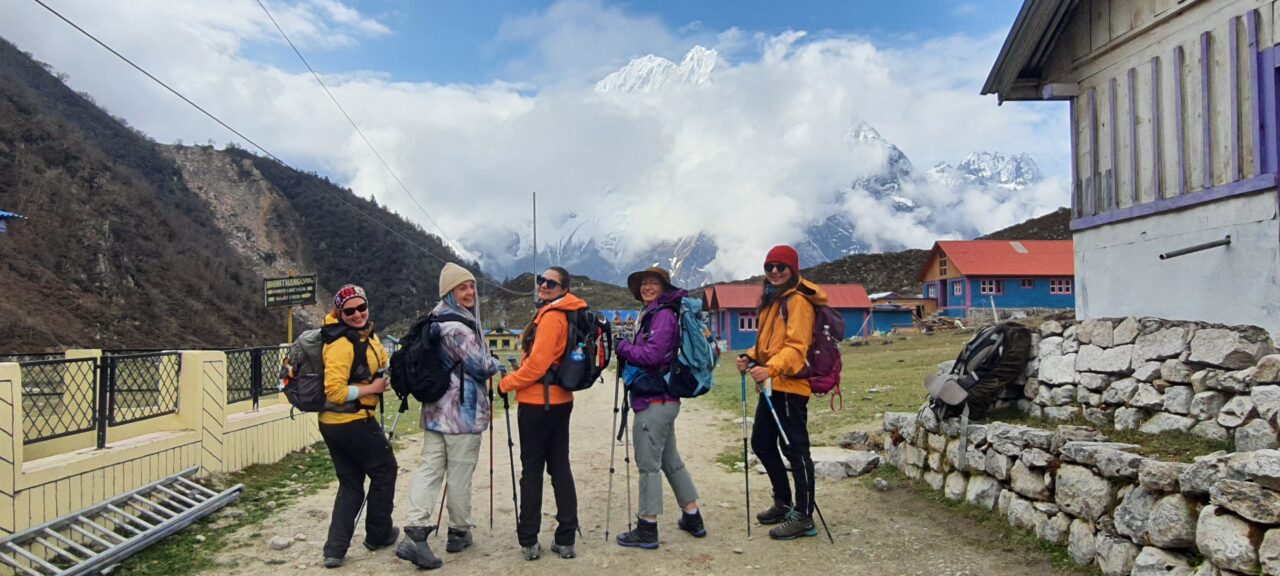
 Share
ShareAnnapurna Circuit Trek from Pokhara - 9 Days

09 Days

Difficult

Throngla Pass (5464 m)

1-20 People

Pokhara/Pokhara

Spring , Autumn and Early Winter

- 8 Breakfast
- 9 Lunch
- 8 Dinner

- Best Available Guest Houses

- Public Sharing Bus
- Public Sharing Jeep
- 1 personUS$ 955
- 2 - 2 personUS$ 750
- 3 - 5 personUS$ 685
- 6 - 10 personUS$ 625
- 11 over 9999 US$ 600
- Your safety, our no 1 priority
- Best price guarantee
- Experienced & dedicated team
- Easy booking, no hidden charge
- You can customize this trip
US$ 955


Highlights of Annapurna Circuit Trek from Pokhara
- Enjoy a scenic drive from the lakeside Pokhara to Dharapani.
- Stay in the comfortable tea house with warm hospitality while enjoying warm meals.
- Walk through lush, green valleys and terraced farmlands, dense rhododendron, pine forests, and dry alpine desert.
- Experience the culture, traditions, and lifestyle of Gurung, Manangi, andThe The Thakali people live in the Annapurna Region.
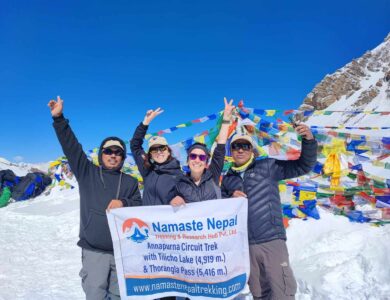
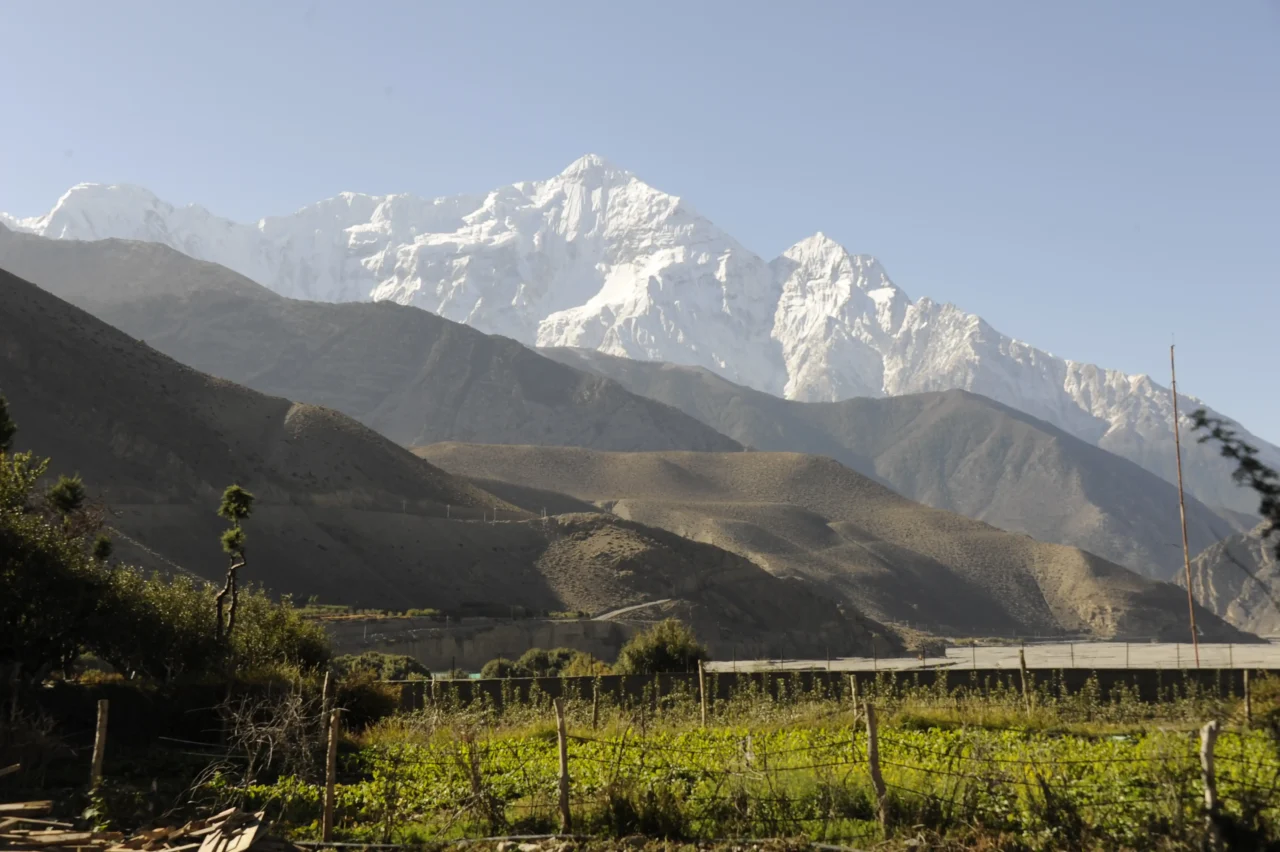
- Conquer the Thorong La Pass by standing at an altitude of 5,416 meters and enjoy the panoramic view of Annapurna I, II, III, IV, Dhaulagiri I (8,167m), Manaslu (8,163m), Gangapurna (7,455m), Tilicho Peak, Fishtail and more.
- Visit the holy Muktinath temple-sacred site for Hindu and Buddhist people.
- Photography and Videography of beautiful landscapes and mountain ranges.
Trip Overview
Namaste Nepal has designed the perfect 9-day trekking program for people who are currently in the beautiful city of Pokhara and want to do the famous Annapurna Circuit. Our 9-day Annapurna Circuit Trek from Pokhara is a well-planned trip that lets you see and do everything this famed route has to offer in a short amount of time.
Your trip starts with a beautiful drive from Pokhara, a city on the lake, to Dharapani, where you will begin your trek deep in the Himalayas. From there, you’ll start to climb up the Marsyangdi River valley. Your route will help you get used to the higher altitudes as you go.

Every day has its own set of challenges and rewards. You will walk through beautiful settlements like Chame and Manang, where you will have a day to get used to the altitude. After that, you keep climbing through Yak Kharka and Phedi until you reach the dramatic early morning push over the Thorong La Pass. At 5,416 meters (17,769 feet), this mountain pass is the highest point of your walk and a huge accomplishment.
After you cross the pass, you will go down to Muktinath, a holy pilgrimage place. Finally, you’ll drive back to Pokhara, your experience over and your heart full of memories that will last a lifetime. This schedule strikes the perfect mix between tough trekking days and much-needed relaxation, making sure you can finish the circuit safely and have the most fun.

Why Choose Us for the Annapurna Circuit Trek From Pokhara
Local Expert Guides
The guide that we will provide to you grew up in the Annapurna Region. They know the terrain, the weather, and the culture of the area quite well. With their expertise, they will make your trip safe and interesting with full of insight, knowledge and stories.
Safety First
We want all our clients to remain safe and secure during the Annapurna Circuit trek. So to maintain safety, we follow all the safety protocols like using safe routes, following an acclimatisation plan, and providing guides who are trained to handle any emergency situation. We always have emergency kits with us and know what to do if someone becomes sick.
Comfortable Stays and Easy Planning
During the trip, we choose the best local teahouses for a warm bed and arrange healthy meals for you. We also handle all the permits required for this trek, including transportation and transport, and logistics. You don’t have to worry about anything else when you make us your travel partner.
Small Groups, Personal Touch
We keep our groups small so that everyone can have a more personal experience. That means our guide will pay more attention to you, and you can walk at your own pace or stop for pictures, rest whenever you choose.
Responsible Travel
We care with respect to the mountains and the people who live there. We do our best to conserve the culture and wildlife of the Annapurna area by following eco-friendly practices and supporting local businesses. You can count on us to have a friendly team that puts your comfort, safety, and enjoyment first!

Recommended Equipment packing list for Annapurna Circuit Trek From Pokhara
The following basic equipment checklist is designed to assist you in preparing for your Annapurna Circuit Trek from Pokhara. It is important to pack efficiently and keep the weight of your gear as light as possible to ensure a comfortable trekking experience.
At the beginning of your trek, your packed bag should weigh no more than 44 pounds (20 kg). This weight limit helps to ensure that our Porter can carry your bag comfortably, and you can manage the physical demands of the trek.
Please review the checklist carefully and pack accordingly to maximize your enjoyment and minimize any unnecessary strain.
- Sun hat or cap
- Warm fleece hat or woolen beanie
- Scarf, buff, or balaclava
- Sunglasses (UV protection recommended)
- Quick-dry T-shirts (3–4 pieces, preferably full-sleeved)
- Fleece jacket or pullover
- Optional: Fleece Wind-Stopper jacket
- Waterproof shell jacket (breathable fabric preferred)
- Down jacket (essential for cold nights) *
- Thermal innerwear tops
- Lightweight gloves
- Warm, waterproof gloves (essential)
- Underwear (moisture-wicking)
- Hiking shorts
- Lightweight cotton or trekking pants
- Thermal/woolen pants
- Waterproof pants
- Thermal innerwear bottoms
- Thin, lightweight inner socks
- Warm woolen hiking socks
- Cotton socks
- Trekking boots with ankle support and spare laces (waterproof)
- Camp shoes, slippers, or sandals (for evenings)
- Duffle bag (main luggage) *
- Daypack (for daily use)
- Dry bags/pouches (2–3 pieces to protect electronics or clothes from moisture)
- Quick-drying medium-sized towel
- Toothbrush and toothpaste
- Biodegradable multipurpose soap and shampoo (travel-sized)
- Deodorant
- Wet wipes (baby wipes)
- Tissue/toilet roll
- Antibacterial hand sanitizer
- Face and body moisturizer
- Lip balm with SPF
- Sunscreen lotion (SPF 50+)
- Nail clippers
- Comb or hairbrush (optional)
- Personal hygiene products (as needed)
- Basic first aid kit
- Diamox (as prescribed) – for altitude sickness
- Paracetamol / Ibuprofen – for fever or pain
- Cold & cough medicine
- Anti-diarrheal tablets
- ORS sachets
- Band-aids (blister care)
- Personal medications (enough for the entire trip)
- Sleeping bag (suitable for sub-zero temperatures) *
- Trekking poles (highly recommended) *
- Headlamp or torch (with extra batteries)
- Water bottles – thermal preferred
- Power bank
- Trail map or guidebook
- Journal and pen
- Snacks (6–8 energy/protein bars)
- Original passport
- Travel insurance copy
- Emergency contact list (printed and digital)
- Reading book
- iPod or music player
- Pencils and small notebooks
- Travel games (Uno, playing cards, dice, etc.)
- Prayer beads (optional for spiritual travelers)
- Face masks (2–3 pieces for dust and cold)
- Earplugs and an eye mask (for better sleep)
Outline Itinerary of Annapurna Circuit Trek from Pokhara
Local Bus Drive from Pokhara to Besisahar and Sharing Jeep to Dharapani
Trek from Dharapani to Chame
Trek from Chame to Upper Pisang
Trek from Pisang to Manang via Ngawal View Point
Acclimatization and Rest Day at Manang: Hike to Gangapurna Lake/Ice Lake
Trek from Manang to Yak Kharka
Trek from Yak Kharka to Thorong Phedi
Trek from Phedi to Muktinath via Thorong La Pass
Drive back to Pokhara
 Best Time To Go For Annapurna Circuit Trek From Pokhara
 Best Time To Go For Annapurna Circuit Trek From Pokhara
The peak trekking season for the Annapurna Circuit trek is during the months of Spring(March to May) and autumn(mid-September to November). But each season offers different weather, views, and overall trekking experiences. Let’s see the details about each season to understand in detail:
Annapurna Circuit trek in Autumn (September to November)
The month from September to November is considered the top choice of trekkers due to stable weather and perfect trekking conditions. The sky remains clear, and you can enjoy the clear view of the mountains and the beautiful landscape without any trouble. It is also the season of festivals( Dashain and Tihar). Simply, you can experience the best moments without much trouble this season.
Annapurna Circuit trek in Spring (March to May)
Another good time to plan for the Annapurna Circuit trek is during the months of March to May. The days remain warm, while the nights remain chilly. There will be occasional rainfall. The blooming of the rhododendron flower, wildflower and lush greenery will attract anyone who travels in this season. The weather is overall good in this season.
Annapurna Circuit trek in Winter (December to February)
The Annapurna region experiences cold with chilly mornings and nights during the month of winter. At high altitude, there will be snowfall, and passing the Throng La Pass remains tough due to heavy snow and harsh conditions. Only highly experienced trekkers travel during this season with proper gear and strong preparation.
Annapurna Circuit trek in Monsoon (June to August)
Although the high altitude Annapurna region is unaffected by rainfall during the monsoon, the lower altitude experiences heavy rainfall. The trails can be slippery and muddy due to rainfall, and the risk of landslides and floods remains high in this season. So people avoid trekking in the monsoon season.

Annapurna Circuit Trek From Pokhara Price for 2026/2027
The price of the Annapurna Circuit trek from Pokhara package depends on the number of people you are in your group. The more you are in a group, the more you can get a discount on the trekking package. Let’s see the price of the package according to the group size:
| Group Size | Price per Person (USD) |
| 1 Person | US $ 955 |
| 2- 4 People | US $ 750 |
| 4–8 People | US $ 685 |
| 7+ People | US $ 600 |
Photo & Video Gallery

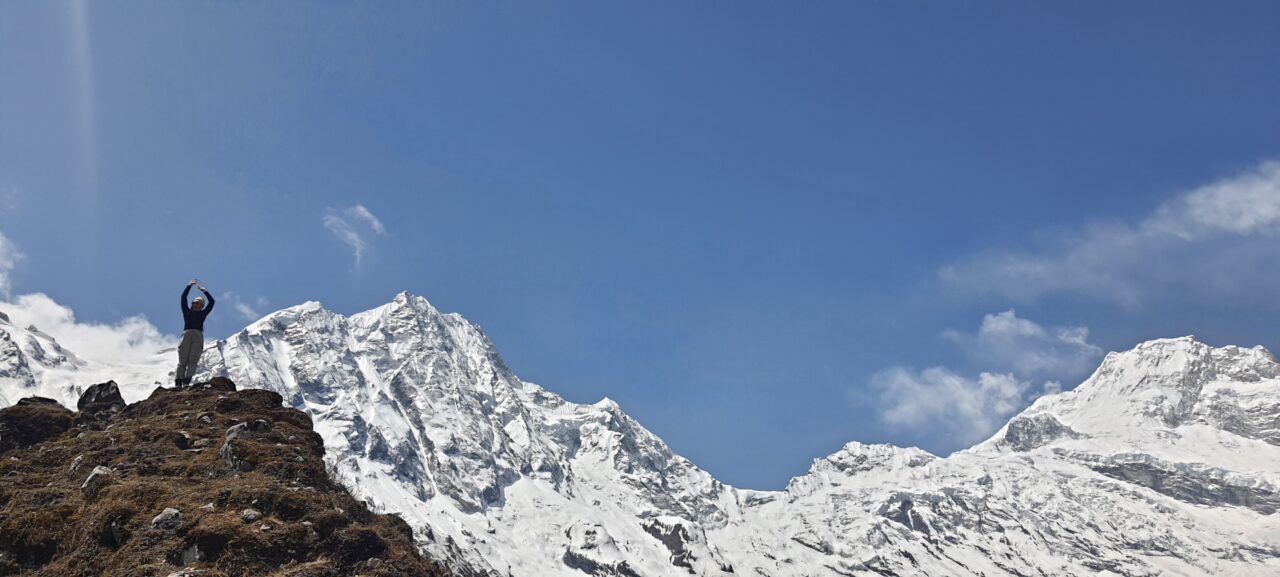
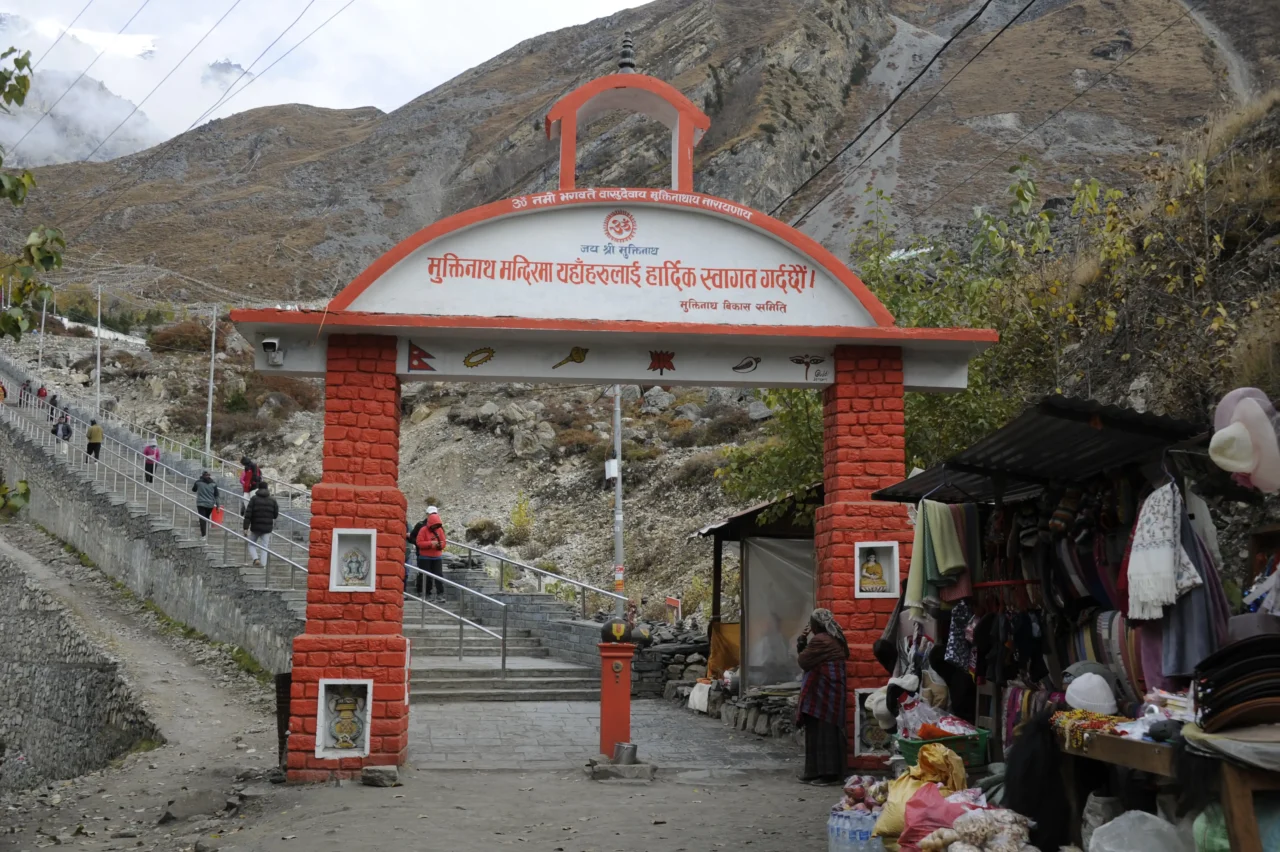
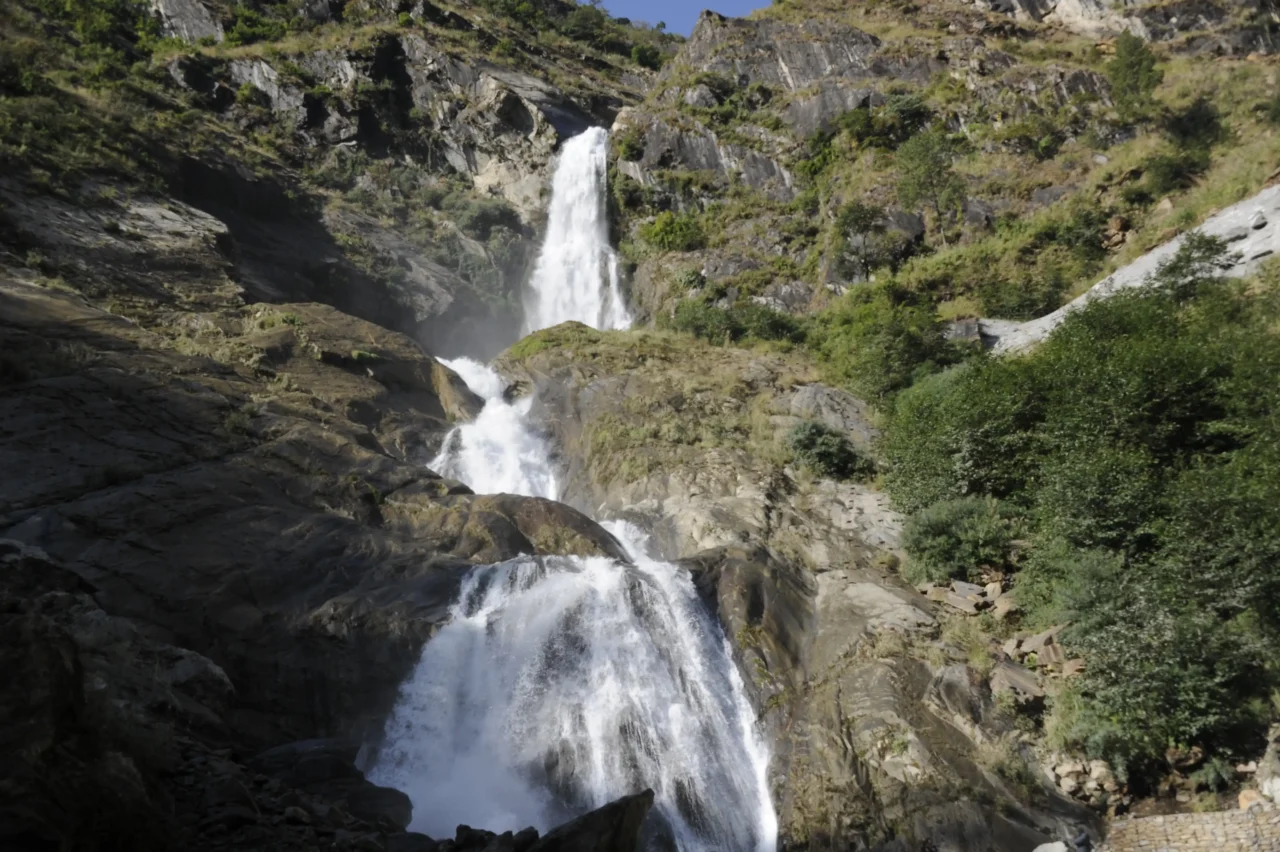
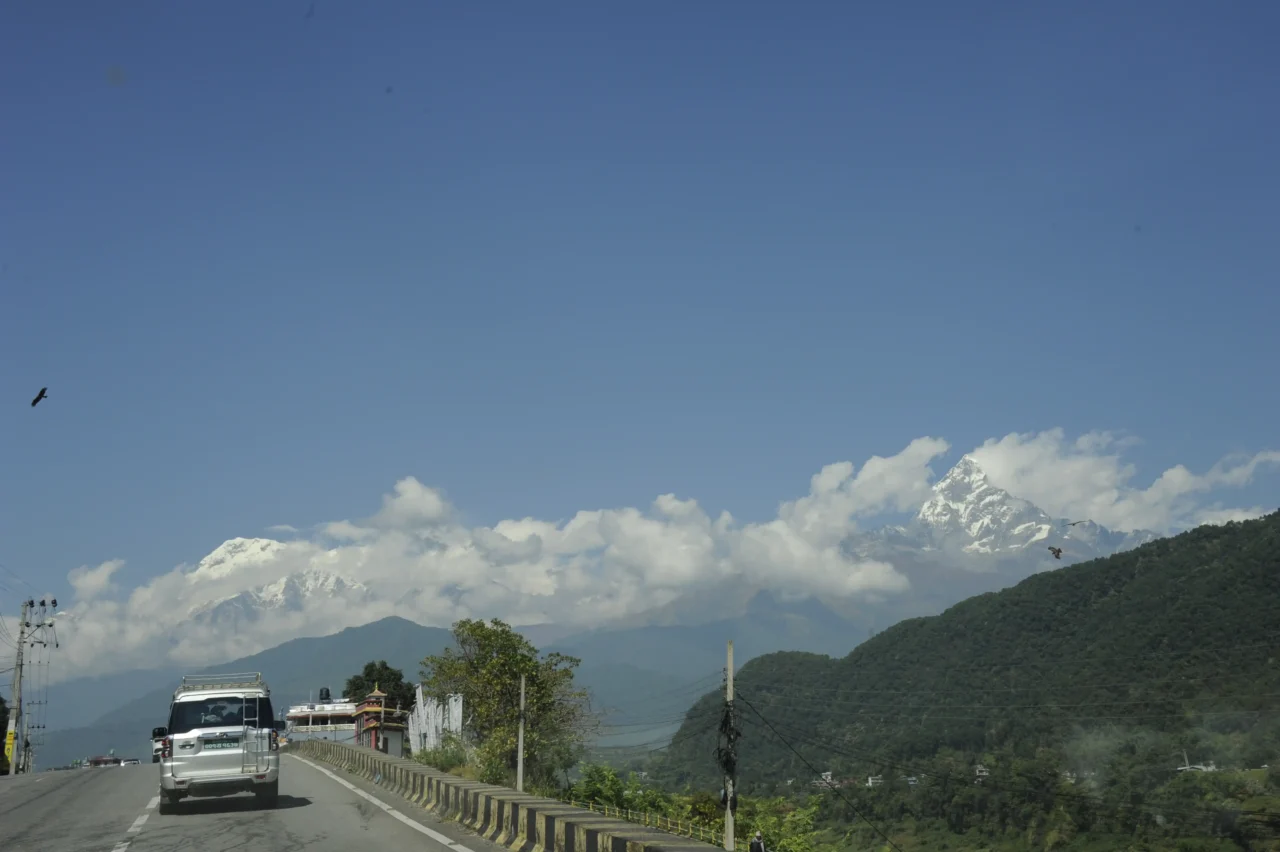
Detailed Itinerary of Annapurna Circuit Trek from Pokhara
Day 1: Local Bus Drive from Pokhara to Besisahar and Sharing Jeep to Dharapani
Your journey of the Annapurna Circuit trek starts from Pokhara early in the morning. After having breakfast, you will take a local bus that is heading to Besishar. Riding for around 3-4 hours, you will reach Besisahar, which is the entry point of the Besisahar.
From Besisahar, the road is off-road, so to make your journey comfortable, we will take a shared Jeep and head toward the Dharpani.
It takes another 3-4 hours to reach. During the ride, you will pass villages like Syange, Jagat, Chamje, and Tal. This popular village is well known for the stone houses, waterfalls, and beautiful landscapes.
As you reach near the Dharapni, the landscape turns from warm lowlands to cool alpine surroundings.
Dharapani (1,860m) is a peaceful village surrounded by pine forests and the stunning views of the Annapurna and Manaslu range. You will check into the tea house and spend the night here.

Day 2: Trek from Dharapani to Chame
After having tea and breakfast, it’s time for you to leave the Dharpani and head toward the Chame(the headquarters of Manang). The distance from Dharpani to Chame is around 13-17 km, and today the walk duration will be around 4.5 to 7 hours.
As you leave the tea house, you will walk through the dense pine and oak forests, small villages, and traditional Tibetan-influenced settlements. Then you will reach Bagarchhap, popular for its prayer flags and ancient monastery. From here, you will walk uphill to reach the Danaque. From here, you can see the great views of Mt. Manaslu and the surrounding peaks.
Further walking, you will notice the landscape turns greener and cooler. You will cross a few wooden bridges and walk through forested paths to reach Timang. Stunning views of Mt. Lamjung Himal and Manaslu can be seen from Timang.
From here, the trail becomes easier and more enjoyable as you continue toward Koto, the gateway to the Nar Phu Valley. A short walk from Koto, you will finally reach Chame (2,710m), which is located beside the Marshyangdi River.
Chame has good teahouses. You can enjoy hot showers, shop, and witness amazing views of the snowy Himalayas. Tonight you will spend the night at a teahouse in Chame.
Day 3: Trek from Chame to Upper Pisang
After having a delicious breakfast in the tea house, it’s time for you to leave Chame. Today’s destination will be Upper Pisang, which is 13.6 to 14 km from Chame, and you will walk around 4.5 to 6 hours.
Following the Marshyangdi River while enjoying the clear views of the Annapurna range, you will move deeper into the valley. After a gentle walk, you reach Bhratang, a small settlement surrounded by apple orchards.
Bhratang is famous for its fresh apples and apple products. From here, the trail gradually climbs toward the impressive Paine Apple Rock, one of the major highlights of the Annapurna Circuit.
The path then leads you through a narrow valley section carved by the river. As you climb higher, the valley opens up, and it rewards you with the breathtaking sight of Swargadwari, a huge curved rock face.
Now you will continue your walk to Dhukure Pokhari. It is a great viewpoint to enjoy the majestic view of Annapurna II and IV while having lunch and resting for a while.
After lunch here, the trail becomes easier and more scenic. The landscape changes into a dry, alpine setting with scattered trees and wide-open fields.
A final gentle climb takes you to Upper Pisang (3,300m). This village offers some of the best mountain views on the circuit, including the majestic Annapurna II shining right in front of you.
After checking into the tea house later in the evening, you can take a short walk to the monastery in the evening and enjoy the peaceful atmosphere of the village.
Day 4: Trek from Pisang to Manang via Ngawal View Point
After breakfast today, you will reach one of the most beautiful villages of the Annapurna region, Manang. From Upper Pisange to Manang, the distance is around 19-21 km, and today you will walk around 6-8 hours.
Today’s route is one of the most beautiful sections of the Annapurna Circuit. Leaving the tea house, you will follow the upper trail via Ngawal. It is a higher and older village from where you can enjoy the breathtaking views of Annapurna II, Annapurna III, Tilicho Peak, and the surrounding valleys.
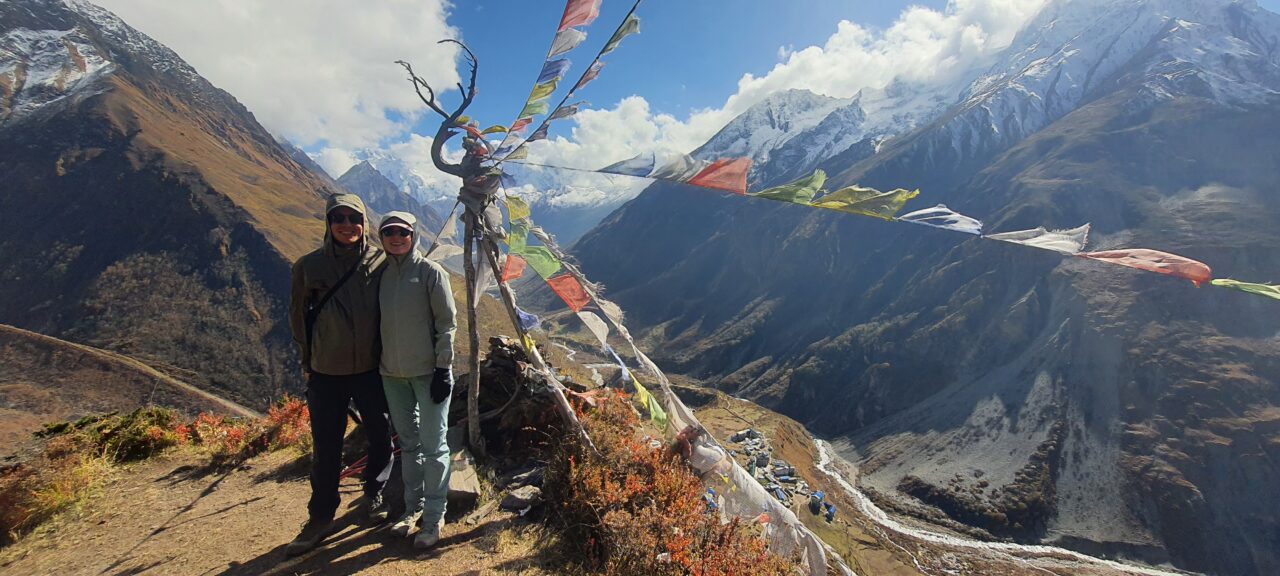
Although the upper route is tough, the rewarding view will take all your tiredness away. After taking enough time to explore Ngawal, you will walk downhill. Passing through dry valleys, mani walls, and prayer flags, you will finally reach Manang. It is one of the biggest villages in the Annapurna region. Manang sits at an altitude of 3540m. This village is popular for its rich culture, bakeries, and stunning landscape.
Day 5: Acclimatization and Rest Day at Manang: Hike to Gangapurna Lake/Ice Lake
Today is an acclimatization day in Manang village. You will go for a short hike to a higher point, but you will return to your tea house in the evening as per the acclimatisation rule: “Trek high, sleep low.” This is important to adapt your body to high altitude and to minimise the risk of altitude sickness(AMS).
After breakfast, your guide will take you on a short hike either to Gangapurna Lake or Ice Lake:
- Gangapurna Lake Hike:
A short and easy hike of around 1-1.5 you can reach the Gangapurna Lake. It is a peaceful glacier lake situated at an altitude of 3,540 meters.
From the lake, you can see stunning views of Gangapurna, Annapurna III, and the Manang Valley. It’s a perfect destination to enjoy the natural beauty of the Annapurna region in a peaceful atmosphere.
- Ice Lake (Kicho Tal) Hike:
Compared to the Gangapurna Lake hike, the Ice Lake hike is a little challenging. It takes around 5–6 hours round-trip. The trail is steep, but once you reach here, you can enjoy jaw-dropping views of the Annapurna and Tilicho ranges. Reaching Ice Lake at an altitude of around 4,600m gives you excellent acclimatisation before climbing higher.
After completing the hike, you will return to your tea house in Manang for lunch. Take plenty of rest, enjoy your favourite food, and most importantly, get enough sleep on this rest day.
Day 6: Trek from Manang to Yak Kharka
Enjoying fresh morning air with a warm breakfast and tea, now it’s time for you to leave the beautiful Manang Valley. Today’s destination will be Yak Kharka, which is around 10-11 km away. Today’s trek will be short and easy of around 3-4 hours.
As you start walking, you will pass through Tengi and Gunsang, small settlements with beautiful views of Annapurna III, Gangapurna, and Tilicho Peak. Now the landscape becomes drier and open, with fewer trees and more grazing areas for yaks.
Because the altitude increases to over 4,000 meters, you may feel the air becoming thinner, so walk at a comfortable pace. Don’t forget to hydrate your body and monitor your health conditions all the time.
Once you reach the Yak Kharka, you will check into the tea house and enjoy a warm meal, and have the rest of the afternoon to relax and acclimatise. In the evening, you can go for a short walk to explore the village and to interact with the locals.
Day 7: Trek from Yak Kharka to Thorong Phedi
After breakfast in Yak Kharak, it’s time for you to leave for Phedi. It is the last village before you cross the challenging mountain pass – Throng La Pass.
Today’s trek will be moderately challenging due to the increasing altitude. The trek distance from Yak Kharka to Phedi is around 7–8 km, and it will take around 3–4 hours of walking.
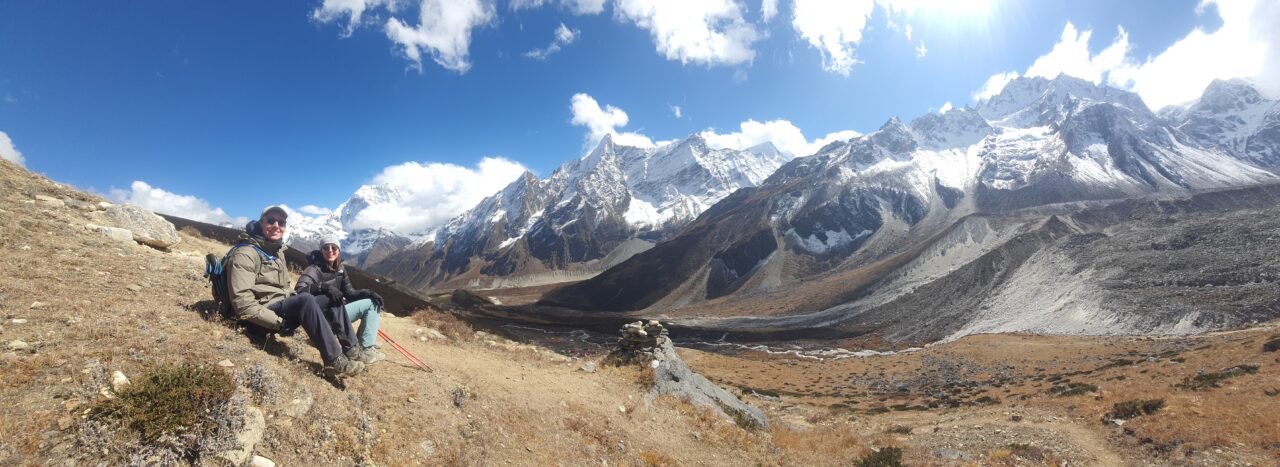
After leaving the tea house, you will pass through open alpine terrain with minimal vegetation, scattered stone shelters, and grazing yaks. During the ascent, you can enjoy the views of Annapurna, Gangapurna, and Tilicho peaks. This breathtaking view of the mountain peak is really impressive to watch.
Because the altitude is now over 4,500 meters, we remind you to walk slowly, take regular breaks, and stay well hydrated. Check the signs of altitude sickness, and if it occurs, inform your trekking guide immediately.
Once you reach Thorang Phedi, you will check into the tea house and enjoy a warm meal and spend the night here. Be mentally and physically ready because tomorrow will be your big day.
Day 8: Trek from Phedi to Muktinath via Thorong La Pass
Finally, it’s time for you to reach your dream destination- Thorong La Pass, which marks a successful completion of the Annapurna Circuit trek. Today’s trek will be tough due to long hours of trekking, around 8–9 hours. The trek distance for the day is around 20–22 km.
You need to leave the tea house early in the morning, before sunrise, so that you make the most of daylight and avoid harsh weather at high altitude. The early start also allows you to ascend gradually and safely, as the pass sits at 5,416 meters, where the air is thin, and temperatures can be extremely cold.
The trail climbs steadily from Phedi through Thorong Phedi, the last settlement before the pass. Along the way, you will pass rocky terrain, high-altitude landscapes, and panoramic views of Dhaulagiri, Annapurna II, and Nilgiri peaks. Walking slowly, taking short breaks, and staying hydrated are crucial to preventing altitude sickness.
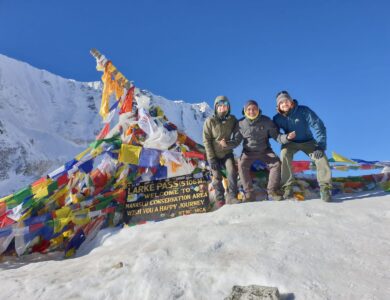
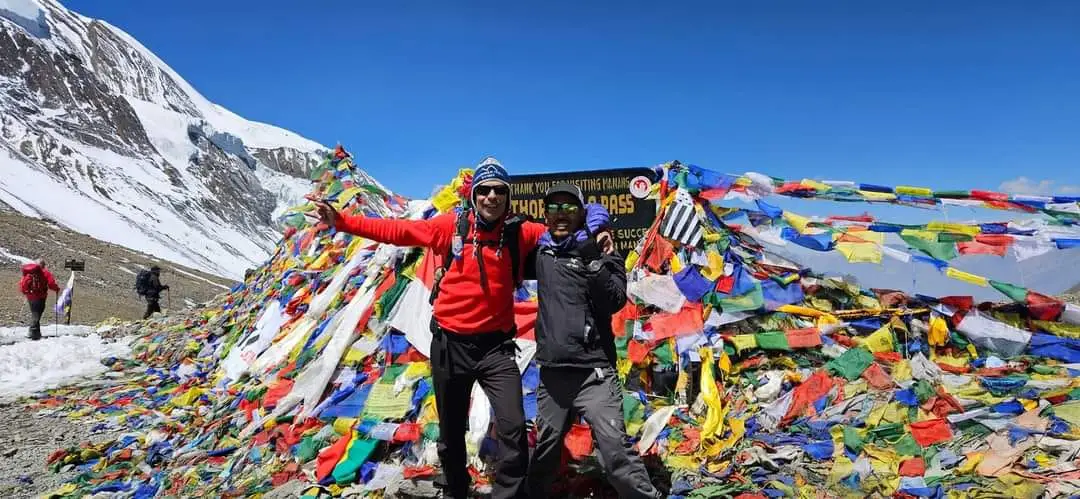
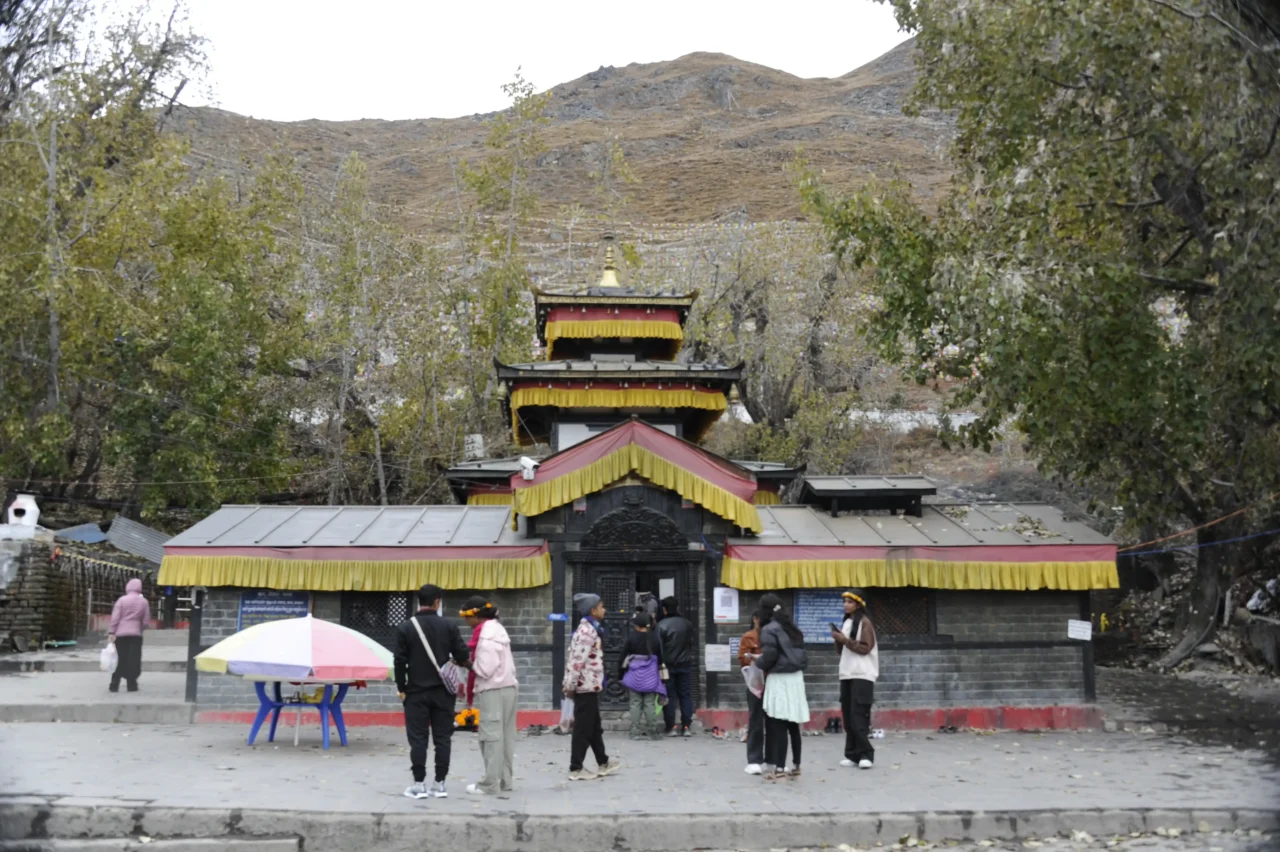
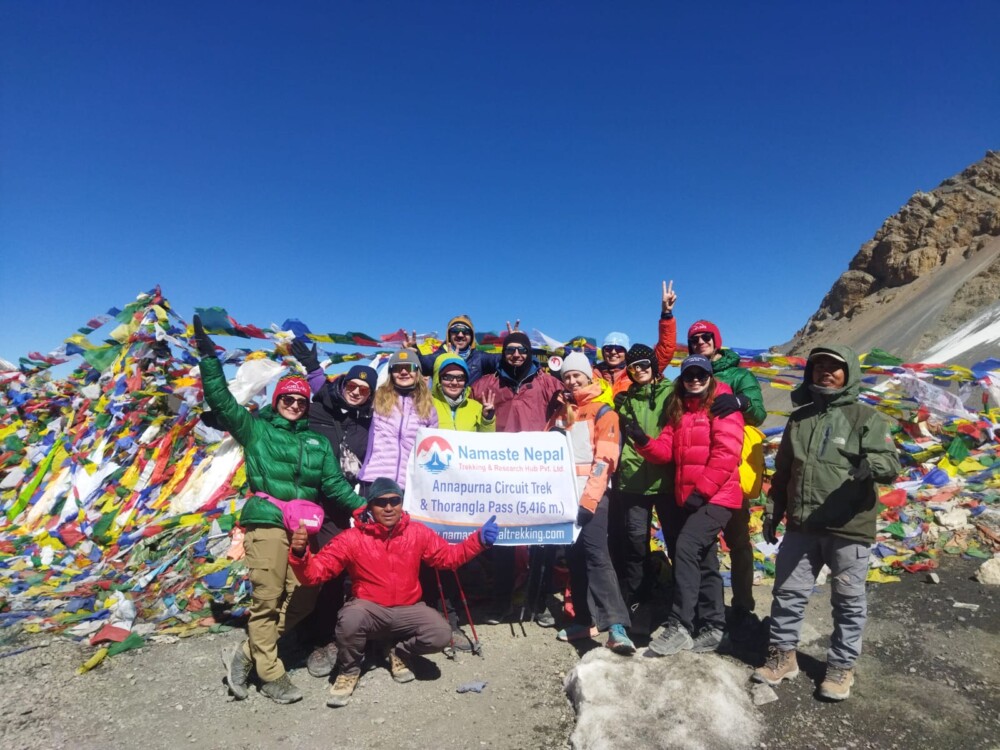
Reaching Thorong La Pass is an incredible achievement. Take time to celebrate, take photos, and enjoy the breathtaking 360° mountain views. After crossing the pass, the trail descends into the Mustang region, leading to Muktinath (3,800m), a sacred pilgrimage site for Hindus and Buddhists.
You will arrive at Muktinath in the late afternoon, check into a teahouse, enjoy a warm meal, and rest after this long and rewarding day.
Day 9: Drive back to Pokhara
After your final breakfast in Muktinath, you will take a drive to Pokhara to conclude your adventurous Annapurna Circuit Trek. You may visit the Muktinath temple in the morning if you haven’t visited it yesterday.
You can travel by regular bus or local jeep, depending on your preference and schedule. It takes 8-9 hours to reach Pokhara by bus, whereas it takes 6-8 hours in a Jeep. Along the way, you will pass through dry valleys, traditional villages, and terraced farmlands. As you descend further, the scenery gradually changes, revealing the lush greenery of the lower Annapurna region.
Once you reach Pokhara, our Guide will drop you at the hotel doorstep. Now you can celebrate the successful completion of your Annapurna Circuit Trek with your team.
Build Your Own Adventure!
Collaborate with our specialists to create a unique itinerary.
Includes/Excludes
- Pokhara to Besisahar by Deluxe Tourist Bus
- Besisahar to Dharapani by Public Sharing Jeep
- Muktinath to Pokhara by Public Sharing Jeep/Bus
- All the twin-sharing accommodation during the Trek
- All the meals (Breakfast, Tea break, Lunch, and Dinner) with seasonal fruits during the trek.
- All necessary paperwork and Annapurna Circuit permits (ACAP and TIMS )
- All government and local taxes
- An experienced English-speaking Trekking Guide,
- Assistant trekking guide (1 assistant trekking guide for every 10 trekkers ),
- And Sherpa porters/Support staff (1 Support staff for every 2 trekkers), including their salary, insurance, equipment, transport food, and lodging.
- Nepal visa fee (the lowest fee available is for a 15-day visa costing 30$/person)
- International airfare to and from Kathmandu
- Your Hotel in Kathmandu/Pokhara
- Excess luggage charges
- Extra night accommodation in Pokhara (in case of early return from the mountain, then the scheduled itinerary)
- Travel and rescue insurance
- Personal expenses (phone calls, laundry, bar bills, personal drinks, battery charge, bottle or boiling water, hot shower, wifi and or internet, etc)
- Tips for guide and porters
Complimentary
- Personalized virtual consultation before finalizing your annapurna Circuit Trek booking.
- Online Pre-Trip Briefing after booking confirmation
- Free excess luggage storage facilities at our office store
- Namaste Nepal’s T-shirt / Baseball Cap
- Annapurna Circuit trekking map
- Namaste Nepal’s duffle bag
- Down jacket and seasonal sleeping bag (to be returned after completion of the trip).
- Trekking Pools (to be returned after completion of the trip).
- A self-sufficient medical first aid kit containing vital medications.
- Company-branded water bottle with purification tablets
- Oximeter to check your pulse oxygen saturation, and heart rate twice daily (Very useful to check AMS symptoms)
Trip Map of Annapurna Circuit Trek from Pokhara - 9 Days
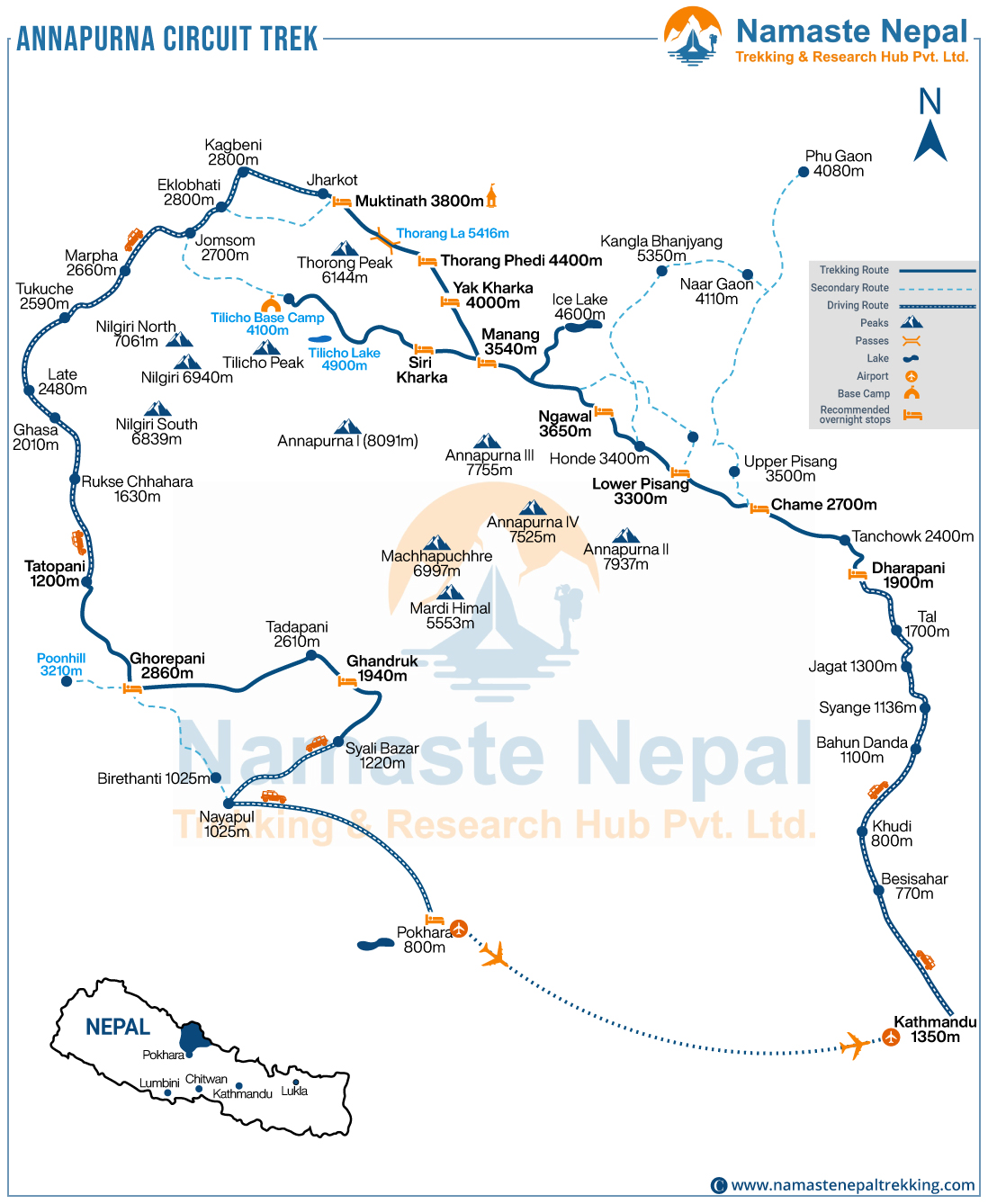
Good To Know
Annapurna Circuit Trek is located inside the Annapurna Region and is controlled by the Annapurna Conservation Area. This conservation area helps to control the rare species of flora and fauna and maintain the beauty of the Annapurna region. Due to this region, all the travellers who are planning to visit here must obtain the permit.
Your required permits are:
- ACAP (Annapurna Conservation Area Permit)
- TIMS (Trekkers’ Information Management System)
Theese permit will be obtained by Namaste Nepal for our trekkers who join the trek with us. For the permit process, you need to send us a copy of your passport and pp-size photo while booking the trek.
Meals will be included in the Annapurna Circuit trek package. Namaste Nepal will arrange three meals for all our clients. You will have a choice of veg and non-veg options. If you have any dietary restrictions, you can inform us in advance so we can try to manage them. Let’s see the type of menu you can expect in the tea house of the Annapurna region during the trek:
- Breakfast
Porridge, muesli, oatmeal, Pancakes, Tibetan bread, chapati, Eggs (fried, boiled, omelette), Toast with jam or honey, Tea or coffee
- Lunch And Dinner:
Dal Bhat (rice, lentils, vegetables), Noodles, pasta, or spaghetti, Fried rice, fried noodles, Potato dishes (mash, fried, boiled), Soup varieties, Veg and non-veg curries, Momos (dumplings), and many more
- Beverage (mostly exclusive):
Hot water, alcohol, cold drinks, energy drinks, and snacks.
Namaste Nepal will arrange the best available rooms in the Guesthouse during the Annapurna Circuit trek. Until Manag Village, we will get the rooms with an attached Bathroom for you. Thieese Guesthouses is run by the local families, and it will be located on the trekking trails.
These guesthouses will be pre-booked for you so that you can relax and enjoy every day after you finish the hike. Let’s see what facilities you can find in the tea house:
- Rooms: Simple, cosy with amenities like a warm blanket, a pillow, a bedsheet, and a shared bed
- Toilets: Squat types with running water. No facilities for handwashing or toilet paper. On the Lower alevatation of the trek, most Toilets and Bathrooms are attached to your Room.
- WIFI: Available in all tea houses. WIfi connection might be poor in high altitude areas. You need to pay certain fees to get a connection.
- Hot Shower: Available deuring the most parts of the trek with your attached bathroom.
At high altitudes like Yak Kharka and Thorang Phed, we do not recommend taking proper hot showers, but they are still available. You need to pay certain fees to use the hot shower facility.
When you are planning to do the Annapurna Circuit trek from Pokhara, we suggest you have travel and health insurance. Although it is safe, sometimes the unseen situation can happen, so if you have insurance, it will help to cover any risks, medical costs, or emergency expenses that may arise during the journey.
In the high altitude region, it will not be possible to rescue from the road, so your insurance policy must cover the cost of a helicopter rescue operation. Without the insurance, a helicopter evacuation can be very expensive and difficult to manage on your own. Let’s see what your insurance must cover:
- High-altitude risk up to 6,000m
- Emergency helicopter evacuation
- Medical treatment and hospital bills
- Trip cancellation or interruption
- Lost or damaged luggage
- Accidents or injuries during trekking
This 9-day Annapurna Circuit trek from Pokhara is challenging. The actual challenge depends upon your fitness level, preparation, trekking experience, and the season you choose to travel. Although it might sound challenging, this trek can be managed when you make enough preparation before heading out on a trek.
Let’s see the common risk factors that you can expect while you are trekking and how you can minimise the risk:
Altitude Sickness
The main challenge of the Annapurna Circuit trek for most trekkers is altitude sickness(AMS). It can happen to anyone, anytime, no matter how experienced you are. Altitude sickness causes breathing problems, mild headaches, nausea, dizziness, and fatigue.
These symptoms are the initial phase of AMS, which can be cured by taking rest or simply descending to a lower altitude. If you avoid the early symptoms that might turn into HACE and HAPE, which are the advanced forms of AMS. It can be life-threatening if not taken care of at an early stage, so you must follow an acclimatisation plan during the trek.
Physical Exhaustion
On the 9-day Annapurna Circuit trek from Pokhara, you will cover around 160–180 km. To cover this distance, you will need to walk for around 6-7 hours. Walking continuously for such a long duration can be tough, especially for beginner trekkers. Before joining the trek, make sure you are physically prepared and able to walk for several hours each day.
Weather Conditions
The Annapurna Himalayas weather conditions can be unpredictable sometimes, even during the best season. A sudden change in the weather can disturb the trekking plans. It can result in heavy snowfall, rain, or cold temperatures, which adds difficulty for trekkers. So you always need to be prepared for such conditions by carrying all the proper trekking gear, warm clothing, waterproof jackets, gloves, hats, and other essential equipment.
Basic Facilities with Limited Medical Access
Trekkers should understand that there will be no luxury hotel or restaurant in the Annapurna Circuit trekking route. There will be limited and very basic facilities in the tea house where you will be staying. There are no advanced hospitals or modern infrastructure in the trekking routes.
So it’s really important to carry the basic first aid, personal medications, and travel insurance to cover any emergencies.
Expert Tips To Minimize Altitude Sickness on the Annapurna Circuit Trek from Pokhara:
You will spend around a week above 3,000 metres during this 9-day Annapurna Circuit trek from Pokhara. The highest point of this trek is Thorong La pass, which sits at an altitude of 5,416 m. It is also the highest mountain pass of the Annapurna Region. Altitude sickness can happen when you travel above 3,000m, so it is our responsibility to understand altitude sickness and learn how to minimise it.
Symptoms of altitude sickness (AMS):
- Headache
- Nausea and vomiting
- Dizziness or lightheadedness
- Fatigue and weakness
- Shortness of breath
- Loss of appetite
- Trouble sleeping
Symptoms of HACE (High-Altitude Cerebral Edema – advanced AMS)
- Severe headache
- Confusion or disorientation
- Loss of coordination (ataxia)
- Difficulty walking
- Hallucinations
- Nausea and vomiting
- Severe fatigue or drowsiness
Symptoms of HAPE (High-Altitude Pulmonary Edema – advanced AMS)
- Shortness of breath, even at rest
- Persistent cough, sometimes with pink or frothy sputum
- Chest tightness or congestion
- Extreme fatigue or weakness
- Rapid heartbeat
- Bluish lips or fingernails (cyanosis)
Preventive Measure:
- Ascend gradually and allow time for acclimatization
- Stay hydrated and drink plenty of water
- Avoid alcohol and smoking at high altitudes
- Eat light, balanced meals
- Take rest days, especially above 3,000 m
- Consider medications like acetazolamide (after consulting a doctor)
- Descend immediately if severe symptoms appear
- Trek with a guide or group familiar with high-altitude conditions
Once you decide to join Namaste Nepal as your travel partner, here is the team that will guide and support you throughout your Annapurna Circuit trek:
- Lead Trekking Guide: Experienced in the Annapurna region treks, plans routes and schedules, shares local knowledge, culture, and insight about the region, monitors trekkers’ health conditions, coordinates with supportive staff, handles emergencies, provides motivation and guidance.
- Assistant Guide: For more than 10 people in a group. Supports the group, assists with navigation and logistics.
- Porters: Carry your main luggage. Our porter will carry a maximum of 20 to 25kg, and one porter will be divided among two trekkers. So make sure your main luggage weighs around 10 to 12kg.
- Driver: Good knowledge and experience, responsible for safely transporting trekkers between trailheads
- Operations/Back Office Team: Available 24/7, Handles permits, food, accommodations, logistics, and emergency support.
Booking Policy
Booking the Annapurna Circuit trek from Pokhara is an easy process.
You can book directly from our website by clicking the book now option, which you can find inside the package. After this, you can choose the travel date, group size, and make a payment to reserve your seat. If you have any confusion, you can also book the trek directly by contacting us on WhatsApp or through email.
To confirm your booking, you need to make an advance payment of 25% of the total package cost, which you find on the website written in USD. The rest of the amount can be paid before starting the trek.
Payment Policy
We accept all kinds of payment like Cash, Credit/Debit Cards, Bank Transfers, QR Codes, Contactless Payments, and Online Gateways.
Cancellation Policy
The payment that you make during the booking (25%) will not be returned as per our Company policy. There will also be no refund in the case of the guest making the cancellation or not showing up on the trip date.
Annapurna Circuit Trek from Pokhara - 9 Days Altitude Chart
Frequently Asked Questions
General
What is the Annapurna Circuit Trek?
Annapurna Circuit Trek is a famous high-altitude trek in Nepal located inside the Annapurna Region. This trek makes a full loop around the Annapurna mountain range in central Nepal. The trek usually starts from Besisahar/Chame. The classic route is about 230 km (around 150 miles) long and reaches its highest point at Thorong La Pass, which stands at 5,416 meters.
How many days it takes to complete the Annapurna Circuit trek From Pokhara?
You can complete the Annapurna Circuit trek from Pokhara in around 9-10 days.
When is the best time to do the Annapurna Circuit Trek from Pokhara?
Pre‑monsoon (late‑February to early June) and post‑monsoon (late‑September to early December) are the best times due to best weather conditions, clear sky and favourable day time temperature.
What is the climate like at different sections of the trek?
- Pokhara–Dharapani (lowland): Sub‑tropical, warm (15‑25 °C).
- Middle section (Manang, Thorong La): Alpine, cold, possible snow (-5 °C to 5 °C).
- Muktinath–Jomsom: Semi‑desert, windy, sunny (10‑20 °C).
Can I do the Annapurna Circuit Trek from Pokhara Solo?
We do not recommend doing the Annapurna Circuit Trek from Pokhara Solo if you are a beginner or trekking in Nepal for the first time. Always hire a guide to stay safe, even though the trail is well-marked. If you are solo trekkers, try to join a group that is traveling on the same dates as you.
What language(s) are spoken along the route?
Nepali (the official language of Nepal) is widely understood. In Gurung and Thakali villages, you’ll also hear Gurung, Thakali, and Magar dialects. Most Guest‑house owners and workers speak good English.
Is the Annapurna Circuit Trek still worth it with the new roads?
Yes, it is still very much worth it. While roads have reached some parts of the trail, trekking agencies use alternative trails (NATT trails) to avoid the dust and vehicles. You still get to see the same stunning mountain views and experience the unique local culture.
Does it rain during the trekking season?
While the peak seasons are mostly dry, occasional rain or snow can happen, especially at higher altitudes. During the monsoon (June to August), heavy rain is common, making the trails slippery and blocking the mountain views.
Booking, Payment, & Extra Cost
Do I need a Trekking Permit?
To participate in the Annapurna Circuit Trek from Pokhara trek you must obtain the Annapurna Conservation Area Permit (ACAP) and TIMS (Trekkers’ Information Management System)
Usually, it is included in the trekking package, so your tour operator will arrange for you.
How much does the Trek Cost?
Approximate budget breakdown (per person, mid‑range):
- International flights: US $800‑$1,300 (depends on origin)
- Domestic flight (Kathmandu Pokhara/Jomsom Pokhara): US $200‑$250 (optional)
- Permits (ACAP/TIMS): US $30/$20
- Guide & porter: US $25‑$30 /day each (US $250‑$350 for guide, US $200‑$300 for porter)
- Accommodation & meals: US $15‑$25 /day (≈ US $150‑$250)
- Equipment rental: US $100
- Miscellaneous (tips, internet, emergencies): US $150‑$200.
- Total estimated cost: US $1,800‑$2,200 (excluding international airfare).
Do I need a visa to enter Nepal?
Most nationalities can obtain a 15/30‑day tourist visa on arrival at Tribhuvan International Airport (Kathmandu). Visa fees are US $30 for 15 Days.
What is the typical tipping Culture for guides and porters?
Tipping is a common cultural practice in Nepal to show appreciation. A general rule is to tip about 10% to 15% of the total trek cost, which is then shared among the guide and porters. It is best to give the tip on the last day of the trek.
Physical Fitness & Preparation
What kind of fitness level is required to join in this Annapurna Circuit trek from Pokhara?
A moderate level of fitness is required to participate in the Annapurna Circuit trek from Pokhara. It means you must be able to walk for an average of 5-7 hours while carrying a light backpack of around 5 kg. Pre-high altitude hiking or trekking is highly recommendable but beginners can also join this trek.
Is the trail suitable for families with children?
The lower sections (Pokhara → Manang) are family‑friendly, but Thorong La Pass (5,416 m) is demanding for children under 12. If traveling with kids, consider a shorter circuit that ends at Manang or skips the high pass. or take enough time to do the trek. with attantation to the details and Care, the Annapurna Circuit trek from Pokhara are completly doable with the Kids.
Is a guide or porter required?
After the new government rules it is mandatory to hire a licensed trekking guide in Nepal in places like national parks or conservation areas and restricted areas. So Yes for this Annapurna Circuit trek from Pokhara also you must hire the guide.
Do I need travel insurance?
Absolutely. Annapurna Circuit trek from Pokhara, which completes in just 9 days is a challenging trek. So choose a policy that covers:
- High‑altitude trekking (up to 5,500 m).
- Medical evacuation.
- Trip cancellation/interruption.
How should I train for the Annapurna Circuit trek from Pokhara?
We recommend starting your training 2-3 months before the trek. Focus on cardio exercises like jogging, swimming, or cycling. The most helpful training is hiking on hills or using a stair-climber machine while wearing the boots and backpack you plan to use on the trek.
Health and Safety
What are the main risks and how to mitigate them?
- Altitude sickness (AMS): Ascend slowly, take acclimatization days, and stay hydrated.
- Weather extremes: Pack layered clothing and waterproof gear.
- Falls & slippery trails: Use trekking poles and wear sturdy boots.
- Lack of cash: Carry sufficient Nepali rupees (NPR).
- Wildlife / stray dogs: Keep food sealed, avoid feeding animals
What are the recommended health precautions?
- Vaccinations: Hepatitis A & B, Typhoid, Tetanus, and routine vaccines.
- Water: Boil or treat all water; bottled water is available in larger towns.
- Altitude medication: Carry acetazolamide (Diamox) if prescribed; consult your doctor.
Can I get Diamox (Altitude sickness medicine) in Nepal?
Yes, Diamox is widely available in pharmacies in Pokhara and Kathmandu without a prescription. However, we strongly recommend consulting your doctor before taking any medication for altitude.
What is the emergency evacuation process?
In case of serious altitude illness, injury, or illness, the guide will contact your tour operator to arrange the rescue operation or the Nepali Police. Most evacuations are via helicopter. Make sure your insurance covers this cost.
What gear do I need to pack for the Annapurna Circuit?
You need high-quality gear, including a down jacket, a waterproof shell jacket, thermal layers, trekking boots, a sleeping bag rated for -15°C, and polarized sunglasses. You can buy or rent most of this equipment in Pokhara or Kathmandu.
Logistics during Annapurna Circuit trek from Pokhara
What food can I expect on the trail?
All Guesthouses serve a standard menu during the Annapurna Circuit Trek:
- Breakfast: Dal‑bhat (lentil soup with rice), porridge, eggs, tea/coffee.
- Lunch/Dinner: Dal‑bhat, vegetable curry, pickles, and sometimes meat.
- Snacks: Momos (dumplings), biscuits, nuts, energy bars.
- Note: Hot water, snacks, and beverages are usually extra costs.
Is internet/phone service available?
Mobile coverage is good in Pokhara, Besisahar, and Jomsom but spotty above 4,000 m. Wi‑Fi is available in most tea‑houses for an extra cost (USD 1-2).
Are there hot showers available on the trek?
Most tea-houses in the lower regions offer gas-powered or solar-powered hot showers for a small fee (usually $1–$3). As you get higher and the weather gets colder, hot water becomes more limited and expensive.
How can I get from Pokhara to the trailhead?
- Option 1: Private car/jeep (2-hour drive to Besisahar).
- Option 2: Tourist bus (daily service).
- Option 3: Shared jeep from Besisahar to Dharapani (faster than a bus).
- Option 4: Flight (Fly Jomsom→ Pokhara).
What cultural etiquette should I follow?
- Greetings: “Namaste” with palms together.
- Dress modestly: Avoid sleeveless tops in villages.
- Photographs: Ask permission before photographing people.
- Tea‑house etiquette: Share tables.
What other treks can I combine with the Circuit?
- Tilicho Lake
- Continue trekking to Ghorepani Ghandruk from Muktinath
- Mardi Himal Trek.
- Ghandruk Trek.
- Annapurna Base Camp (ABC).
What is the “reverse” Annapurna Circuit?
Starting from Jomsom (fly in from Pokhara) and trekking southward toward Besisahar via Throngla Pass. This version is popular for those with limited time or who prefer to finish at a lower altitude.
How difficult is the Thorong La Pass?
Thorong La Pass is the most challenging part of the Annapurna Circuit trek from Pokhara. You will start walking very early in the morning (around 4 AM) to avoid high winds. The climb is steep, and the air is thin, but the feeling of reaching the top is incredibly rewarding.
Practical Matters
How do I get cash for the trek?
ATMs are located in Pokhara, Besisahar, Jomsom, and sometimes in Manang. It’s safest to withdraw enough cash (NPR 1,000‑4,000 per person per day) before leaving Pokhara.
Is it possible to do the trek on a “Leave‑No‑Trace” basis?
Yes. Pack out all trash, stay on the trail, use biodegradable soap 200m away from water sources, and respect wildlife.
How can I help the local communities?
Hire local guides/porters, buy locally made handicrafts, leave a 10-15% tip for tea-house staff, and participate in community clean-ups.
Where can I find up‑to‑date trail information?
Official ACAP website, local trekking agencies, trip-report forums (Reddit, Lonely Planet), and Facebook groups like “Annapurna Circuit Trekkers”.
Can I trek with a pet?
Yes. Pets are allowed for the Annapurna Circuit trek. But there is a lack of facilities for the pets.
Can I charge my phone and camera batteries on the trail?
Yes, most tea-houses allow you to charge your devices in the common area for a small fee. However, electricity can be unreliable at high altitudes, so we highly recommend bringing a high-capacity power bank.
Related Blogs & Articles

Kathmandu To Besisahar By Bus, Car, Jeep, Flight: Ultimate Guide

Top 10 Best Mountain Movies You Can’t Miss

ACAP Bans Loudspeakers in the Annapurna Region
- 1 personUS$ 955
- 2 - 2 personUS$ 750
- 3 - 5 personUS$ 685
- 6 - 10 personUS$ 625
- 11 over 9999 US$ 600
- Your safety, our no 1 priority
- Best price guarantee
- Experienced & dedicated team
- Easy booking, no hidden charge
- You can customize this trip
US$ 955
Client Reviews


Related Trips