English
 Dutch
Dutch Japanese
 Hindi
Hindi Italian
 Spanish
 French
 German
 Chinese
 Korean
 Arabic
 Hebrew
 Russian
 Portuguese
 Danish
 Czech
Czech Polish
 Swedish
16 Days
Moderate
 Share
Share Updated: 4 August, 2025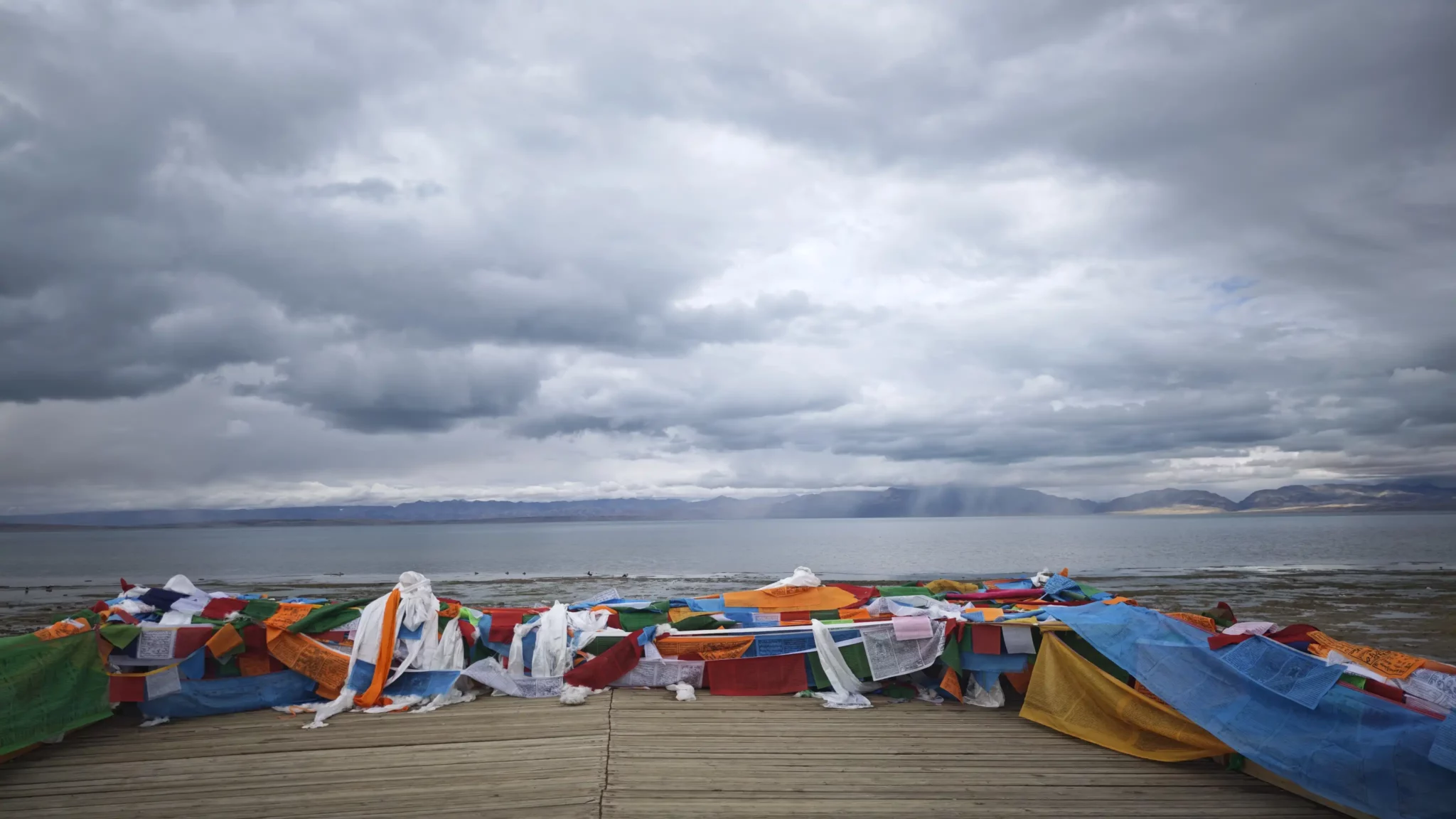
The Mansarovar Lake is a gift of nature that is not just a point on the map of the vast and enigmatic region of the Tibetan Autonomous Region. The Indians and the western world refer to it as Lake Manasarovar, and the Tibetans call it Mapang Yongcuo.
This lake, which is a freshwater lake, has a special combination of spirituality, legends, and the beauty of nature. It is believed that it is the mythical origin of four of the biggest rivers in Asia, and many religions feel that it is the purest of all lakes.
Its two names reflect a very rich experience of cultural exchange and strong religion. Join us to peep into the numerous significations of Mansarovar Lake, a lake in which the pure waters person the sky and the inner desires of folks.
| Feature | Details |
| Name (English) | Mansarovar Lake |
| Tibetan Name | Mapang Yongcuo |
| Location | Tibetan Autonomous Region, China |
| Altitude | 4,590 meters (15,060 feet) |
| Type | Freshwater Lake |
| Religious Significance | Sacred in Hinduism, Buddhism, Jainism, and Bon |
| Nearby Landmark | Mount Kailash |
Lake Mansarovar means a lot to most religions, especially those found in thousands of years. The Hindu writings term it as the most primitive formation of his mind of Brahma, and hence the name Manasarovar, which is translated as lake of the mind in Sanskrit. According to ancient texts, its waters were used in the purification of sin accumulated over millennia.
The Buddhist traditions of Buddhism also adore this holy lake. They feel that Queen Maya, who was the mother of the Buddha, had a bath here before she gave birth to the Buddha. Tibetan Buddhists regard the lake as an expression of compassion and wisdom; thus, circumambulation around the lake is a great spiritual exercise.
Even Jainism and the early Bon religion of Tibet have a stake in the lake. Archeological remains indicate people lived near the lake thousands of years ago, and there are a lot of monasteries and caves carved into the hills near the lake, which is testimony to its ancient spiritual mysticism.

The full circumambulation (kora) of the Mansarovar Lake is about 100-110 kilometres. The majority of pilgrims spend between 1 and 3 days covering this route, depending on the mode of transport they use and individual speeds. Some choose to be assisted through vehicular means, whereas others choose the old-fashioned walking method.
The clockwise direction follows Buddhist tradition, though Hindu pilgrims may choose counterclockwise movement. Each approach offers unique perspectives and spiritual experiences.
The grandest landmark of the route is Chiu Gompa. The monastery is situated so dramatically on a rocky outcrop that it has panoramic views of both the Mansarovar Lake and Mount Kailash. The gompa contains old murals and comes along with visitors with an opportunity to view prayer rituals on a daily basis.
Seralung Monastery is another important place where the circumambulation is done. The smaller equal sacred site offers smaller spaces where contemplation and meditation can take place. The pilgrims who visit the lake usually get to hear stories that explain the spiritual meaning of the lake, as provided by the monks who are locals.
Along the path, there are numerous small shrines, prayer flag set-ups, and natural stopping places where visitors can take a rest and reflect. The climbing stops also display various views of the lake and other mountains, so that the effect of the video is always fascinating. 16 Days ModerateRecommended Trip  Kailash Mansarovar Yatra From Nepal | Registration Open 2026
| Season | Average Temperature (°C) | Weather Conditions | Best Activities |
| Spring (March-May) | 5°C to 12°C | Cool and Pleasant | Pilgrimage, Photography, Light Trekking |
| Summer (June-August) | 9°C to 20°C | Mild with Occasional Rain | Exploring Nature, Pilgrimage, Festivals |
| Fall (September-November) | 4°C to 10°C | Clear and Crisp | Trekking, Photography, Spiritual Activities |
| Winter (December-February) | -10°C to 4°C | Harsh and Snowy | Limited Activities Due to Cold Conditions |
The Mansarovar Lake can be defined as the final pilgrimage point of thousands of followers on the Asian continent. According to Hindu tradition, the waters are supposed to cleanse the sins collected over many lifetimes, and one can cleanse oneself by drinking the waters or by taking a bath in the lake. The lake is regarded as a form of instant awareness of God.
The lake is not meant to benefit only the spiritual gain of an individual. Most of the pilgrims will do the pilgrimage in place of departed relatives or on account of oaths taken when one is facing trouble in life.

With a lot of reverence, the pilgrims come to Mansarovar Lake, many in contact with them start with a bath, even though the water is cold because of the chilling cool climate. Most people save water in special containers so that they can take it home and use it in blessings and celebrations. It is the process of circumambulation, which is itself a moving meditation and with every step, an offering of devotion.
Prayer rituals happen spontaneously all through the day as the rest of the pilgrims and groups assemble to receive the sight of notable points. Their encounters through food sharing, oral narration, and sharing of spiritual lessons form some lasting relationships, which in most cases persist long after the pilgrimage is over.
In contrast, on the extreme, the neighboring Rakshas Tal causes fear and reverence as opposed to the hands-on interaction. The local tradition remembers it as the demon lake, because of its darker water and more agitated state on its surface, the impression of power fills the air.The majority of pilgrims will be respectful towards Rakshas Tal but at the same time remain detached from it as the shadow story of life as they experience it, one which cannot be welcomed. Several traditions entail drinking little trickles of Rakshas Tal water as a way of integrating and balancing with Mansarovar.
The existence of two lakes forms a very strong metaphor of duality in life, light and its shadow, good and bad karma, spiritual and material desire. Pilgrims may think about this duality during their journey and regard it as a pattern of the development of their spiritual growth.
Manasarovar Lake, located at an altitude of 4,590 meters (15,060 feet), is a sacred freshwater lake situated in western Tibet. Revered in Hinduism, Buddhism, Jainism, and Bon, it lies to the south of Mount Kailash. The lake is circled by several ancient monasteries that not only serve as spiritual centers but also offer shelter and guidance to pilgrims on the Kailash Manasarovar Yatra. Pilgrims traditionally perform a clockwise Kora (circumambulation) of the lake, covering about 90+ km over 2–4 days by walk and 2-3 hours by vehicle. Here are the eight major monasteries around Lake Manasarovar, listed in clockwise order:
Chiu Monastery sits on a rocky hill near the northwest shore of Lake Manasarovar. It was built around a meditation cave of Guru Padmasambhava. The monastery offers peaceful views of the lake and is often the first stop for pilgrims.

Located on the southwestern shore, Langbona welcomes pilgrims walking around the lake. Monks here offer blessings. It’s a peaceful rest stop during the journey to Mount Kailash.
Trugo is on the southern shore of Manasarovar. Gurla Mandhata mountain rises behind it. This peaceful spot is often visited during the lake kora. The views are wide and beautiful.
Seralung is a quiet monastery on the northern shore of the lake. Few monks live here. It is a good place for meditation and reflection. The peaceful setting draws visitors looking for calm.
Gossul is on the northeastern side of the lake. It is calm and remote. The monastery is home to a few monks and old Buddhist texts. Visitors come here to enjoy the silence and natural beauty.
Pilgrims traditionally perform a clockwise Kora (circumambulation) of Lake Manasarovar, which takes about 3–4 days on foot (about 90 km in total). The monasteries mentioned above are often used as spiritual waypoints or overnight stops. Each monastery has its own stories, lineage, and rituals, which add depth to the spiritual journey.
Lake Manasarovar is not just a physical lake in Tibet—it is a sacred spiritual destination revered by Hindus, Buddhists, Jains, and followers of Bon. Its calm blue waters are believed to hold divine power and ancient secrets. For thousands of years, myths and legends have connected this lake with gods, sages, and mystical beings.
According to Hindu mythology, Lake Manasarovar was created by Lord Brahma, the god of creation. The name “Manasarovar” comes from two Sanskrit words—Manas (mind) and Sarovar (lake)—meaning “Lake of the Mind.” It is said that Brahma imagined this lake in his mind as the perfect place for his sons to bathe during their pilgrimage to Mount Kailash.
Another belief holds that Lord Shiva, who resides on nearby Mount Kailash, chose Manasarovar as his summer retreat. It is said that Shiva and Parvati spend peaceful time here when not meditating atop Kailash. The energy of the lake is considered a reflection of Shiva’s inner peace.
Manasarovar and nearby Rakshas Tal (Ravan Tal) represent light and darkness. Manasarovar is associated with purity and enlightenment, while Rakshas Tal is linked to ego and demonic forces. Their contrasting shapes (circular and crescent) symbolize the eternal balance of nature.
In Buddhist cosmology, Mansarovar is known as Anavatapta, meaning “the Unheated” or “Heat-Free Lake.” It is believed to be at the center of the world, from which four great rivers flow toward the four directions.
According to legend, Queen Maya Devi, the mother of the Buddha, was bathed in Mansarovar by divine beings before she gave birth to Siddhartha Gautama. Many Buddhist texts describe the lake as a source of spiritual purity, and monks have meditated on its banks for centuries.
For Jains, Mansarovar is revered as the site where Rishabhadeva, the first Tirthankara, visited after attaining Kaivalya (liberation). Jain scriptures refer to it as a sacred region that enhances spiritual elevation. Pilgrims believe that bathing in the lake and walking around it can remove karmic bondage and help attain moksha (liberation).
In the ancient Bon tradition of Tibet, which predates Buddhism, Lake Mansarovar is sacred and closely tied to the deity Sipaimen, the goddess of fertility and life. According to Bon legends, Sipaimen blesses the lake and ensures the balance of nature and harmony. Ritual offerings are still made at the lake to honor spirits and local deities, preserving the spiritual energy of the place.

Hindu texts tell of Saptarishis (seven great sages) and other divine beings who bathed in Mansarovar to cleanse their souls. It is believed that Lord Indra, the king of gods, visits the lake during auspicious times. During full moons, many pilgrims have reported seeing mysterious lights or floating figures on the water—interpreted by some as manifestations of divine beings.
Pilgrims have often reported seeing a golden fish in the lake—a symbol of good fortune, purity, and divine presence. In both Hindu and Buddhist traditions, golden fish represent spiritual awakening and the movement of the soul toward liberation.
Manasarovar is believed to be the playground of divine swans (Hamsa). These celestial birds are said to appear only to pure-hearted individuals and are considered the vehicles of Brahma and Saraswati. The sighting of a swan is taken as a sign of spiritual readiness.
Many pilgrims believe that wishes made at Manasarovar come true, especially when the lake is calm and the reflection of Mount Kailash is visible in its waters. The lake is seen as a mirror of the soul, and bathing in it is said to wash away sins from many lifetimes.
Many pilgrims and ascetics have claimed to witness a golden glow over the lake during twilight hours. Some legends say this light is the aura of Lord Shiva meditating at Mount Kailash. In both Hindu and Bon traditions, this phenomenon is interpreted as a blessing from the divine realm.
According to a lesser-known legend, Airavata, the white elephant of Lord Indra, once bathed in the lake to purify himself after a battle between gods and demons. His presence is believed to have blessed the lake with divine aura.
The crescent-shaped Rakshas Tal near Manasarovar is said to be the place where Ravana, the demon king of Lanka, performed intense penance to please Lord Shiva. Despite his evil deeds, his deep devotion is remembered here. Some believe his presence still lingers on the barren shores of Rakshas Tal, contrasting with the calm divinity of Manasarovar.
Some Tantric and Shakta traditions claim that Manasarovar is a Shakti Peetha, a sacred site where parts of Goddess Sati’s body fell after her self-immolation. This connection deepens the lake’s significance for devotees of Devi (the Divine Mother).
Some legends claim that time behaves differently around Mansarovar. Ancient yogis believed that karma is accelerated here—acts of devotion, prayer, or even thoughts have immediate spiritual effects. As such, pilgrims approach the lake with great reverence, believing that even a moment spent in its presence has a lasting impact on the soul.
The most suitable time to visit Mansarovar Lake is during the months of May to September, as the weather becomes a little moderate and the road is accessible. July and August have the warmest conditions, together with slight chances of monsoon rains, and crowds of pilgrims visiting the place of worship.
May and September are the most reasonable in terms of weather and lower crowds, but nights are still very cold. October may be equally gifted with brilliantly clear skies, but the month does have the threat of early winter blizzards that might leave the travelers stranded.
During winter, visits (November to April) are not advisable because of extreme cold weather, blocked routes of access, and no places to stay. Even those who have been used to high-altitude travel may find winter conditions at Mansarovar extremely challenging.
Your tour agency will arrange the food and accommodation for you when you visit Tibet for a journey to Lake Mansarovar. Here is what you can expect when you book the package.
Option 1: Dormitory-style shared guesthouses with electric blankets, outdoor public toilets
Option 2: Hotel Hotspring – 4-star comfort with:
Travellers do this Mansarovar Lake circumambulation by vehicle, so they don’t need to care much about their fitness level. But if you are planning to do the Kailash Kora, then you should have a good level of physical fitness.
Those who are planning to visit Tibet for a trip to Mansarovar Lake should understand that Tibet lies at a high altitude (8,000-10,000 feet). So, to adapt to the high altitude effect and reduce altitude sickness, you must plan accordingly.
The mental demands of high-altitude pilgrimage often exceed physical challenges. Developing patience, accepting discomfort, and maintaining a positive outlook despite difficulties becomes essential for completing the journey successfully.
Meditation practice, stress management techniques, and realistic expectation setting prepare the mind for the inevitable challenges of extreme environment travel. Understanding that setbacks and difficulties are part of the pilgrimage experience helps maintain perspective during challenging moments.
Here is the list of some common things for backpacking for the trip to visit Mansarovar Lake.
Worth reading: Packing list
Visiting Mansarovar Lake requires multiple permits and documentation. Foreign visitors need Chinese visas plus special Tibet Tourism Bureau permits. Additional permits may be required for border regions near Nepal and India.
Note: You cannot enter Tibet solo and get the permit or visa on your own. So you need to find a tour agency and make travel arrangements with them. Worth reading: Tibet Travel Permit and Visa Info
Mansarovar Lake, which is located in Tibet, has various ways to reach this place. The best way to reach Mansarovar Lake is via the Nepal route. From Nepal, you use road transportation or take a direct flight to Lhasa and drive toward the Mansarovar Lake.
| Arrival in Nepal | Departure to Tibet | Final departure from Nepal | Note |
| 21 April | 27 April | 08 May | Download Itinerary (Full Moon) |
| 4 May | 8 May | 19 May | Download Itinerary |
| 21 May | 27 May | 7 June | Download Itinerary (Full/Blue Moon) |
| 2 June | 6 June | 17 June | Download Itinerary |
| 7 June | 11 June | 22 June | Download Itinerary |
| 14 June | 18 June | 29 June | Download Itinerary |
| 21 June | 25 June | 6 July | Download Itinerary (Full Moon) |
| 5 July | 10 July | 21 July | Download Itinerary |
| 20 July | 25 July | 4 August | Download Itinerary (Full Moon) |
| 28 July | 1 August | 12 August | Download Itinerary |
| 3 August | 7 August | 18 August | Download Itinerary |
| 17 August | 23 August | 3 September | Download Itinerary (Full Moon) |
| 7 September | 21 September | 22 September | Download Itinerary |
| 15 September | 21 September | 2 October | Download Itinerary (Full Moon) |
| 18 September | 23 September | 4 October | Download Itinerary |
16 Days
Moderate
Many pilgrims all over the world have a dream to visit this holy destination once in their lifetime. If you are one of them, then you should definitely visit this holy and divine destination once in your lifetime. To visit Mansarovar Lake or do Kailash Kora, you need to have a guided tour, so we suggest you choose a tour agency like us( Namaste Nepal Trekking) and handle the rest for you for a smooth journey. To know more in detail about travel plans, you can contact us directly.

Sabin Shrestha is an experienced content writer with over 4 years of expertise in creating clear and engaging content. He specializes in writing about lifestyle, travel, health, and technology, delivering well-researched articles that connect with readers. Known for his storytelling skills and attention to detail, Sabin creates content that informs, inspires, and leaves a lasting impression on audiences.