English
 Dutch
Dutch Japanese
 Hindi
Hindi Italian
 Spanish
 French
 German
 Chinese
 Korean
 Arabic
 Hebrew
 Russian
 Portuguese
 Danish
 Czech
Czech Polish
 Swedish
16 Days
Moderate
 Share
Share Updated: 23 July, 2025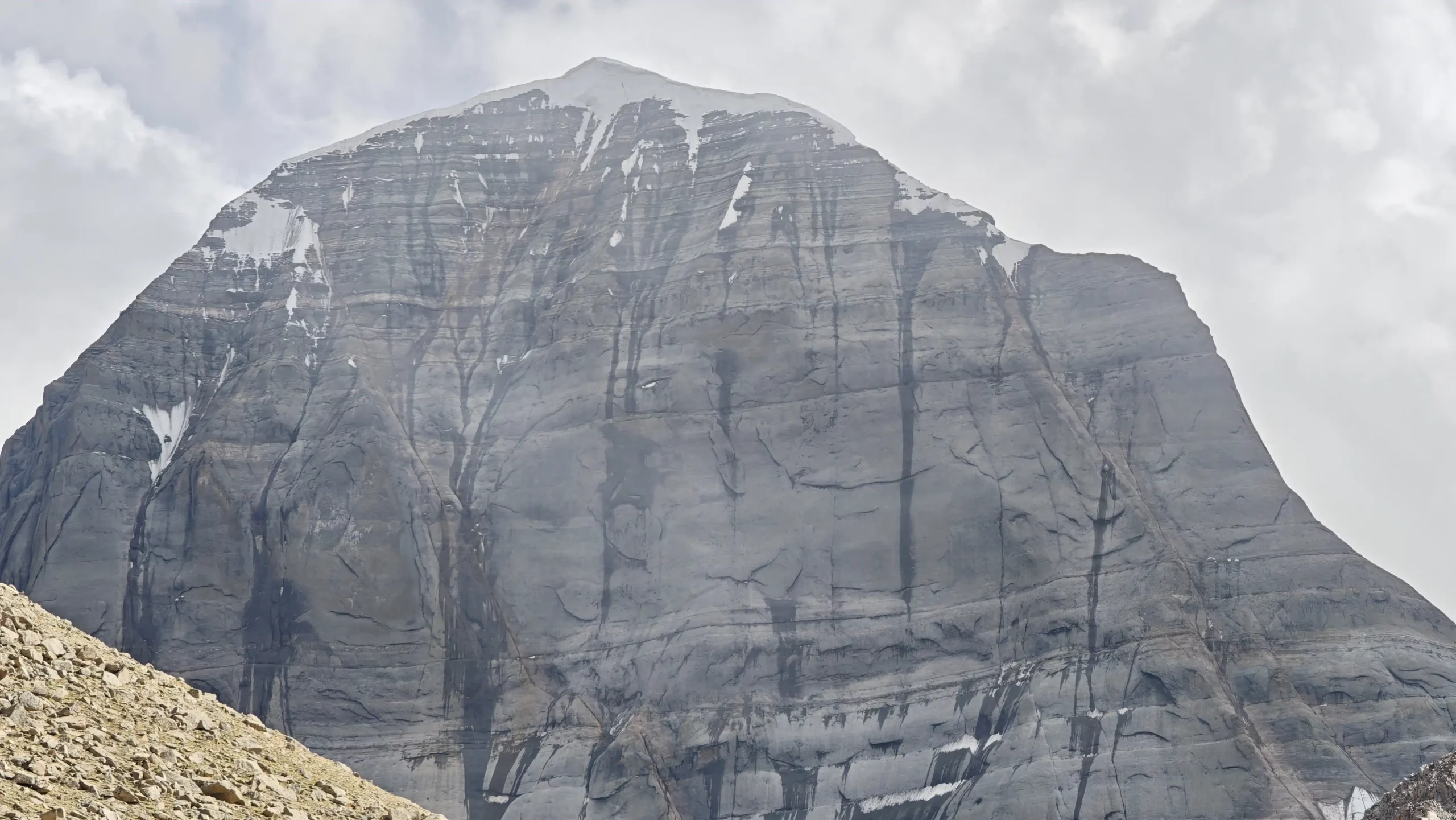
Mount Kailash and Lake Mansarovar are one of the sacred yatra on this planet, calling religious pilgrims from all over the world to Tibet’s Plateau. Mt. Kailash is a towering 6,714-meter-high mountain, which is highly spiritually important to Hindus, Buddhists, Jains, and also to the ancient Bon people. The holy water on Lake Mansarovar at the base of Kailash peak is believed to purify the soul from all sin.
Before booking the Kailash Mansarovar Yatra Package, it is important to find the best time for the Kailash Mansarovar Yatra for a smooth and fulfilling trip.
Travelling to this holy place in different seasons presents its unique features due to variations in climatic conditions. Also, choosing the best time for Kailash Mansarovar lets your visit overlap with your physical stamina, religious mission, as well as travel comfort.
With this overall guide on each season, you can easily select a suitable month for travelling through Kailash Mansarovar so the holy yatra takes place in the best conditions available.
Here you will learn about all the seasons around Kailash Mansarovar — including weather, temperature, festivals, trail conditions, challenges, and more.

Spring is considered the beginning season for the Kailash pilgrimage tour in Tibet. Day temperatures in this month range from 5°C to 15°C while the cold night temperatures vary from -5°C to 5°C. The weather is stable as months go from April to June, with good conditions on most days.
Many consider it the best season for Kailash Mansarovar yatra due to the reopening of routes after winter and crisp air.
Spring is also a very tempting time for pilgrims to Kailash Mansarovar. Trails shut all winter start to open up again for pilgrims to once more embark on the trek. Fresh crisp air is ideal for vast scenery over the white-topped mountains, ideal for stunning photos and more religious significance.
This season is also a top choice for those searching for the best time to go to Kailash Mansarovar while avoiding crowds.
Although desirable, spring travel has some disadvantages of its own. Certain passes are bound to be snowed up at high altitude, which will mean delaying or diverting. Day temperature and overnight temperature are quite disparate, requiring careful layering and appropriate gear.
Altitude sickness remains prevalent as the sudden increase in altitude can strike even experienced pilgrims. Careful management of such a case is necessary when the eagerness to start the pilgrimage can interfere with the needed time to recuperate.

16 Days
Moderate
Summer is another good time for a pilgrimage tour to Kailash Mansarovar Yatra due to warm weather conditions. Day temperatures are up to 20°C and nights are cold between 5°C and 10-10°C. Summer is the finest climatic time for the overall journey.
A favourable climate also eases camping. All the Kailash Mansarovar roads are also easily accessed, with options being left for movement by pilgrims. A long sunlight period leads to more time for Kailash Kora/trek as well as practice time for the area around the holy sites.
After weighing all the above factors, summer is generally the best time to visit Kailash Mansarovar.
The main challenge that travellers need to be aware of while travelling during the summer is Nepal’s route to Tibet. In Nepal, heavy rainfall is common during summer, and the route to Tibet can be obstructed due to floods and landslides. Also, flights from Nepal to Lhasa and via the Hilsa route can be delayed or cancelled due to bad weather conditions.

Many experienced travellers choose autumn as the best time to go on the Kailash Mansarovar yatra. Autumn weather conditions are also well-suited to nature in blossoming colours because the entire landscape turns golden. Autumn temperature varies from 10°C to 15°C during the day and -5°C to 5°C at night.
Post-monsoon months are the time for record air quality with the clearest vistas into the Himalayan ranges. The weather is reliable and even, with scattered showers and even temperatures. Lower numbers of people than in the summer months result in a more introspective spiritual experience.
Photography enthusiasts are especially blessed in the autumn months as the clear light and cloudless weather are ideal for lighting up the sacred landscape. The temperatures during this time make the journey easier for people with different levels of fitness.
Approaching winter from autumn, conditions are unpredictable. Autumn snows are occasional on high passes, but the risk is generally toward the last part of October. A drop in temperature at night warrants cold-season appropriate clothing.
Daylight hours start decreasing, reducing time for trekking and sacred rituals. Pilgrims begin refining daily schedules so that all holy sites are visited during available daylight hours.

| Arrival in Nepal | Departure to Tibet | Final departure from Nepal | Note |
| 21 April | 27 April | 08 May | Download Itinerary (Full Moon) |
| 4 May | 8 May | 19 May | Download Itinerary |
| 21 May | 27 May | 7 June | Download Itinerary (Full/Blue Moon) |
| 2 June | 6 June | 17 June | Download Itinerary |
| 7 June | 11 June | 22 June | Download Itinerary |
| 14 June | 18 June | 29 June | Download Itinerary |
| 21 June | 25 June | 6 July | Download Itinerary (Full Moon) |
| 5 July | 10 July | 21 July | Download Itinerary |
| 20 July | 25 July | 4 August | Download Itinerary (Full Moon) |
| 28 July | 1 August | 12 August | Download Itinerary |
| 3 August | 7 August | 18 August | Download Itinerary |
| 17 August | 23 August | 3 September | Download Itinerary (Full Moon) |
| 7 September | 21 September | 22 September | Download Itinerary |
| 15 September | 21 September | 2 October | Download Itinerary (Full Moon) |
| 18 September | 23 September | 4 October | Download Itinerary |
Winter turns the Kailash Mansarovar area into a cold, snowy environment where it is freezing. Day temperatures are barely above freezing, with night temperatures at −20°C or less. All the high-altitude Kailash Mansarovar trails leading to Kora are closed due to snowfall and icy conditions. Although spiritually intensive, it is not usually the best time for the Kailash Mansarovar yatra.
Summer and autumn are easier for people with average fitness, while spring and winter require strong fitness and experience with high altitude.
Suppose you have pre-existing health conditions, you need to be extra careful because there are no advanced hospitals in the high-altitude areas. The cold and high altitude can make your condition worse if you neglect the high altitude effect.
To avoid unnecessary challenges, you should always choose the best time for the Kailash Mansarovar Yatra. Additionally, check weather conditions before heading for Tibet or consult with your tour operator or tour guide if you need any assistance.
Along with choosing the best time for the Kailash Mansarovar Yatra, trekkers can also plan their departure date to match with the full moon or a festival for a more spiritual and meaningful experience.
Here is a list of different festivals that visitors can plan to experience during their Kailash Mansarovar Yatra from the Nepal route:

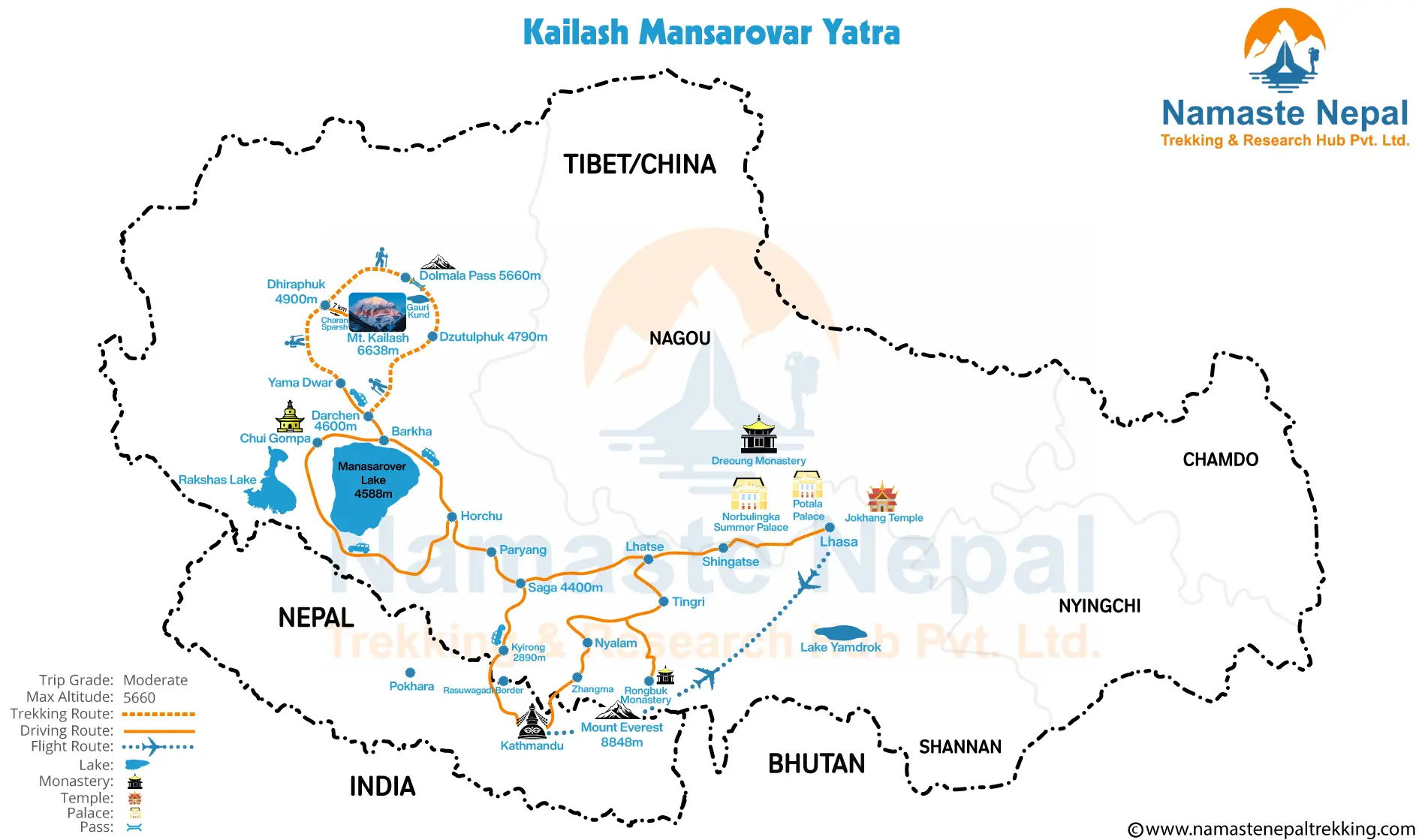
It is one of the most popular routes for the Kailash Mansarovar yatra. We recommend this route if you are travelling from May through October. During this time, the weather is more stable, and the trekking experience at high altitude is safer, so you can travel without much trouble.
19 Days
Moderate
After the recent flood in the Rasuwagidi border (July 8, 2025), this Kathmandu- Kodari route is open for travellers who want to enter Tibet for Kailash Mansarovar Yatra. This route is best if you are travelling in May, August, September, or October 2025. Travelling in monsoon ( June, July) is also possible, but you need to keep updating yourself about road awareness, as monsoon can impact road conditions.
If you want to complete the Kailash Mansarovar Yatra in a few days( 5-10)Days then this route can be the best option for you. This route is affected by weather conditions because it includes a helicopter flight to Hilsa, which operates only during good weather. There are very limited lodges, especially in the Hilsa, so you need to book the package early if you are taking this route.
Further reading: Kailash Mansarovar Yatra Routes
No matter which season you choose for the journey to the Kailash Mansarovar Yatra, it is important to be aware of altitude sickness and proper acclimatisation. For the first time, trekkers plan for gradual altitude gain during the Kailash Kora. Take time to rest at high altitude and drink enough water to avoid altitude sickness.
If you experience altitude sickness symptoms or find difficulty during the trek or while travelling, make sure to inform your Tibetan guide immediately.
Since Kailash Yatra is graded as a challenging trek, travellers need to focus on maintaining cardiovascular fitness and endurance building before departure. If you have any underlying health conditions, make sure to consult with your Doctor about your travel plan.
Read more: How To Prevent Alitude Sickness on Kailash Mansarovar Yatra
Due to strict travel regulations, it is important to have all the required Tibet travel permits and a visa to enter Tibet. You are not allowed to travel, and you need help from the trekking agency to get all the permits. Since it takes time to get the permits and visa, we advise you to start the process at least 2–3 weeks in advance.
Check your passport validity, get travel insurance, and coordinate with the travel agency’s fixed departure schedule to ensure smooth processing.
Check out: Tibet Travel Permit and Chinese Visa
To make the Kailash trip smooth, comfortable and successful, it is important to pack necessary clothing and other essential equipment according to the season you choose to travel. While packing, make sure to know what you can take with you to Tibet and what not. Also, if you are flying to Tibet, check the weight limitations.
Most things like food, accommodation, permits, and logistics will be arranged by your tour operator. If you’re unsure about what to pack, you can ask your tour operator for guidance.
Worth reading: Packing list for Kailash Mansarovar Yatra
The best time for your Kailash Mansarovar pilgrimage is from May to October. You can choose this month according to your travel plan and holiday. Kailash Mansarovar is a must-visit destination not only for religious people but also for foreigners who seek spiritual peace and adventure. If you are travelling in a group, make sure to bargain the price in the Kailash Mansarovar package from the tour operator. You can also join the group if you are travelling alone.
We, Namaste Nepal Trekking, proudly organise the Kailash Mansarovar Yatra for travellers from all around the world. If you are planning to visit the Kailash Mansarovar on this horse year 2026 or the upcoming years, then you can book in advance with us. If you have queries related to Kailash Mansarovar Cost, Itinerary, etc, you can directly contact us.

Sabin Shrestha is an experienced content writer with over 4 years of expertise in creating clear and engaging content. He specializes in writing about lifestyle, travel, health, and technology, delivering well-researched articles that connect with readers. Known for his storytelling skills and attention to detail, Sabin creates content that informs, inspires, and leaves a lasting impression on audiences.