English
 Dutch
Dutch Japanese
 Hindi
Hindi Italian
 Spanish
 French
 German
 Chinese
 Korean
 Arabic
 Hebrew
 Russian
 Portuguese
 Danish
 Czech
Czech Polish
 Swedish
18 Days
Moderate
 Share
Share Updated: 6 May, 2026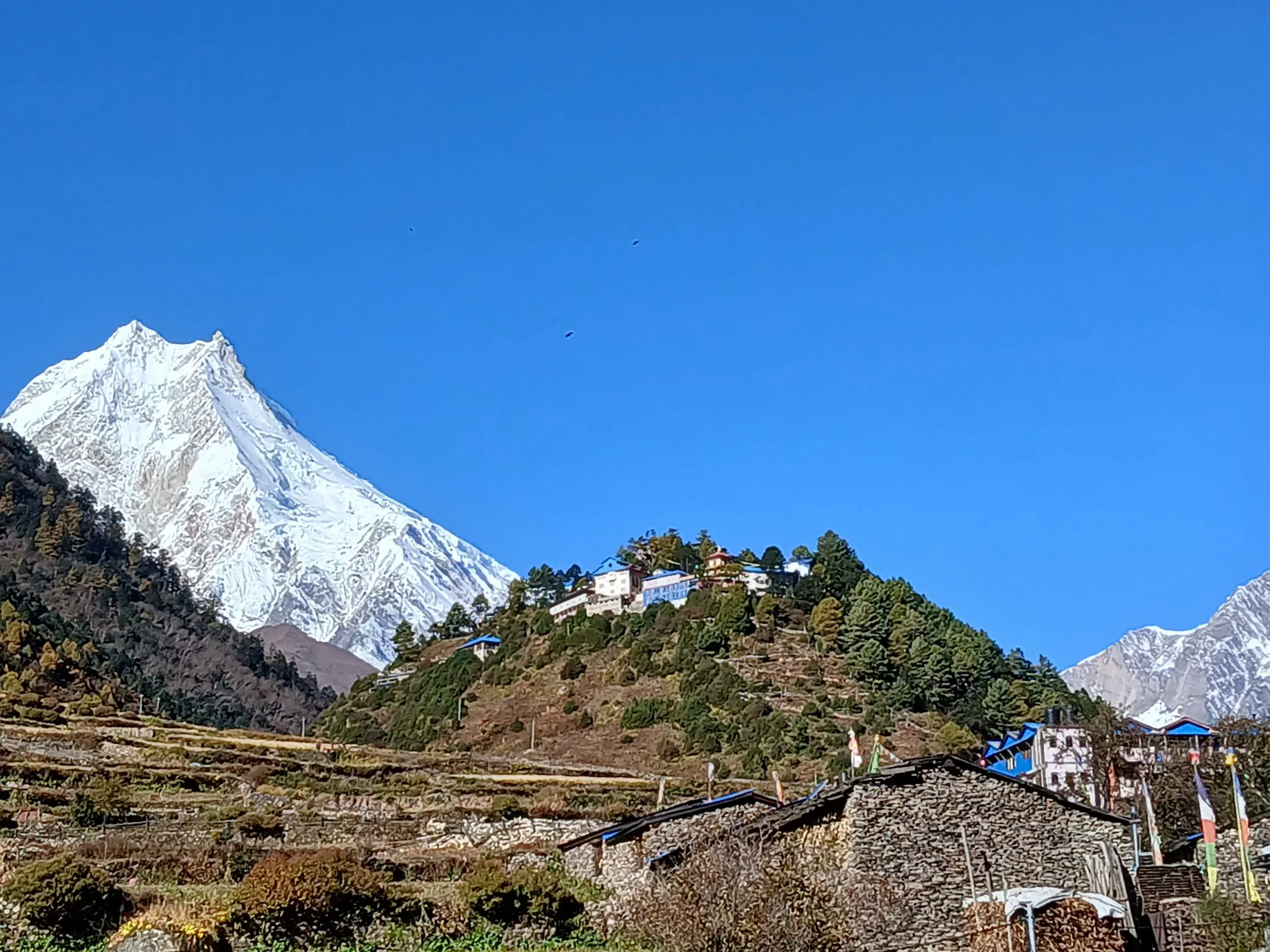
When planning a Manaslu Circuit trek, the first question on your mind is probably: when should I go? The answer depends on what you want out of the experience.
However, if you’re looking for a straightforward answer, you should know that most trekkers and guides consider autumn (September to November) as the best time to trek the Manaslu Circuit due to its stable weather and crystal-clear mountain views, followed by spring (March to May) for blooming rhododendrons and moderate temperatures.
October is the single best month for crossing Larkya La Pass, as conditions are most stable with minimal snow risk. If you can only trek one month, choose October.
| Category | Key Detail |
| Best time overall | October (peak) and November (clear, colder). Spring (March–May) for rhododendrons. |
| Months to avoid | June–August (monsoon: landslides, leeches, cloud cover). |
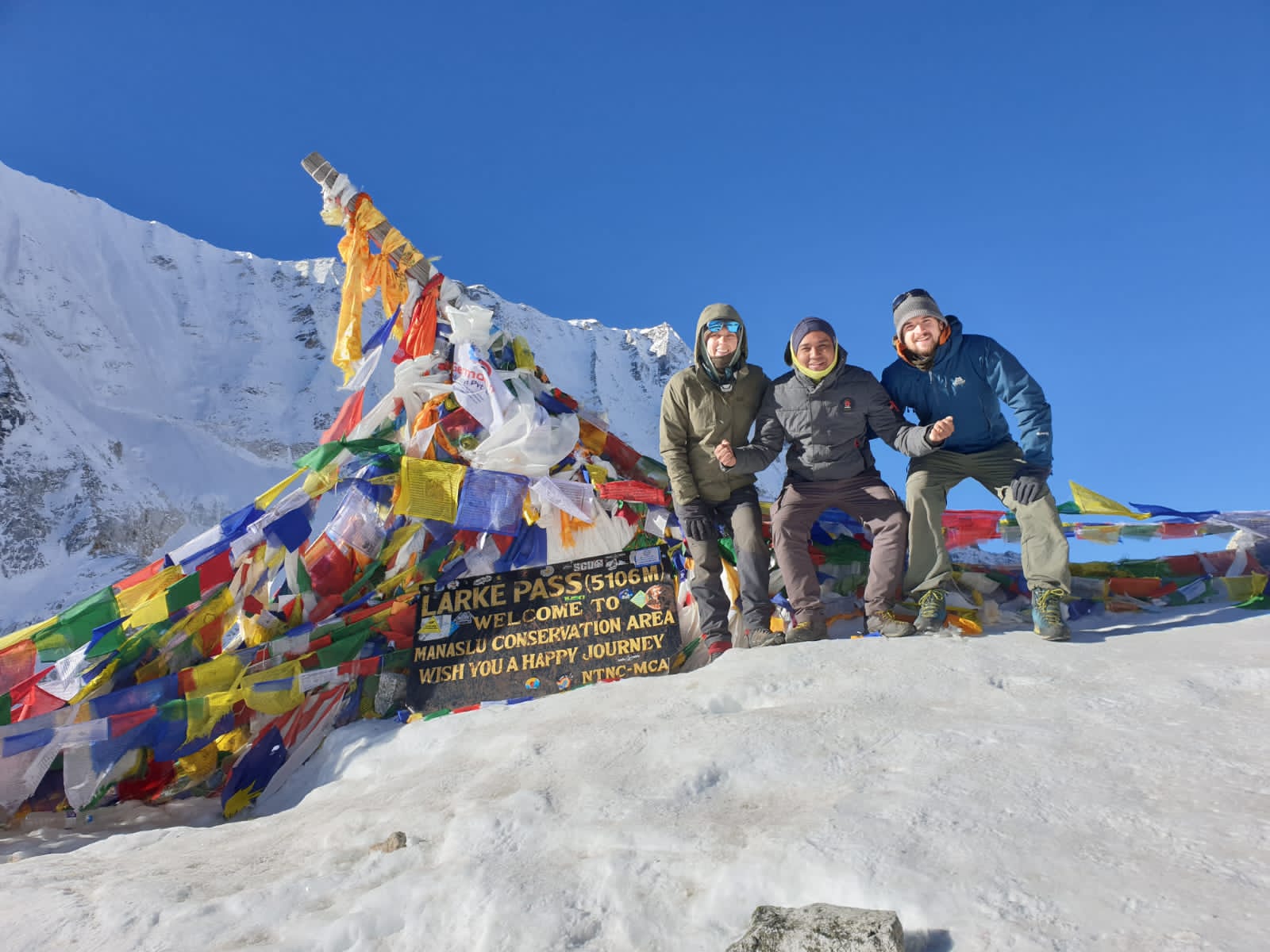
| Larkya La Pass | 5,160m. Safest Oct–Nov. Closed/risky Dec–Feb. Requires acclimatisation days. |
| Restricted Area Permit (RAP) | Mandatory. Requires registered guide + minimum 2 trekkers (or higher solo fee). Costs vary by season. |
| Teahouse booking | Essential for Oct–Nov. Book 2+ months in advance for October. Many close Dec–Feb. |
| Trek duration | Typically 14–17 days including acclimatisation. |
| Difficulty level | Moderate to challenging. High altitude, long pass day, remote sections. |
| Maximum elevation | Larkya La Pass – 5,160 metres. |
| Starting point | Usually Arughat or Machha Khola (drive from Kathmandu, 8–10 hours). |
| Ending point | Besi Sahar or Dharapani (connects to Annapurna Circuit). |
| Essential gear (seasonal) | Spring: light rain gear. Autumn: down jacket. Winter: -20°C sleeping bag. Monsoon: leech socks, heavy rain gear. |
| Guide requirement | Legally required for RAP. Cannot trek independently. |
| Travel insurance | Mandatory for permit. Must cover helicopter evacuation above 5,000m. |
| Visa for Nepal | Available on arrival for most nationalities. Bring passport photos and USD cash. |
| Currency | Nepalese Rupee (NPR). ATMs limited outside Kathmandu; carry cash for permits and teahouses. |
| Connectivity | WiFi available in most teahouses (paid, slow). No mobile signal at higher elevations near pass. |
| Health precautions | Altitude sickness risk above 3,000m. Acclimatisation days mandatory. Diamox optional but consult doctor. |
| Packing non-negotiables | Warm sleeping bag, layered clothing, water purification, trekking poles for pass day. |
| Cultural note | Manaslu region is restricted Tibetan-border area. Respect local customs; photography restrictions near military checkpoints. |
The ideal time for the Manaslu Circuit changes based on what matters most to you: views, solitude, budget or specific conditions like pass safety.
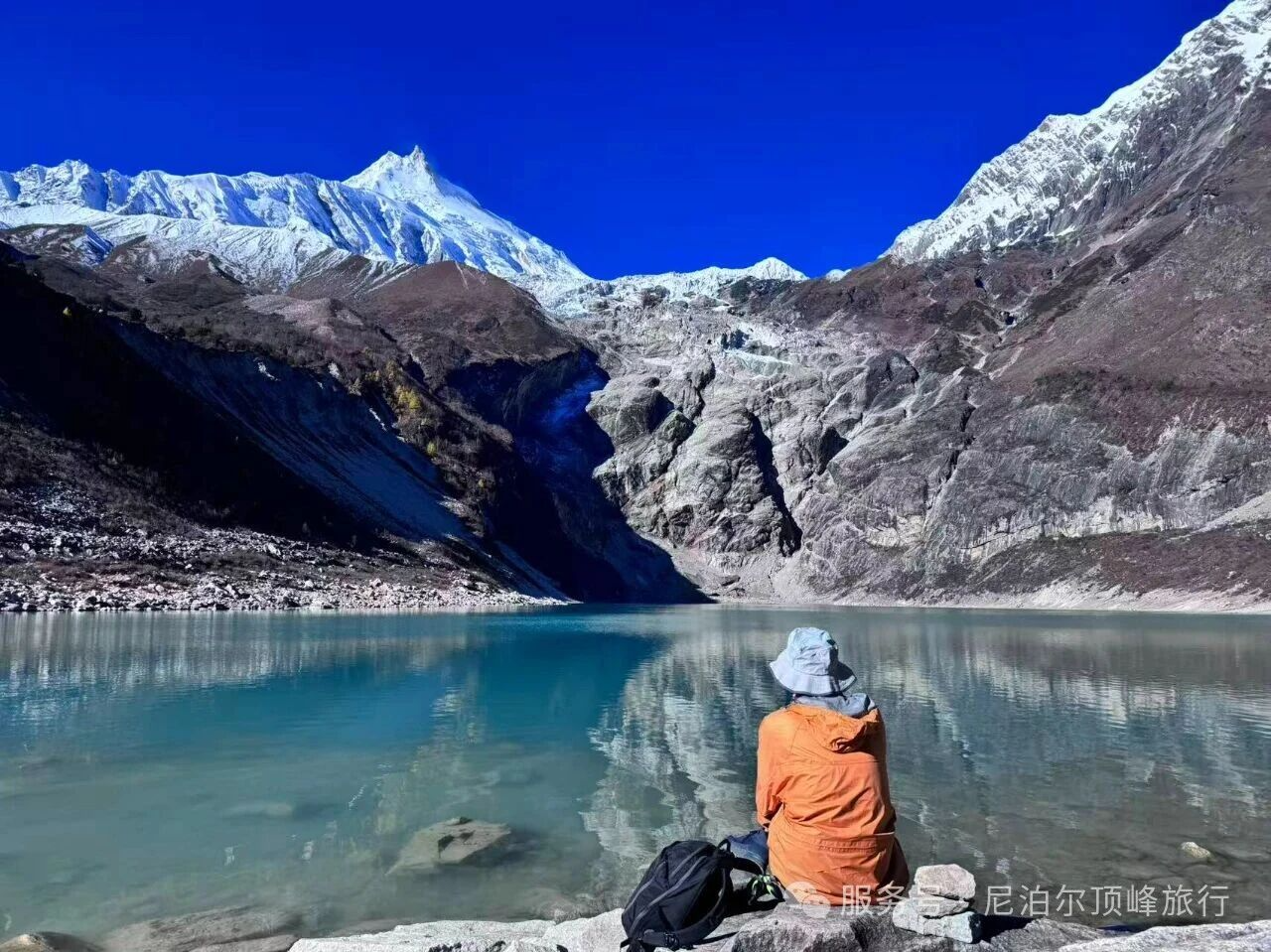
For clear views, visit during the autumn months. September to November has the most visibility. Skies are dry and clear, especially in October and November. This is the best choice if photography or unobstructed mountain scenery is your priority while trekking.
If you want to see beautiful rhododendron blooms, come to Manaslu during the spring. The months of March to May turns forests lower in the circuit into picturesque flower displays. Weather is stable in April, though May can bring pre-monsoon clouds and occasional rain. Crowds are moderate, increasing toward May.
If you want to enjoy your trek without the crowd, the winter months (December to February) have nearly empty trails. However, temperatures at high camps drop, and Larkya La Pass is often closed. Teahouse availability and rescue options are limited. Only for experienced trekkers who accept serious risk.
March and November are also quite ideal as they have fewer trekkers than peak October, but still manageable weather. Permits and teahouses are easier to secure, and you avoid peak-season price pressure.
The pass is the real deciding factor for any trek. It is fully accessible and safest from October to November. Spring (March to May) is also accessible, but snow patches may remain. From December to February, the pass is effectively closed. During monsoon (June to August), crossing is risky due to slippery terrain and poor visibility.
You should pick the time that is most suitable for you based on which of these factors you are unwilling to compromise on. No single season does everything well.
Namaste Nepal Trekking and Research Hub can help you decide on the time that would be best for you based on your requirements.
The Manaslu Circuit passes through distinct climate zones and weather varies significantly by altitude.
Altitude-based zones: Lower sections (up to 2,500m) experience mild temperatures similar to other Himalayan foothills. Mid-elevations (2,500m to 4,000m) are cooler with more pronounced day-night swings. High-altitude areas near Larkya La (5,160m) see extreme conditions, especially from late afternoon onward.
Day vs night temperature variation: Daytime temperatures at lower camps can reach 15°C to 20°C in peak seasons, while nights drop close to freezing. At higher camps, daytime highs may reach only 0°C to 5°C, with nights falling to -15°C or lower in winter.
Influence of Himalayan rain shadow: The northern side of the circuit, after crossing Larkya La, lies in a rain shadow. This means drier conditions and more stable weather compared to the southern approach, even during monsoon margins.
General pattern: Mornings are typically clearer than afternoons across all seasons. Weather can change quickly near the pass, independent of conditions in lower regions.
18 Days
Moderate
| Season | Months | Weather & Visibility | Pass Status | Crowds | Key Notes |
| Spring | Mar–May | Rhododendron blooms. Visibility is good, but May brings pre-monsoon haze. Daylight 11–12 hrs. | Accessible; early March may have snow patches. | Moderate (Mar) → high (May) | April is the most stable month. |
| Autumn | Sept–Nov | Most reliable weather. Crystal clear skies, minimal cloud cover. | Most stable. Minimal snow, manageable winds. | Peak (especially Oct) | October is single best month. Book permits & teahouses 2+ months in advance for Oct. November colder but less crowded. |
| Winter | Dec–Feb | Extreme cold: high camps -15°C to -20°C. Lower sections cold but manageable. | High closure risk (official & practical). Deep snow, high winds. | Empty trails | Pros: solitude, snow landscapes. Cons: cold, pass closed, limited teahouses/rescue. Requires -20°C sleeping bag. |
| Monsoon | June–Aug | Heavy rain, landslides, leeches. Thick low cloud blocks peaks for days. | Risky / slippery | Very few trekkers | Strongly discouraged. Permit valid but only for experienced trekkers with landslide contingency plans. |
| Month | Temperature at Mid-Altitude (e.g., Samagaon ~3,500m) | Larkya La Pass Status | Crowds | Recommendation |
| January | Day: -3°C to 0°C / Night: -18°C to -15°C | Closed or extremely dangerous. Deep snow, high avalanche risk. | Very Low | Not recommended |
| February | Day: 0°C to 4°C / Night: -15°C to -10°C | Mostly closed. Still very cold, uncertain conditions. | Very Low | Not recommended (except late Feb for experienced winter trekkers) |
| March | Day: 5°C to 10°C / Night: -10°C to -6°C | Opening. Snow melting, but snow patches remain. | Low | Good. Budget-friendly, fewer crowds. |
| April | Day: 8°C to 14°C / Night: -6°C to -2°C | Accessible. Most stable spring month for crossing. | Moderate | Best spring month. Rhododendrons in bloom. |
| May | Day: 10°C to 18°C / Night: -5°C to 0°C | Accessible. Warmest month, but pre-monsoon clouds and haze increase late month. | Moderate (early May) → Low (late May) | Good in early May. Late May brings monsoon uncertainty. |
| June | Day: 13°C to 20°C / Night: 0°C to 5°C | Risky / slippery. Monsoon begins. Landslides, leeches, poor visibility. | Very Low | Avoid |
| July | Day: 14°C to 21°C / Night: 1°C to 6°C | Dangerous. Peak monsoon. Trails treacherous, rivers swollen. | Very Low | Avoid |
| August | Day: 13°C to 20°C / Night: 0°C to 5°C | Risky. Monsoon continues. Slight improvement late month, but still not safe. | Very Low | Avoid |
| September | Day: 10°C to 16°C / Night: -5°C to 0°C | Improving. Early Sep risky; late Sep becomes stable. | Low (early) → Moderate (late) | Good from mid-September onward. Lush greenery, fewer crowds than Oct. |
| October | Day: 6°C to 12°C / Night: -8°C to -4°C | Fully accessible. Most stable conditions of the year. Minimal snow, manageable winds. | High (peak) | Best month overall. Book teahouses 2+ months in advance. |
| November | Day: 2°C to 8°C / Night: -12°C to -6°C | Accessible. Clear skies, but colder. Conditions deteriorate late month. | Moderate (high early, thinning after mid-Nov) | Excellent early to mid-November. Less crowded than October. |
| December | Day: 0°C to 5°C / Night: -16°C to -10°C | Closing. Deep snow and ice. High closure risk. | Low | Only for experienced cold-weather trekkers. Many teahouses closed. |
Unlike many other Himalayan treks where weather is the primary variable, the Manaslu Circuit has a single geographic hold-up: Larkya La at 5,160 metres.
Your ability to cross this pass safely determines whether you complete the full circuit. If the pass is closed or unsafe, you either turn back or take a long alternate route. This makes pass conditions more important than general weather when choosing your trek dates.
| Status | Months |
| Safest / Fully accessible | October – November |
| Accessible (with snow patches) | March – May |
| Risky / Slippery | June – August (monsoon) |
| High closure risk / Effectively closed | December – February |
Our itineraries have built in acclimatisation days before the pass, typically at Samagaon (3,530m) and Nile (3,700m). However, weather near the pass can change independently of conditions in lower regions.
A common recommendation is to add one or two buffer days into your schedule, especially if trekking in early spring or late autumn. This allows you to wait out sudden snow or high winds without rushing a crossing.
For October, a buffer is less critical but still prudent. For November, March, and April, buffer days are strongly advised. For December through February, no amount of buffer makes the pass reliably safe.
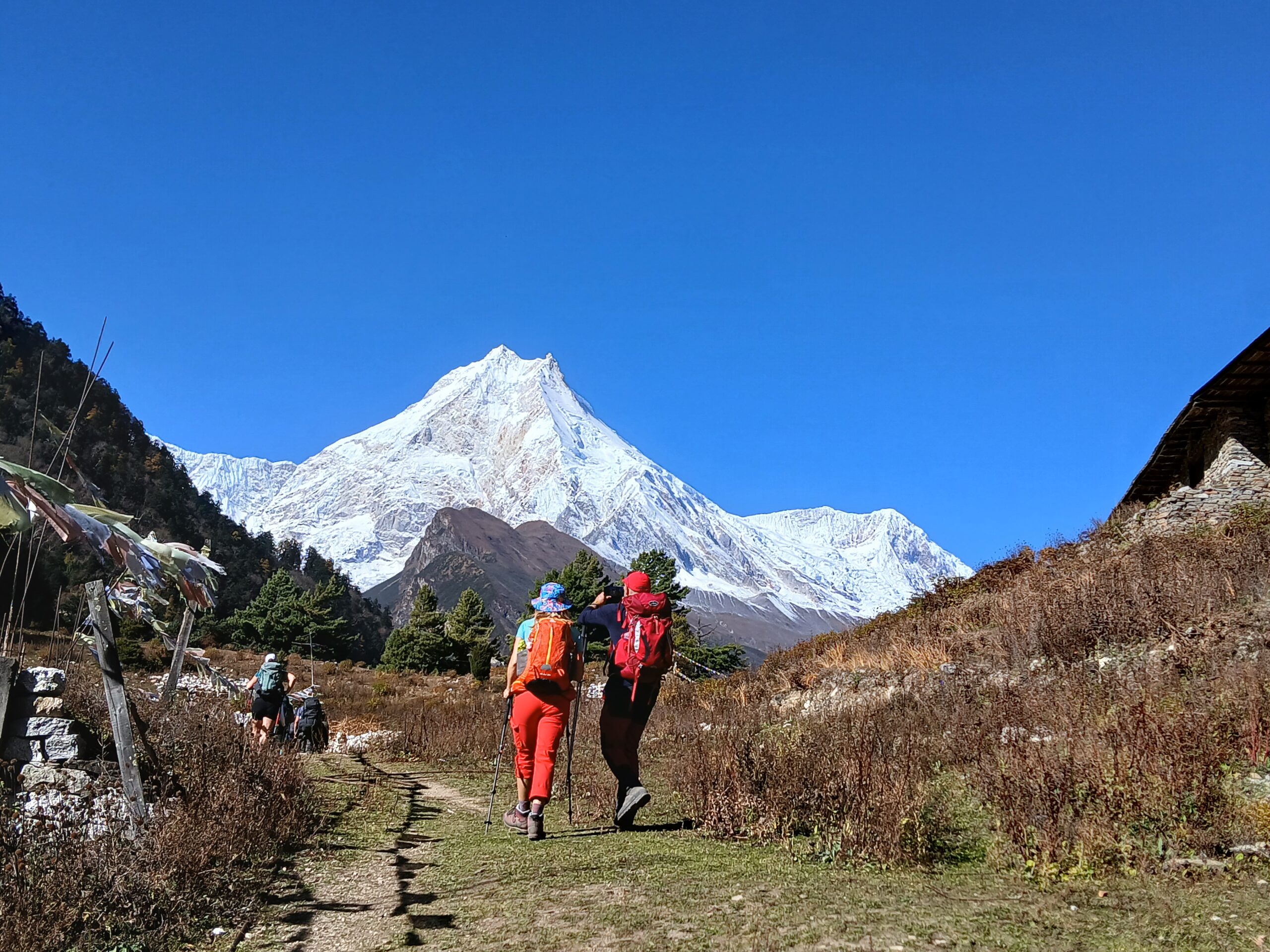
Knowing when to avoid the trek is as important as knowing when to go.
This is the clearest window to avoid. Heavy rain creates dangerous landslides, particularly on lower section trails. Leeches are abundant on wet stretches.
Cloud cover sits low and thick, blocking views of Manaslu and surrounding peaks for days at a time. The Restricted Area Permit is technically valid, but trekking is strongly discouraged for nearly all trekkers.
Larkya La faces high closure risk during these months, both official and practical. Deep snow and high winds make crossing unsafe for most trekkers. High camps regularly see temperatures between -15°C and -20°C. Many teahouses close entirely, and those that remain open offer limited services. Rescue options are significantly reduced.
While March is generally considered a shoulder season, heavy winter snowfall can leave the pass and high trails buried well into March. In such years, conditions may not be reliably accessible until late March or early April. Check recent trail reports before booking an early March departure.
The Manaslu Circuit requires a Restricted Area Permit (RAP) because the region lies close to the Tibetan border. Unlike standard trekking permits, the RAP has different cost structures depending on the season, though the exact pricing changes periodically.
The general pattern: peak season (autumn, especially October) commands the highest permit fees. Shoulder months (March, November) are moderately priced. Off-season (winter, monsoon) may have lower fees, but trekking conditions are poor enough that the savings rarely justify the risks.
You must trek with a registered guide and at least two trekkers (or a solo trekker with higher permit fees) to obtain the RAP. These requirements are year-round, not seasonal.
| Period | Teahouse Status |
| October | Full capacity. Booking 2+ months in advance recommended. |
| September and November | Mostly open. Advance booking advised for November. |
| March to May | Open but not at peak capacity. March has more availability than April/May. |
| December to February | Many teahouses closed, especially at higher elevations. Limited services where open. |
| June to August | Most teahouses open but fewer trekkers. Landslides can disrupt access to some villages. |
Clear visibility months
The best months for unobstructed mountain views are October, November, April, and May.
October and November offer the most reliable conditions. Skies remain crystal clear with minimal haze or cloud cover. Morning light on Manaslu and surrounding peaks is sharp and consistent. This is the prime window for serious photography.
April and May are also good, with a key difference: May introduces pre-monsoon haze and occasional afternoon clouds. Morning shots remain viable, but later in the day visibility degrades. April is the clearer of the two spring months.
Worst months for photography
June through September are the least reliable for visibility. During peak monsoon (July and August), thick low cloud can block all peaks for days at a time. Even when clouds part, the air is often hazy and humid, reducing contrast and sharpness.
September improves slowly. Early September still carries monsoon cloud cover. By late September, conditions become noticeably better, but October remains the true turning point.
Spring (March to May)
Carry light rain gear. While spring is generally stable, May brings pre-monsoon showers, especially in afternoons at lower elevations. Layering is key: warm nights and mornings, warmer days at mid-altitude.
Autumn (September to November)
Book permits and teahouses at least two months in advance for October departures. For November, one month may suffice, but advance booking is still wise. Daytime temperatures are pleasant, but nights cool quickly. Pack a good quality down jacket.
Winter (December to February)
A sleeping bag rated for -20°C is mandatory. Do not assume teahouse blankets will be sufficient: many higher-elevation teahouses close entirely, and those open have limited bedding. Carry extra food and fuel if attempting winter trekking, as resupply options are unreliable.
Monsoon (June to August)
Avoid unless you have a specific reason. If you must trek during monsoon, add a landslide contingency plan to your itinerary. Allow extra days for trail blockages. Carry leech socks and waterproof gear rated for sustained rain. Understand that peak views will be rare or non-existent.
Q: What is the best month to do the Manaslu Circuit?
October is the single best month. It offers the most stable weather, crystal-clear visibility, and safest conditions for crossing Larkya La Pass. November is a close second, though temperatures are colder and conditions deteriorate late in the month.
Q: Is October a good time for the Manaslu Circuit Trek?
Yes, October is the peak month for good reason. Skies are clear, the pass is fully accessible, and views of Manaslu are unobstructed. The trade-off is crowds as teahouses are at full capacity, and permits should be booked at least two months in advance.
Q: Can you trek the Manaslu Circuit in December?
Technically yes, but not recommended for most trekkers. December brings freezing temperatures, with high camps at -16°C to -10°C at night. Larkya La faces high closure risk due to deep snow and ice. Many teahouses close. Only experienced cold-weather trekkers with appropriate gear should attempt December.
Q: What is the least crowded time to trek the Manaslu Circuit?
Winter (December to February) has the fewest trekkers. However, the pass is often closed, and teahouse availability is limited. For a balance of low crowds and manageable conditions, March and November are better options.
Q: What is the cheapest season for Manaslu Circuit permits?
Shoulder months (March and November) typically offer lower permit costs than peak October. However, the Restricted Area Permit pricing structure changes periodically. The larger savings come from easier teahouse bookings and potentially lower flight/accommodation costs in Kathmandu, not just permit fees.
Q: Is it better to trek Manaslu in winter or summer?
Neither is ideal, but for different reasons. Winter has extreme cold and pass closure. Summer (monsoon) has landslides, leeches, and thick cloud cover that blocks peak views. If forced to choose, late winter (February) is marginally better than monsoon, but both are far inferior to spring or autumn.
Q: How difficult is Larkya La Pass in spring vs autumn?
Autumn (October to November) offers the most stable pass conditions with minimal snow, manageable winds. Spring (March to May) is also accessible, but early spring may have significant snow patches. By April, conditions improve significantly. Autumn remains the safer and easier window for pass crossing.
Q: Do I need a guide for the Manaslu Circuit?
Yes. The Restricted Area Permit requires you to trek with a registered guide. This is a legal requirement, not just a recommendation, and applies year-round regardless of season.
Q: Are teahouses open year-round on the Manaslu Circuit?
No. From December to February, many teahouses at higher elevations close entirely. Those that remain open offer limited services. In peak season (October), teahouses are fully operational but fill quickly. Always book ahead for October and November departures.

Rajan Lamichhane, the Founder and Managing Director of Namaste Nepal Trekking & Research Hub, brings over 17 years of expertise in the tourism industry. With a profound passion for trekking and mountaineering, he has led numerous trekking and cultural tours across Nepal, Tibet, and Bhutan, prioritizing safety, enjoyment, and sustainability. Under his leadership, Namaste Nepal Trekking has become a trusted name in adventure travel industry.