English
 Dutch
Dutch Japanese
 Hindi
Hindi Italian
 Spanish
 French
 German
 Chinese
 Korean
 Arabic
 Hebrew
 Russian
 Portuguese
 Danish
 Czech
Czech Polish
 Swedish
16 Days
Moderate
 Share
Share Updated: 25 November, 2025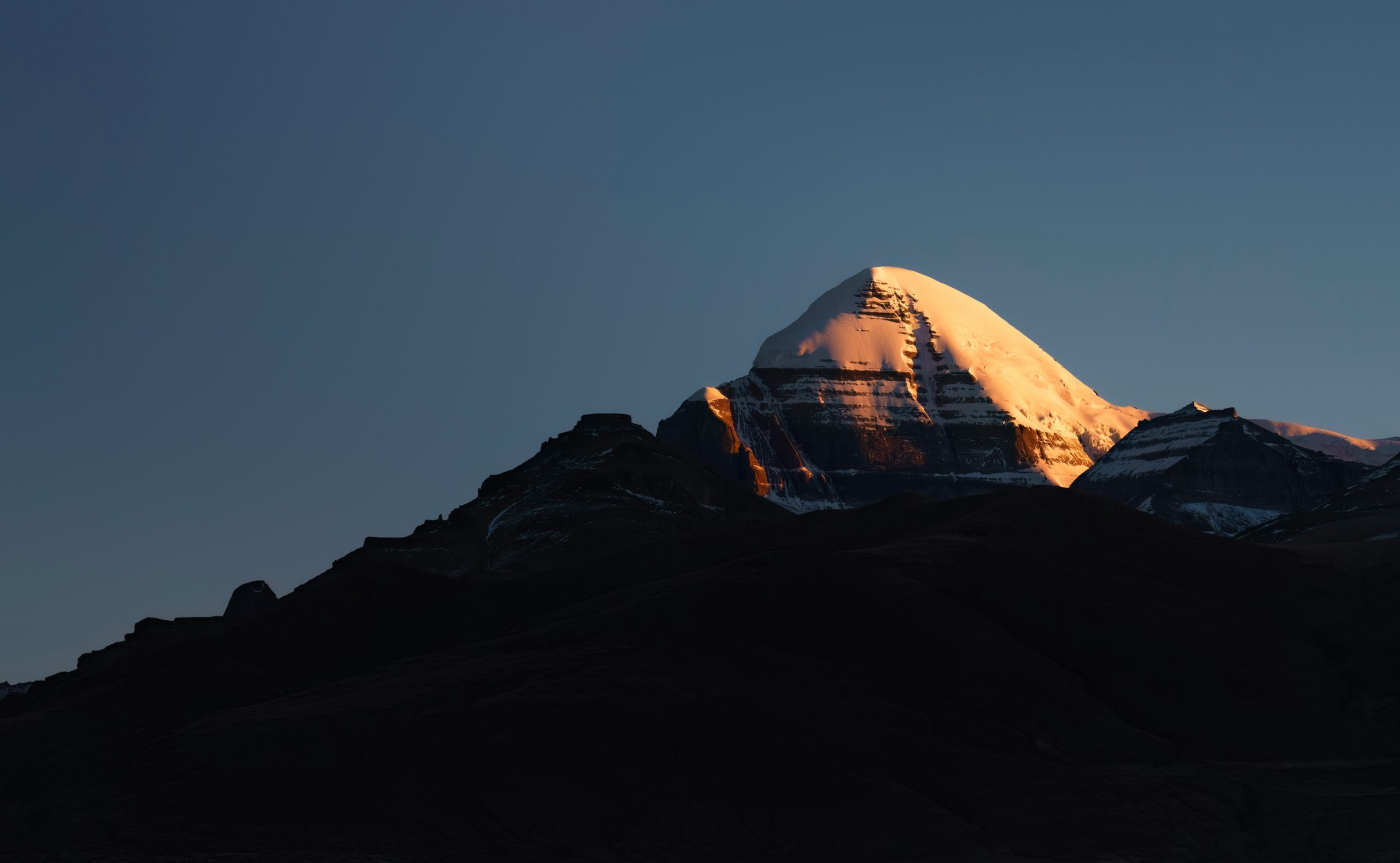
Mount Kailash has been a mysterious observation point on the Tibetan Plateau for thousands of years. It is a pyramid-shaped peak covered in clouds and legends. Hindus see it as the home of Lord Shiva, Buddhists see it as the spiritual center of the universe, Jains see it as the source of all life, and members of the Bon faith see it as the sacred home of the sky goddess. Its deep spiritual meaning is clear. Kailash has also become a center for strange theories, rumors, claims, and interesting hypotheses about hidden energies, ancient civilizations, and even connections to aliens.
Due to curiosity, people often want to know the truth behind Mt Kailash, so they look for NASA to reveal the secret knowledge.
If you are one of those people, this blog post will tell you what real scientific research, using tools used by space agencies like NASA, can tell us about this amazing mountain. It will also respectfully address and often clear up the more fantastical claims that have become popular.
Let’s understand Mt Kailash not by the eyes of faiths or folklore but with the help of science that reveals the truth.
Before we get into the science, it’s important to know how spiritually important Mount Kailash is. Mt. Kailash is more than just a mountain. For the pilgrims it is the cosmic axis, a source of spiritual energy, a place to find enlightenment and get Moksha( free from the cycle of birth).
Hinduism: Kailash is the permanent home of Lord Shiva, the Destroyer and Transformer, and his wife Parvati for millions of Hindus. Ancient texts say it is a region of perfect purity, a paradise where Shiva meditates and keeps the cosmos going with his cosmic dance. People who go on the hard Kora (circumambulation) believe it purifies sins and gives them spiritual merit.
Buddhism: Buddhists think that Kailash is where Demchog (Chakrasamvara), an angry form of Buddha, lives. It is also linked to the Milarepa( famous poet and tantric), who fought and won over the Bon shaman Naro Bön-chung on Mt Kailash slopes. People think that the Kora is a way to wake up spiritually.
Jainism: For Jains, Kailash is Pavanagiri or Ashtapada, the spot where their first Tirthankara, Rishabhanatha, gained moksha, or freedom.
Bon Faith: Bon, the indigenous tribal religion of Tibet, sees Kailash as Mount Yungdrung Gutseg, the “Nine-Story Swastika Mountain,” a place of spiritual force and the source of all spiritual power.
Untouched and Unconquered: While the world highest peak, Everest and K2″Savage Mountain” has been successfully climbed by several people, Mt Kailash is virgin. Till date no one has ever climbed Mt Kailash. The Tibetan says it will hurt the sentiment and faith of those who try to climb. So due to this reason the Chinese officially banned climbing this sacred place. This makes it even more mysterious, letting legends grow without being touched by anyone.
Check out:

16 Days
Moderate
The phrase “What NASA sees on Mt. Kailash?” has become a powerful clickbait headline that makes people think of secret satellite photos, hidden government reports, and shocking discoveries that the public isn’t allowed to know about. It draws on a personal interest in the unknown and a lack of faith in official stories. But to really understand what science (including NASA’s work) can teach us, we need to first deal with these common misconceptions.
The “Man-Made Pyramid” Theory: Some people say that Kailash is not a natural mountain but a huge, old pyramid that was built by an intelligent culture or even aliens. It might be the main pyramid in a group of smaller pyramids which make up an even bigger structure. Supporters often point to Russian scientists like Ernst Muldashev, who made the theory famous, as proof that NASA satellite images show its geometric accuracy.
The “Time Vortex” or “Time Dilation” claims: There are stories that time acts differently around Kailash. People say that time speeds in here, hair and nails grow faster and aging happens quickly. There are several occasions when NASA is loosely mentioned as having evidence that backs up these strange time effects.
The “Energy Vortex” and “Cosmic Axis”: Some theories say that Kailash is more than just a source of spiritual energy. It is also a physical energy generator, a massive wave that releases unknown types of energy that can change biological processes or perhaps allow communication with other dimensions. Some people say that NASA satellites can find these strange energy patterns.
“UFO Bases” or “Hidden Cities”: Some of the most bizarre claims are that there are hidden underground cities, alien bases, or gateways near Kailash. NASA is said to have photos or thermal scans that show strange activity there.
NASA (National Aeronautics and Space Administration) is best recognized for its work in space exploration, planetary science, and aeronautics research. But a big part of its job is to study Earth Science. This includes:
Earth Observing Satellites: NASA runs a group of satellites, such as Landsat, Terra, Aqua, ICESat, GRACE, MODIS, Sentinel-2, and -3 (in conjunction with ESA), that keep an eye on Earth’s temperature, ecology, and ecosystems all the time.
Remote Sensing: These satellites gather information from a distance using different types of sensors, such as optical, infrared, microwave, radar, and lidar.
They keep track of things like:
NASA, or any other space agency that can see Earth, “sees” Mt. Kailash in the same way it sees any other big geographical landmark on Earth: by using the unbiased lens of scientific instruments.
High-Resolution Satellite Imagery: Yes, NASA and other companies like Maxar and Planet Labs have very detailed pictures of Mt. Kailash. You may find these pictures on sites like Google Earth, NASA’s Earthdata portal, USGS Earth Explorer, and others.
Geological and Topographical Data: Satellites give scientists accurate information about the mountain’s height, which helps them to make 3D models of its structure.
Environmental Monitoring: They keep track of the amount of snow on the ground, the glaciers melting, the levels of lakes (Manasarovar and Rakshastal), and the patterns of plants.
Atmospheric Conditions: Weather satellites keep an eye on changes in temperature, cloud cover, and rain.
Evidence of artificial pyramid structures: High-resolution images of Mt Kailash proves that it is formed by the natural phenomenon as a result of erosion and tectonic uplift. The Mt Kailash Pyramid shape did not occur from human construction or building.
Measurable time dilation effects: There is no known way for time to slow down in that area, and no satellite sensor can pick it up. Time dilation is a relativistic phenomena that happens when you travel very fast or are very close to a big gravitational body, such a black hole. It doesn’t happen on the surface of the Earth.
Undeniable “energy vortexes”: Spiritual people and pilgrims talk about Mt Kailash energy. But for physical science to measure energy, there needs to be electromagnetic radiation, thermal energy, and gravitational anomalies. Some types of physical energy can be detected by satellites, however no strange or unexplained energy signals have been found around Kailash.
UFO bases or hidden cities: There has never been any evidence from satellite images, thermal scans, or radar data that there is an alien base or a hidden city on or under Kailash. When strange patterns are found, they are usually geological features, shadows, or sensor artifacts.
People have a misconception that Nasa has a secret discovery about Mt. Kailash. They believe it without finding trustworthy sources, scientific support, or public proof.
Anecdotal reports suggesting a macroscopic acceleration of time (e.g., 12 hours equaling two weeks of aging) are physically inconsistent with established laws of General Relativity. Gravitational Time Dilation effects on Earth are extremely minor, quantifiable only in nanoseconds.
Accelerated Aging is a Valid Biological Stress Response: Prolonged exposure to high-altitude environments is strongly associated with Biologically Accelerated Aging (BA), likely due to environmental stressors, hypoxia, and increased oxidative stress. This physiological reality is the probable basis for anecdotal claims of accelerated biological changes.
The sensation of altered time flow or “timelessness” experienced by pilgrims is primarily a psychological response to the extreme physical and mental fatigue, combined with the intense spiritual focus inherent in high-altitude endeavors.
The OM mantra is typically chanted at $432 \, \text{Hz}$, a low, deep tone known to generate longer sound waves that resonate effectively throughout the body, contributing to calming and grounding physical effects.
Although claimed to be in harmony with the planet’s vibration, the $432 \, \text{Hz}$ OM frequency is substantially higher than the Earth’s fundamental electromagnetic resonance, the Schumann Resonance (SR), which oscillates at an Extremely Low Frequency (ELF) of approximately $8 \, \text{Hz}$.
Large mountain structures are not static but are constantly in motion, exhibiting measurable resonant swaying at low frequencies due to excitation by background seismic energy originating from global sources like the oceans and human activity.
Scientific assessment, including analyses reportedly of interest to entities like NASA, has confirmed the existence of powerful magnetic distortions and electromagnetic fields in the specific high-altitude region under discussion, though their impact on biological function remains unproven.
Claims that the mountain is an ancient, man-made pyramid structure or part of a global energy grid are advanced primarily by non-geological researchers.11 Radar indications of subsurface hollow areas or tunnels are ambiguous and do not constitute official confirmation of artificial constructionl.
Reports of Unidentified Aerial Phenomena (UAPs) in the region are often explained by prosaic causes, including atmospheric electrical phenomena like plasma (e.g., ball lightning) or observational artifacts caused by temperature inversions or sensor interference.
Due to the region’s remoteness, spiritual sensitivity, and geopolitical restrictions (including no-fly zones), detailed official scientific measurement remains limited. This lack of conclusive data regarding the powerful, confirmed geophysical anomalies allows speculative and fringe theories to flourish
| Effect | Claimed Mechanism | Scientific Status | Magnitude/Observation |
| Macroscopic Time Distortion | Unknown Energy Fields/Portals | Rejected by Physics | Hours/Days accelerated per 12 hours (Anecdotal) |
| Gravitational Time Dilation (GTD) | Difference in Gravitational Potential (General Relativity) | Verified but Negligible | Nanoseconds per year (Confirmed via atomic clocks) |
| Biologically Accelerated Aging (BA) | High-Altitude Stress, Hypoxia, Oxidative Stress | Verified Physiological Effect | Hastened BA markers over extended periods |
| Perceptual Time Distortion | Psychological Response to Extreme Environment | Verified Psychological Effect | Feelings of timelessness or altered pace |
| Phenomenon | Associated Claim/Anecdote | Scientific Status | Deeper Explanation/Mechanism |
| Time Dilation | Macroscopic acceleration of time/aging | Rejected (Physics) / Verified (Psychological/Biological) | GTD is nanoscopic; psychological stress and Biologically Accelerated Aging are the causal factors. |
| OM Sound (432 Hz) | Harmony with Earth’s natural vibration | Valid Acoustic Property / Thematic Link | 432 Hz is low-frequency; Earth’s true resonance (SR) is ∼8Hz. |
| Pyramid Shape | Man-made ancient structure / Global alignment | Unverified / Modern Folklore | Hypothesized by fringe research; lacks geological support. |
| Geophysical Anomalies | Magnetic/Gravitational fields altering perception | Verified (Magnetic Field Existence) / Unverified (Impact on Perception) | Powerful magnetic distortions confirmed; biological/perceptual impacts are speculative. |
| UFO/UAP Sightings | Underground extraterrestrial base / Flight restrictions | Unverified / Attributed to Atmospheric Phenomena | Most UAPs are prosaic; high-altitude conditions cause misinterpretation (plasma, sensor artifacts). |
Mount Kailash is located in the Tibetan Plateau, which is one of the most geologically active and changing areas on Earth. The Indian subcontinent and the Eurasian plate collided to build the plateau.
Tectonic Uplift: The Himalayas and the Tibetan Plateau are a direct result of this continuing collision, which began roughly 50 million years ago. The Indian plate is still pushing north, which causes a lot of compression and uplift. Kailash is made up mostly of sedimentary rocks like sandstone, limestone, and shale that came from the ancient Tethys Ocean floor. Over millions of years, it has been pushed up, folded, and faulted.
Sedimentary Origins: The presence of marine sedimentary rocks at such high altitudes is a powerful testament to the region’s dramatic geological transformation. These rocks, often layered, give Kailash its distinctive striated appearance.
Erosion and Shaping: The “pyramidal” appearance that fuels so many theories is a result of powerful erosional forces acting on these uplifted sedimentary layers. Glacial ice, wind, and water have carved the mountain’s flanks over millennia, creating angular faces, sharp ridges, and deep valleys. The parallel lines often cited as evidence of construction are simply the exposed strata of sedimentary rock.
Fault Lines: The region is crisscrossed by major fault lines, indicative of ongoing tectonic activity. While Kailash itself is a stable peak, minor seismic events are common in the broader Tibetan Plateau. Remote sensing data, particularly interferometric synthetic aperture radar (InSAR), much like that used by NASA’s NISAR mission (a joint effort with ISRO), can detect minute ground deformation over time, revealing the subtle movements of these fault systems. This provides critical insights into earthquake hazards and the ongoing mountain-building process.
Mt Kailash is called the “Water Tower of Asia” due to its vast reserves of snow and ice. The Major Rivers Originating around Mount Kailash: Hydrological Profiles
| River Name | Origin Location (Kailash Range) | Flow Direction/System | Projected Climate Impact (Upper Basin) |
| Brahmaputra (Yarlung Tsangpo) | Glacier of the Kailash range (near Lake Konggyu Tsho) | East ($2,880\ \text{km}$ total length): through Tibet, India, and Bangladesh. | Projected 22% snowmelt reduction; highest climate impact vulnerability |
| Indus | Vicinity of Manasarovar/Kailash | West ($1,120,000\ \text{km}^2$ drainage area): Through Pakistan. | Defines the western limit of the Himalayas; supports vast ecosystems |
| Sutlej | Vicinity of Manasarovar/Kailash | West/Southwest: Through India and Pakistan. | Hydrological shifts historically influenced regional settlements |
| Karnali (Ghaghara) | Vicinity of Manasarovar/Kailash | South: Through Nepal and India. | Major tributary providing flow to the Ganges River system |
Lake Mansarovar and Rakshastal are close to each other; however the water in Lake Mansarovar is fresh and the water in Rakshastal is salty. The research on this lake is still going on, but scientists think that Lake Manasarovar contains fresh water from the Kailash glaciers and that Lake Rakshastal doesn’t have any big freshwater inlets, therefore, salts build up over time.
According to study and scientific research, even with harsh conditions, the region supports a high altitude ecosystem because of permafrost and the unique soil and climate.

This open access allows independent verification and collaborative scientific research, making it extremely difficult for any “secret discovery” regarding Kailash to be hidden by a single organization such as NASA for an extended period, particularly if it represents genuinely revolutionary scientific proof.
NASA and other scientific organizations really “see” Mt. Kailash by working together in an open and continuing way to learn about our planet through observation and data analysis, not through secret revelations.

Sabin Shrestha is an experienced content writer with over 4 years of expertise in creating clear and engaging content. He specializes in writing about lifestyle, travel, health, and technology, delivering well-researched articles that connect with readers. Known for his storytelling skills and attention to detail, Sabin creates content that informs, inspires, and leaves a lasting impression on audiences.