English
 Dutch
Dutch Japanese
 Hindi
Hindi Italian
 Spanish
 French
 German
 Chinese
 Korean
 Arabic
 Hebrew
 Russian
 Portuguese
 Danish
 Czech
Czech Polish
 Swedish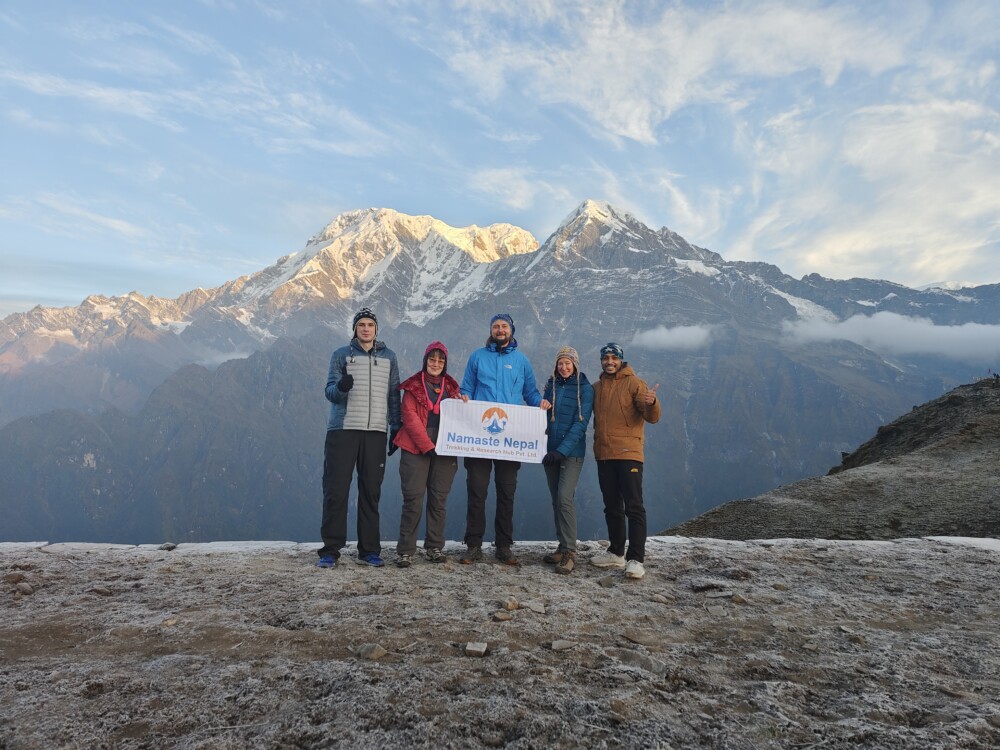

 Share
ShareMardi Himal Base Camp Trek - 7 Days

07 Days

Moderate

4500m

5 -15 People

Kathmandu

Spring , Autumn and Early Winter

- 9 Breakfast
- 6 Lunch
- 7 Dinner

- 3-Star Hotel in Kathmandu
- 3-Star Hotel in Kathmandu
- Best Available Guest Houses

- Private Tourist Vhicle
- Luxurious Tourist Bus
- 1 - 1 personUS$ 850
- 2 - 2 personUS$ 783
- 3 - 5 personUS$ 685
- 6 - 10 personUS$ 625
- 11 over 9999 US$ 565
- Your safety, our no 1 priority
- Best price guarantee
- Experienced & dedicated team
- Easy booking, no hidden charge
- You can customize this trip
US$ 850


Highlights Of Mardi Himal Base Camp Trek
- Trek into the heart of the Annapurna massive
- Stunning view of the peak of Machapuchare, the abode of the Hindu god Shiva.
- Blooming rhododendron forests and landscapes of the Alpine zone. The rhododendron flower is the symbol of Nepal
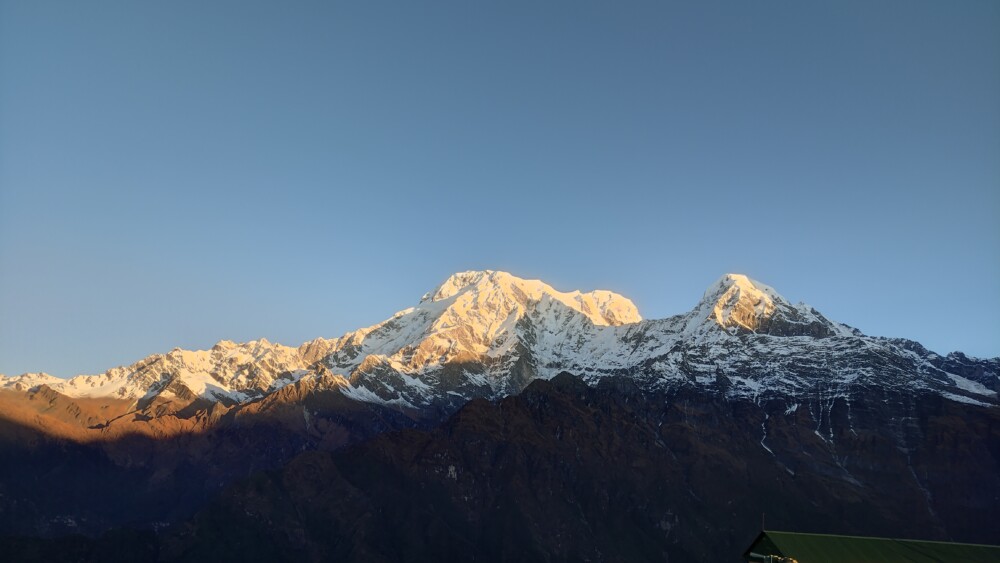
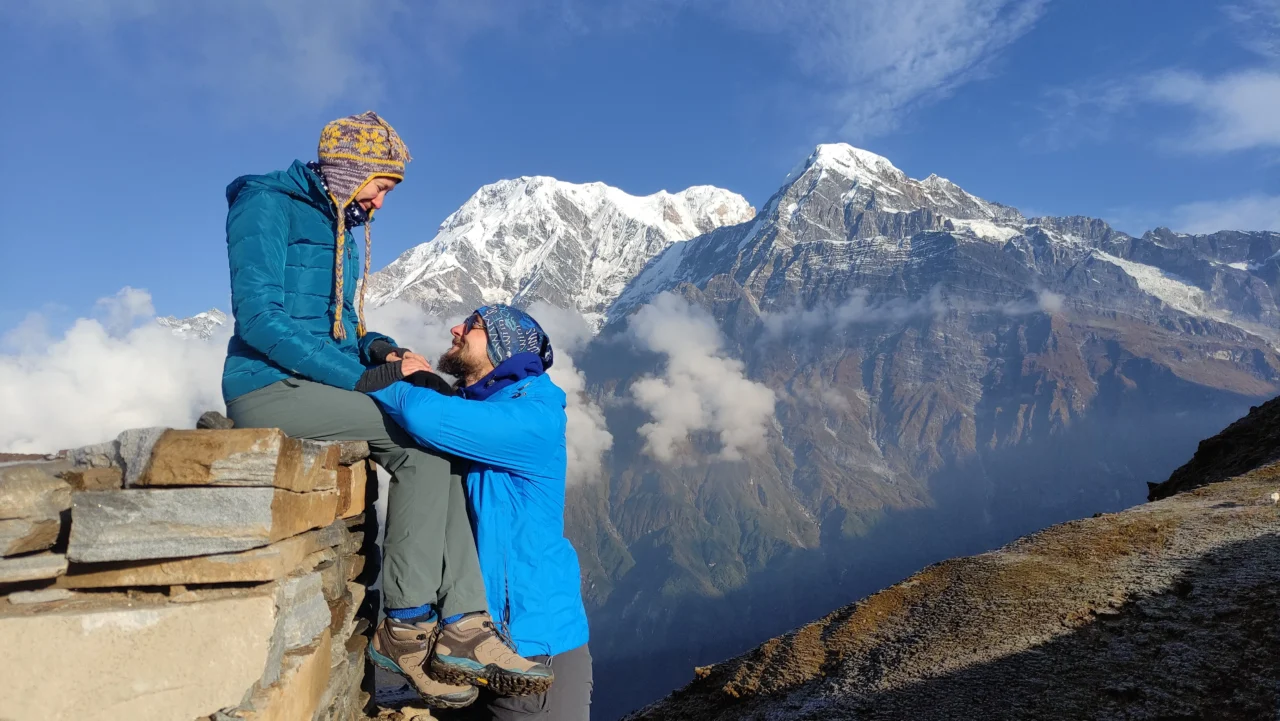
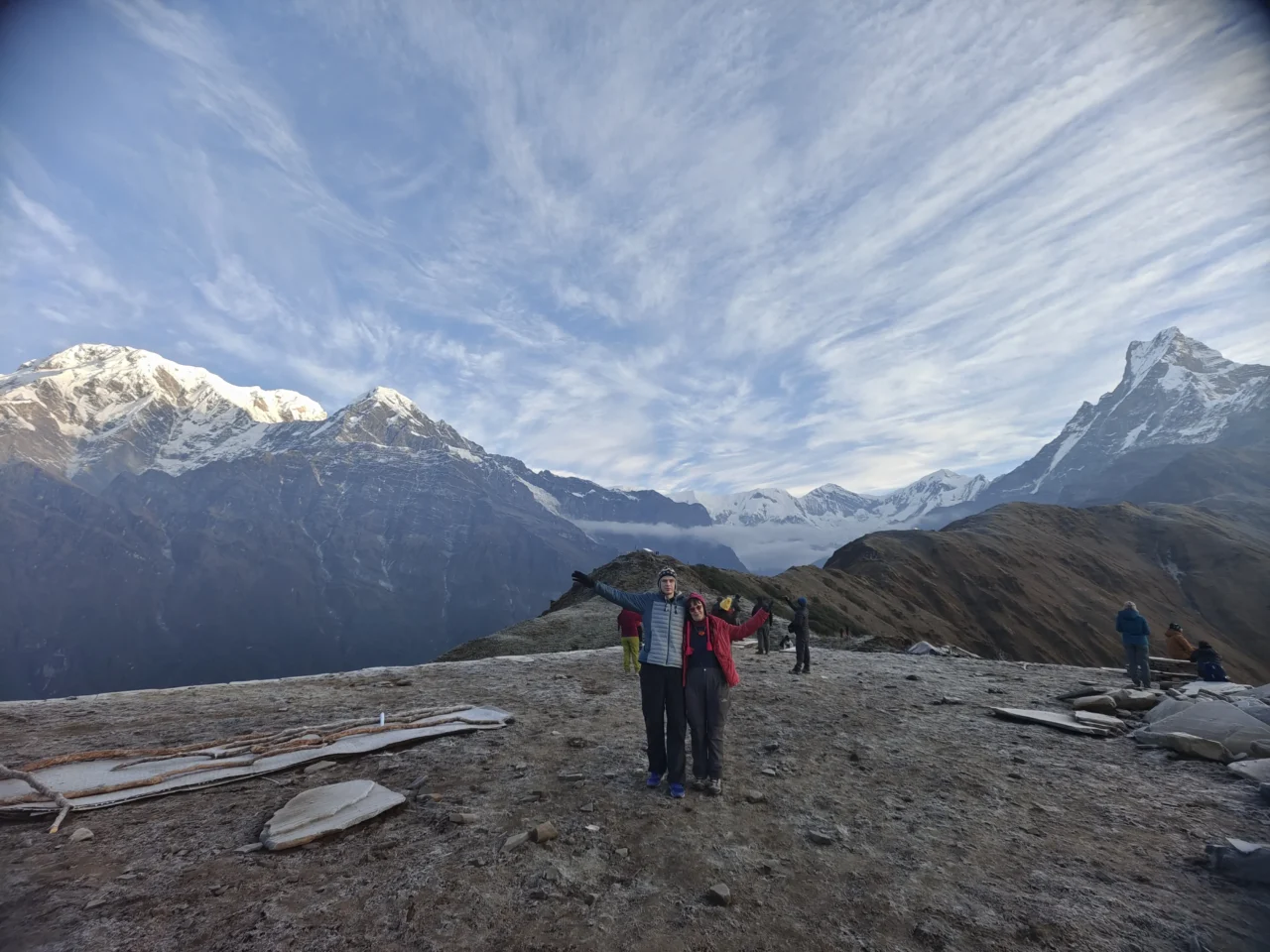
- Magical dawn from the observation deck overlooking the mesmerizing panoramas of the mountainous snowy peaks of the Annapurna massive
- Experience Authentic villages and mountain tourist shelters
- Pass through the beautiful farming villages of Dhampus, Sidhing, and Lamure
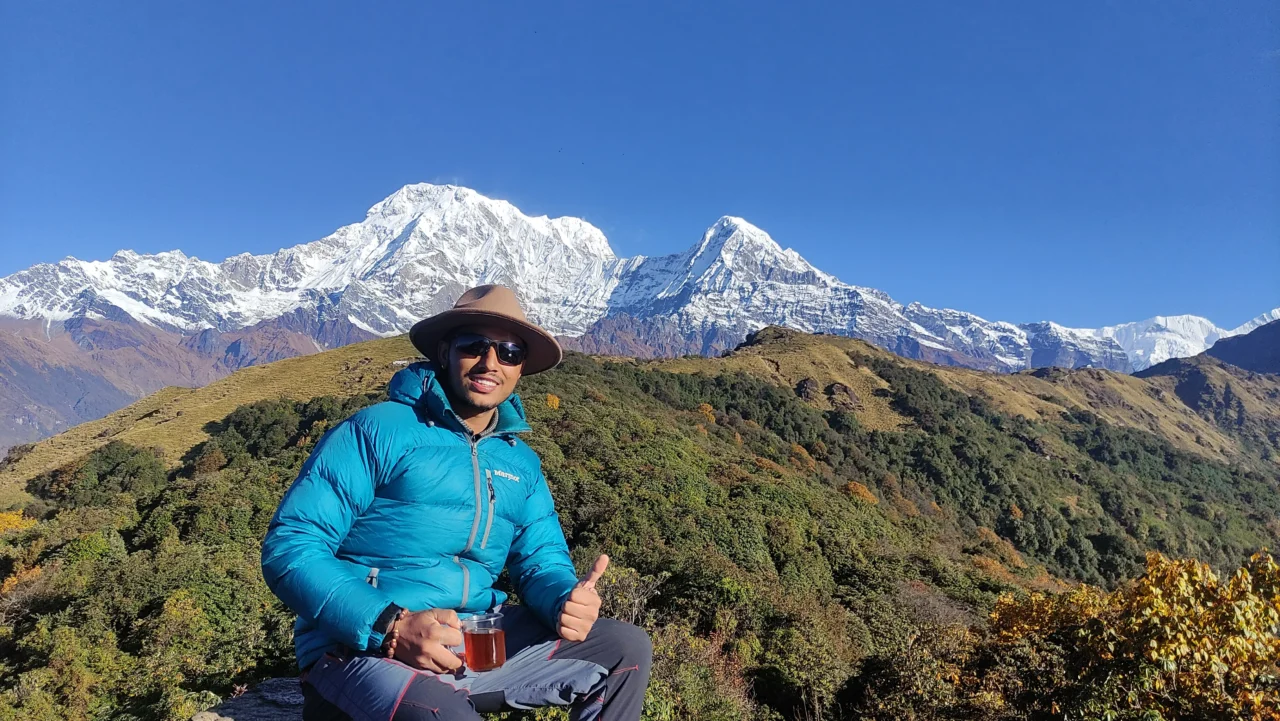
- Witness the impressive high mountain peaks like Dhaulagiri, Annapurna 1st, Annapurna South, Machhapuchre, Himchuli, and many more
- Experience wonderful Nepali Culture and their daily lifestyle in Locle Homestay.
Trip Overview
A short and medium trek of just 5 to 7 days to the Mardi Himal base camp trek is something everyone should try once. The Mardi Himal Trek is a newly opened trekking trail and a hidden treasure in the Annapurna region.
While trekking trails such as Everest Base Camp and Annapurna circuit / Base Camp tend to capture the attention of mountain lovers, the Mardi Himal trek offers a fantastic Himalayan trekking and magnificent mountain scenery experience without the impact of high-volume trekking groups.
This makes the Mardi Himal Base Camp Trek one of those “best-kept secret” locations that only some trekkers can experience. The Mardi Himal trek is full of surprising views every day. The Mountain Panorama of Annapurna, Machhapuchre, Manaslu, and Mardi will shine above everything else. Mardi Himal base camp, Badal Danda, Siding village, and Lwang are the major attractions of this trek.

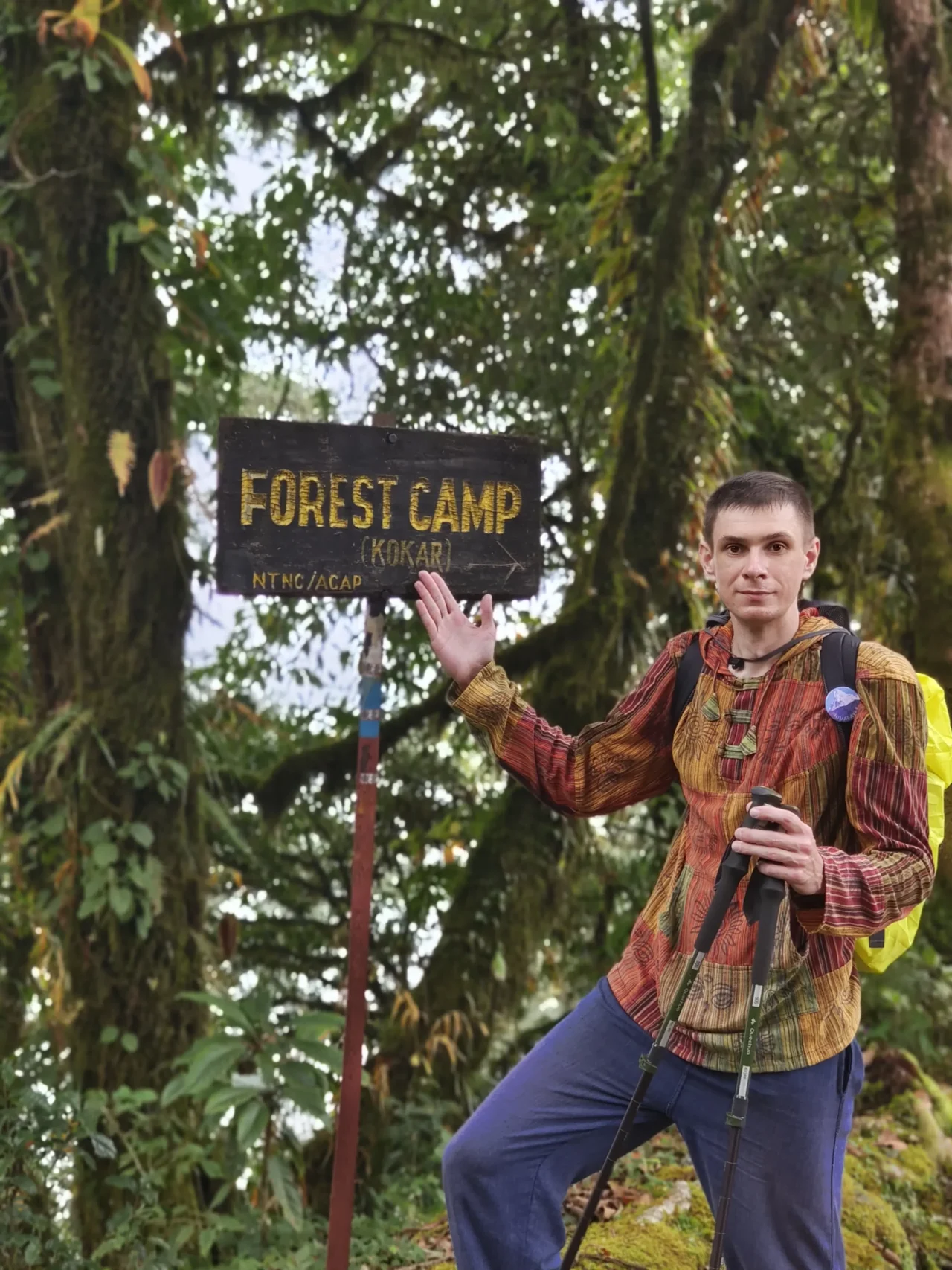
The short adventure to the Mardi Himal base camp starts at Kande after about 1 hour of driving from Pokhara. After about an hour of the steeper climb from Kande, we reach Australian Camp (2060m), then we trek slightly downhill to Pothana (1950m), then up again to Deurali (2100m) and continue trekking to the Village of Landruk. This iconic Gurung village has so many cultural vibes to offer! From Landruk, we turn right at the forest camp. Most of the trek goes to the left, leading to the Annapurna base camp.
The trail is through the jungle, at first up, then undulating on the top of a ridge; there is a section just over halfway where the trail drops steeply. As we continue the trek, the trail goes gradually up the ridge. Soon, we will arrive at the beautiful campsite of Forest Camp at an altitude of 2600 meters.
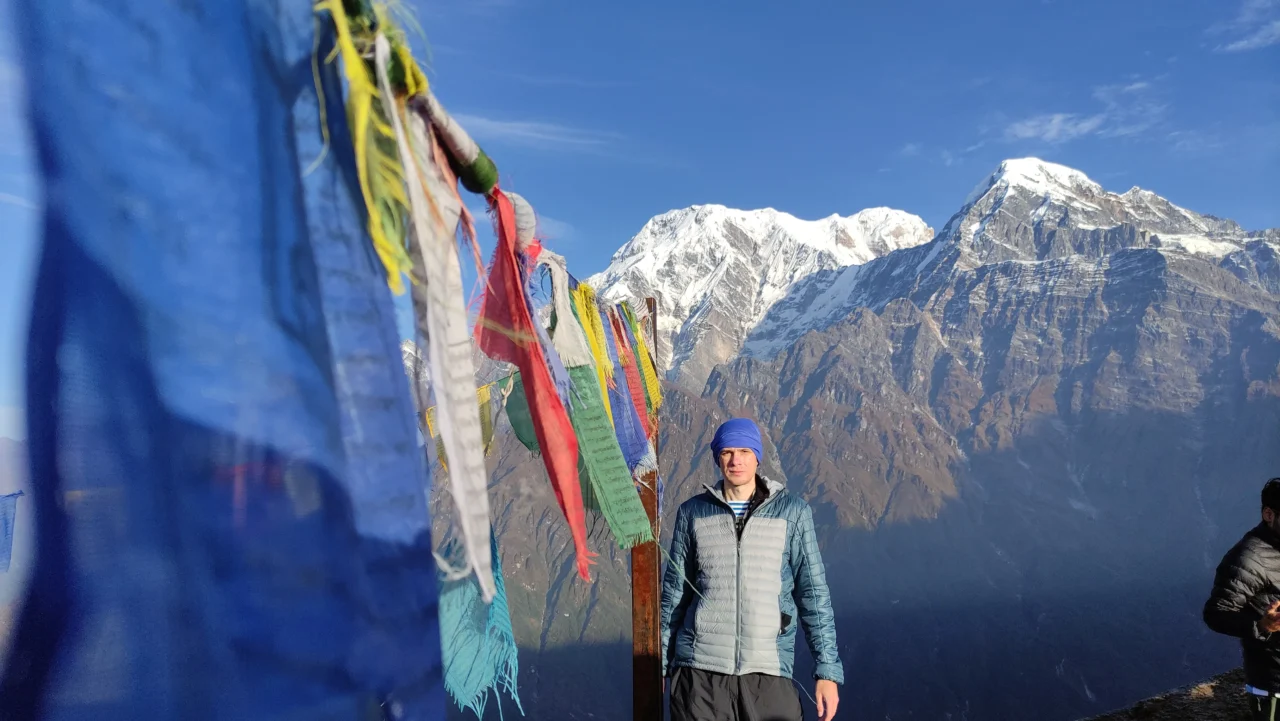
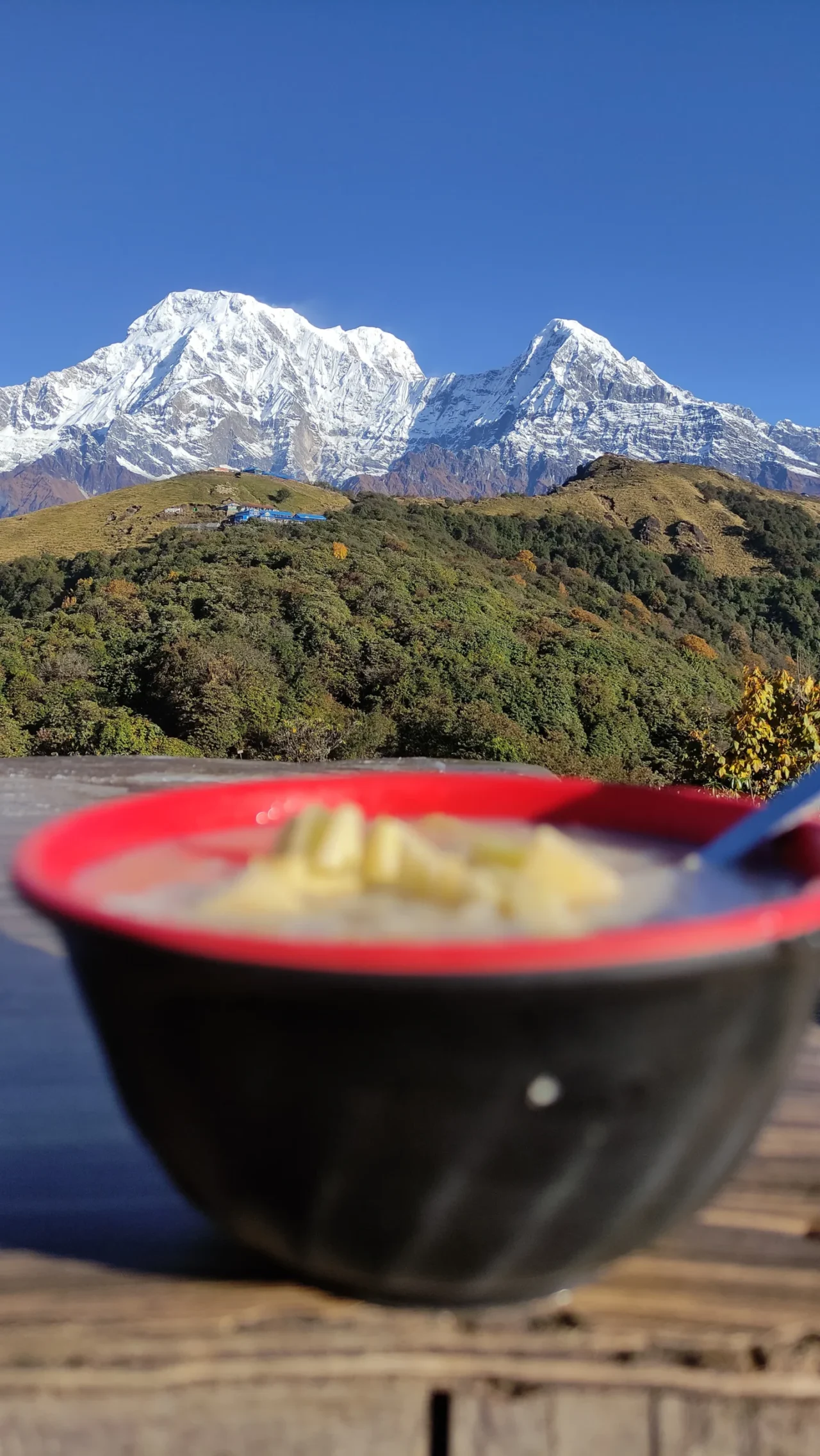
The trail is, to begin with, quite steep from Forest Camp but soon gets less steep as you again get up on the ridge. The trail leaves Low Camp again in the jungle, but the trees soon start to get smaller, and after about one hour, trekking broke out of the jungle and onto the open ridge with spectacular views of Machhapuchhre ahead and Annapurna South to the left.

From High Camp, the trail along the grassy ridge to Mardi Himal Base Camp takes about 4 hours at an altitude of 4500 meters—the final destination of the trek. From here, we trek down to Siding Village via Low Camp, where we will experience a homestay. From Siding, we drive back to Pokhara. Then, to Kathmandu.
This whole trip will always remain in the most sacred part of your heart; you will always cherish these memories and want to make more of them. Happy Trekking.

Why should you go to Mardi Himal Base Camp?
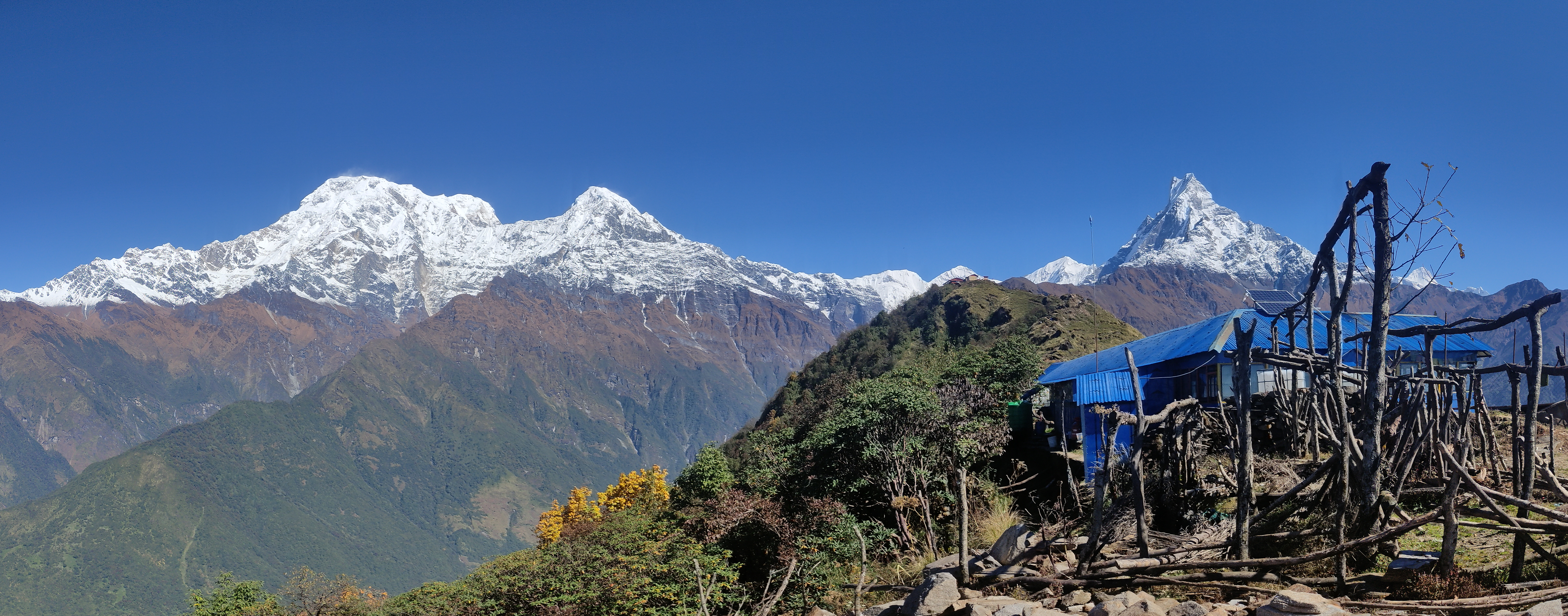
- The Mardi Himal trek is ideal for beginners traveling to Nepal for the first time. It’s designed just for you. The highlight of the Trek is the unique views of Mt. Machapuchare, the sacred peak and abode of the Hindu god Shiva. Shiva chose the most beautiful peak for his home, and we will look at it from all sides. Even the most experienced trekkers who have been to Everest Base Camp and walked around Annapurna will be amazed by the unique views.
- There are no crowds of tourists, so here you can enjoy truly wild nature, silence, and almost no civilization. Only paths trodden by shepherds, rare simple loggias, and authentic mountain villages will remind you that there are people here. Smooth climbs without sharp drops, as the trail runs along the ridge.
- You will be accompanied by experienced Nepalese guides and a porter who will take on the extra load. We have more than 20 years of experience in organizing such trekking trips.
- In March, April, and May, everything in Nepal blooms, turns green, and brims with life. We will go through beautiful rhododendron forests that will not leave anyone indifferent, especially lovers of flowers, photos, and romance.
- We will be visiting monuments of world importance under UNESCO protection in Kathmandu, ancient sacred stupas and temples, and the capital of travelers from all over the world, a romantic lake city, Pokhara, where you can go paragliding with eagles over mountain peaks.
- On top of that, before the trip, we will advise you on trip preparation. During the Trek, our guide will offer advice, explain the flora, fauna, and culture, share interesting facts about the Trek, outline tomorrow’s plan, and advise on what to wear. He will tell you what mountains are around and basic information about the sights.
Best Time for Mardi Himal Trek
The Mardi Himal Trek is year-round; you can do it any time of year. But Spring (March, April, May) and Autumn (September, October, November) are the best months. The air, freshly washed by the monsoon rain, is crystal clear, the stunning mountain scenery is on display, and the weather is still comfortably warm.
Although the Mardi Himal Trek can be taken during winter and monsoon, the cold can be bitter around the High Camp and Lo Camp areas. And the trails can be slippery due to monsoon rain. Nepal’s famous Juka (leeches) are an unpleasant feature of the wet season, but with care, trekking can still be possible, and there are certainly fewer trekkers on the trail.
Recommended Equipment Packing List for Mardi Himal Base Camp Trek
The following basic equipment checklists should help you with your packing. Please remember that you should always try to keep the weight of your equipment to a minimum. Your packed trek bag should weigh not more than 44 pounds or 20 kg at the start of the trek.
- Sun hat or scarf
- warm fleece hat
- Sunglasses
- T-shirts
- Fleece jacket or pullover
- Fleece Wind-Stopper jacket (optional)
- Waterproof (preferably breathable fabric) shell jacket
- Down jacket
- Lightweight gloves and or
- Heavyweight gloves
- Under Garments
- Hiking shorts
- Lightweight cotton long pants
- Fleece or wool pants (seasonal)
- Waterproof pants
- Thin, lightweight inner socks
- Thick, warm wool hiking socks
- Hiking boots with spare laces
- Camp shoes (sneakers and/or sandals)
- Sleeping bag
- Headlamp
- Trekking Bags
- Duffle bags
- Basic First Aid Kit
- Regular medicine
- Trekking Poles
- Water bottles
- 1 medium-sized quick drying towel
- Toothbrush/paste
- Multipurpose soap
- Deodorants
- Face and body moisturizer
- Personal Hygiene
- Wet wipes (baby wipes)
- Tissue /toilet roll
- Anti-bacterial hand wash
- Reading book
- Trail Map/Guidebook
- Journal and Pen
- iPod
- Pencils and small notebooks
- Travelling games(Uno, playing cards, dice, etc)
Outline Itineary of Mardi Himal Base Camp Trek
Arrival at Kathmandu
Drive / Flight to Pokhara
Drive from Pokhara to Kande then Trek to Landruk Village
Trek from Landruk Village to Rest Camp
Trek from Rest Camp to High Camp
Day hike to Mardi Himal Base Camp and return to High Camp
Trek To Shidding and then drive to Pokhara
Drive/flight to Kathmandu
Final Depature
Our Trekking Team for Mardi Himal Trek
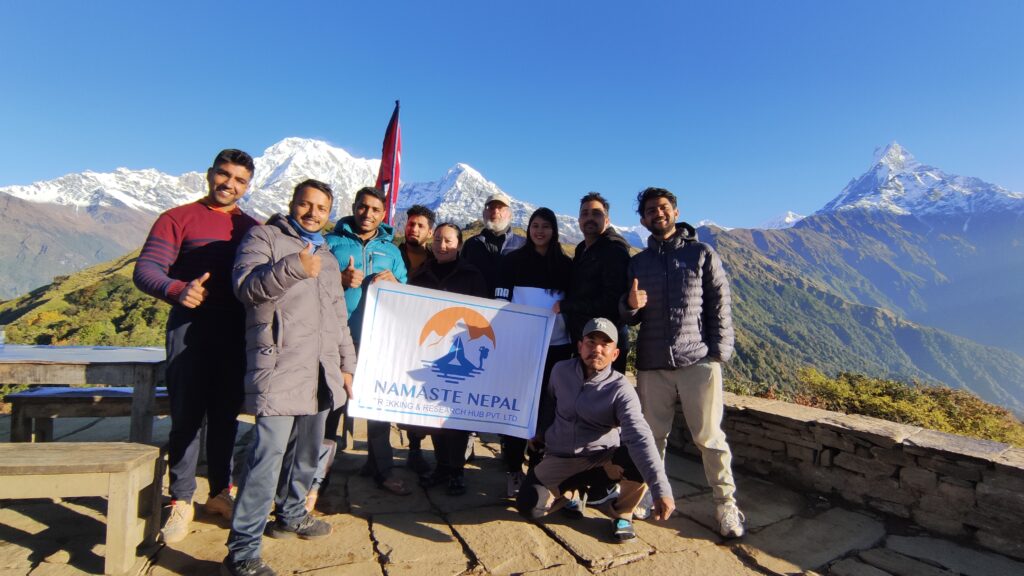
Your safety is our first priority. To make your dream adventure come true and successful, there will be 1 professional trekking leader/guide, 1 assistance trekking guide (1 assistance trekking guide for every 10 trekkers), and support staff / Sherpa porters (1 support staff for every 2 trekkers).
These arrangements will make sure that if anybody in the group gets any issue (emergency return, Altitude sickness, physical damage, sickness, etc) in the middle of the trek and can’t continue, the rest of the group can still go ahead as planned as to the destinations.
How Difficult is Mardi Himal Trek
The Mardi Himal Trek is classified as moderate in difficulty. The trail climbs steadily to an altitude of 4,500 m (Mardi Himal Base Camp) over 7–9 days, depending on your itinerary. The terrain includes well‑maintained footpaths, occasional stone steps, and a few steep sections that demand a reasonable level of fitness and a willingness to walk 4–6 hours per day. Most travelers with a basic trekking background complete the trek comfortably; however, those who have never trekked above 3,000 m should allow extra days for acclimatization.
How To Prepare for the Mardi Himal Trek
- Physical conditioning – Aim for at least 30 minutes of cardio (jogging, cycling, brisk walking) three to four times a week, combined with strength work for the legs and core. Hiking with a loaded backpack (10–12 kg) once a week will simulate trail conditions.
- Gear checklist – Essential items include a down jacket (minimum 800 fill), insulated trekking pants, a waterproof shell, sturdy trekking boots (broken in), warm gloves, a hat, and a sleeping bag rated to –10 °C. A reusable water bottle, headlamp, and personal first‑aid kit are also must‑haves.
- Travel documents – Keep both a printed and digital copy of your passport, visa, trekking permit, and insurance policy handy.
- Acclimatization – Plan a gradual ascent; the itinerary built into our package is built in such a way that it it allows your body to adjust properly to the increasing altitude, reducing the risk of altitude sickness during the trek.
Photo & Video Gallery
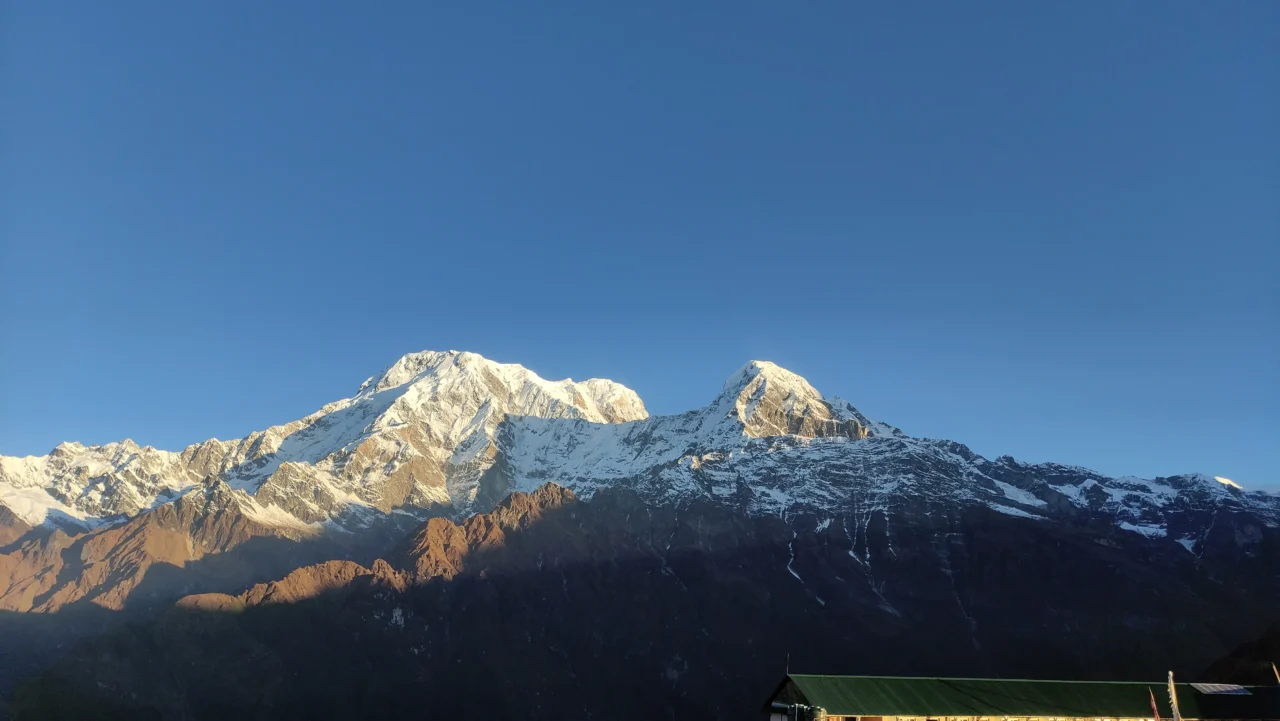
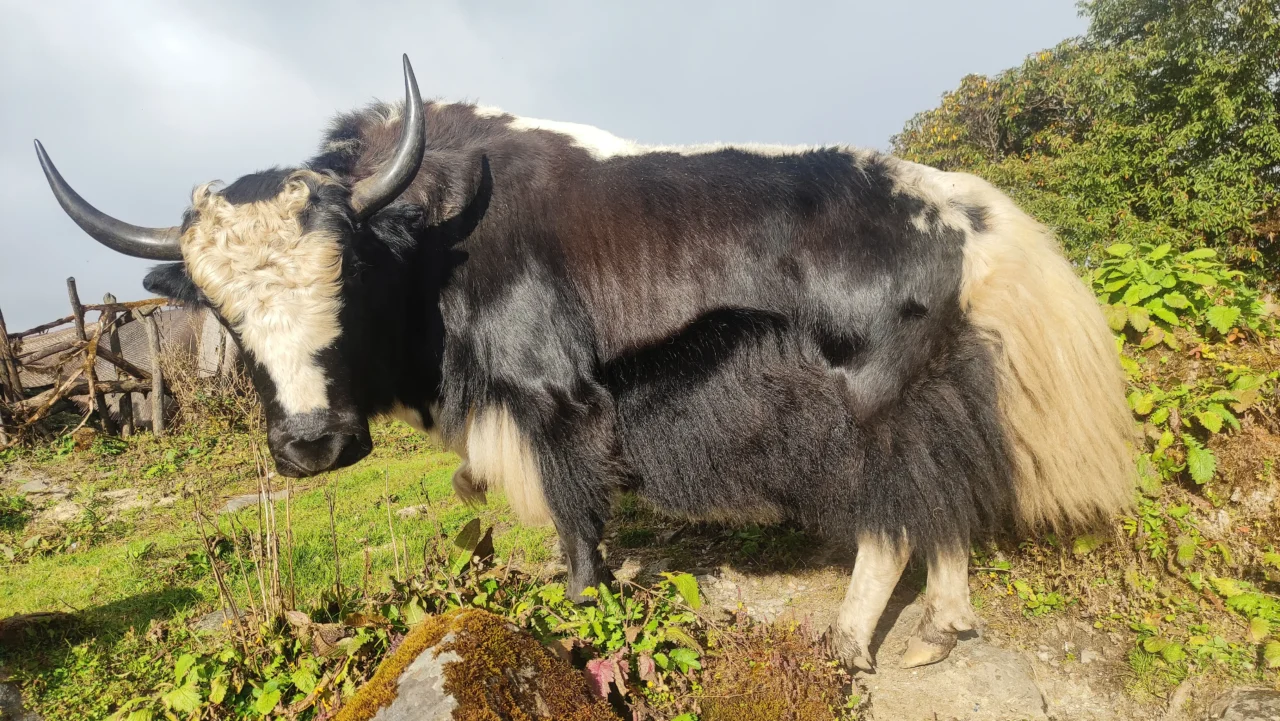
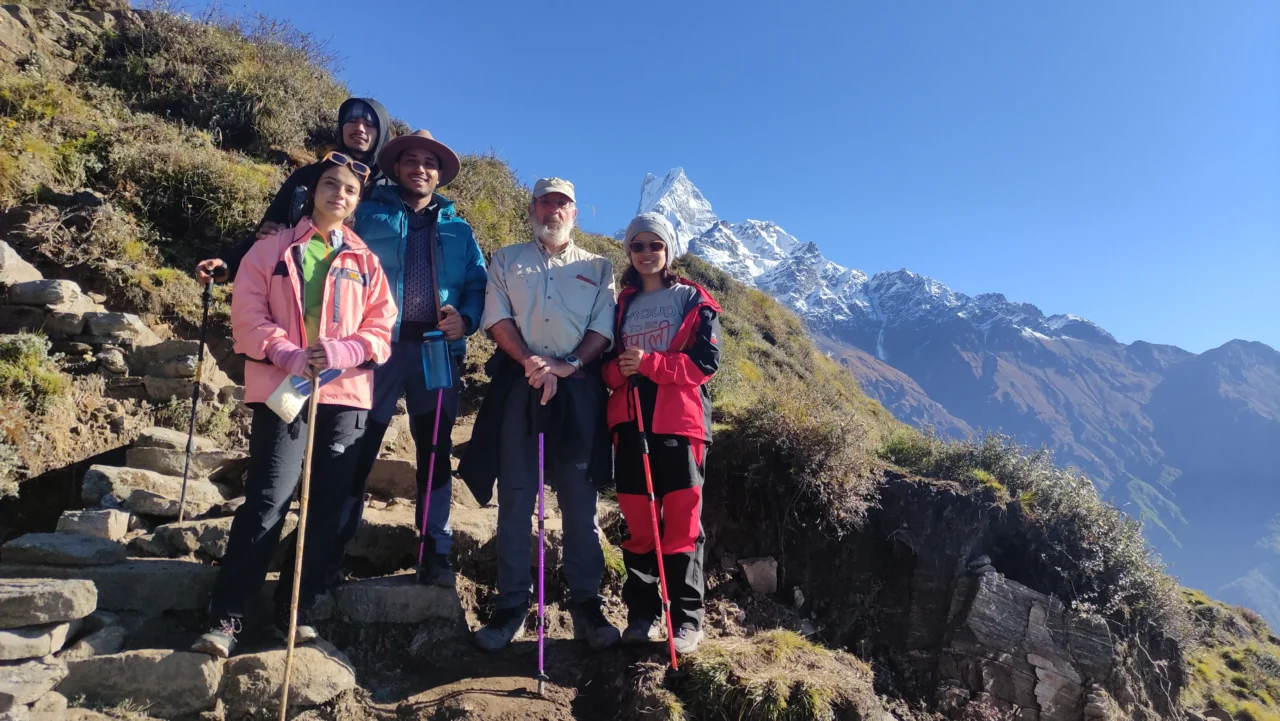
Detailed Itinerary of Mardi Himal Base Camp Trek
Day 1: Arrival at Kathmandu
Upon your arrival in Kathmandu, our representative from Namaste Nepal Trekking & Research Hub will pick you up from the airport. He will be displaying your full name sideboard outside the airport’s arrival terminal. Transfer to the selected hotel.
In the afternoon the pre-trip meeting will be held. During this meeting we will introduce your trek and or tour leader/guide, so please make sure that you ask all the questions and concerns. For the meeting please make sure you bring your passport, 2 copies of passport-size photos, and your travel insurance policy copy (if you haven’t sent it by email before). And sign the legally binding trip form as well as the non-liability disclaimer.
Then head out and visit one of Kathmandu’s cultural highlights. In the evening, the tourist hub of Thamel is a good place to grab your first meal, with a variety of restaurants to choose from offering both Western and local Nepali dishes.

Activity
WelcomeTrip Duration
30 min driveDistance
7kmMax Altitude
1,400m / 4,593ftAccommodation
3-Star HotelDay 2: Drive / Flight to Pokhara
A road trip from Kathmandu to Pokhara is a truly unforgettable experience. With its awe-inspiring landscapes, riversides, cultural treasures, and the chance to witness Nepal’s natural beauty up close, this journey offers a captivating adventure. So, sit back, relax, and let the road unveil the wonders of Nepal as you embark on this remarkable expedition.
Pokhara is also known as the gateway to the Annapurna region, Pokhara is blessed with stunning lakes, including the famous Phewa Lake, and magnificent views of Dhaulagiri, Manaslu, Machhapuchhare, Annapurna, and Lamjung Himal. Upon arrival, you can indulge in a range of activities, such as boating on the lake, paragliding from Sarangkot, or simply strolling along the lakeside promenade, enjoying the tranquility and majestic views.
Activity
Drive / FlightsTrip Duration
6-7 HoursDistance
200 kmMax Altitude
822m / 2,697ftMeals
BreakfastAccommodation
3-Star HotelDay 3: Drive from Pokhara to Kande then Trek to Landruk Village
Our Mardi Himal Base Camp journey begins here. After the morning breakfast, the 1-hour drive will take us to Kade, the trekking starting point. The trek from Kande to Landruk Village is renowned for its diverse terrain, magnificent views, traditional villages, and the warm hospitality of the locals. The trail stretches for approximately 10 kilometers.
As we begin the trek from Kande, you’ll find yourself surrounded by lush green forests, where rhododendron blooms in vibrant colors during the spring season. The trail gradually ascends to the Australian Camp and further to the Potana and Pritam Deurali Village, offering stunning panoramas of the Annapurna mountain ranges. The snow-capped peaks include Machhapuchhre (Fishtail) and Annapurna South, Himchuli, Annapurna III, Gangapurna, and many more. from Prittam Deurali it’s an easy Downhill & flat to reach Landruk Village.
The Landruk village offers a serene and tranquil atmosphere, allowing you to unwind and connect with nature. This charming Gurung village also offers an opportunity to immerse yourself in the local culture and experience traditional Nepalese hospitality with terraced fields, picturesque traditional stone houses, and panoramic views of the surrounding mountains.
Activity
TrekkingTrip Duration
4-5 HoursMax Altitude
1,500m / 4,921ftMeals
Breakfast, Lunch & DinnerAccommodation
Hotel With Attached BathroomDay 4: Trek from Landruk Village to Rest Camp
Our second day of the trek. We already left all the city crowd, village, and Roads. Yes, we are all in nature. The trail ascends gently through the deep mixed forest of Rhododendrons, Oak, maple, hemlock, and many more flora and faunas. After about 3 hours of ascending into the dense forest, the small settlement of Forest camp will be welcoming us for a filling lunch. From where we can have a stunning view of Annapurna massive on one side and the beautiful village of Ghandruk on the other side.
After the lunch break, we will continue our way to the Rest Camp which will take about an hour from Forest Camp. Along the way, keep an eye out for unique flora and fauna, including colorful birds and elusive wildlife, adding to the trek’s natural allure.
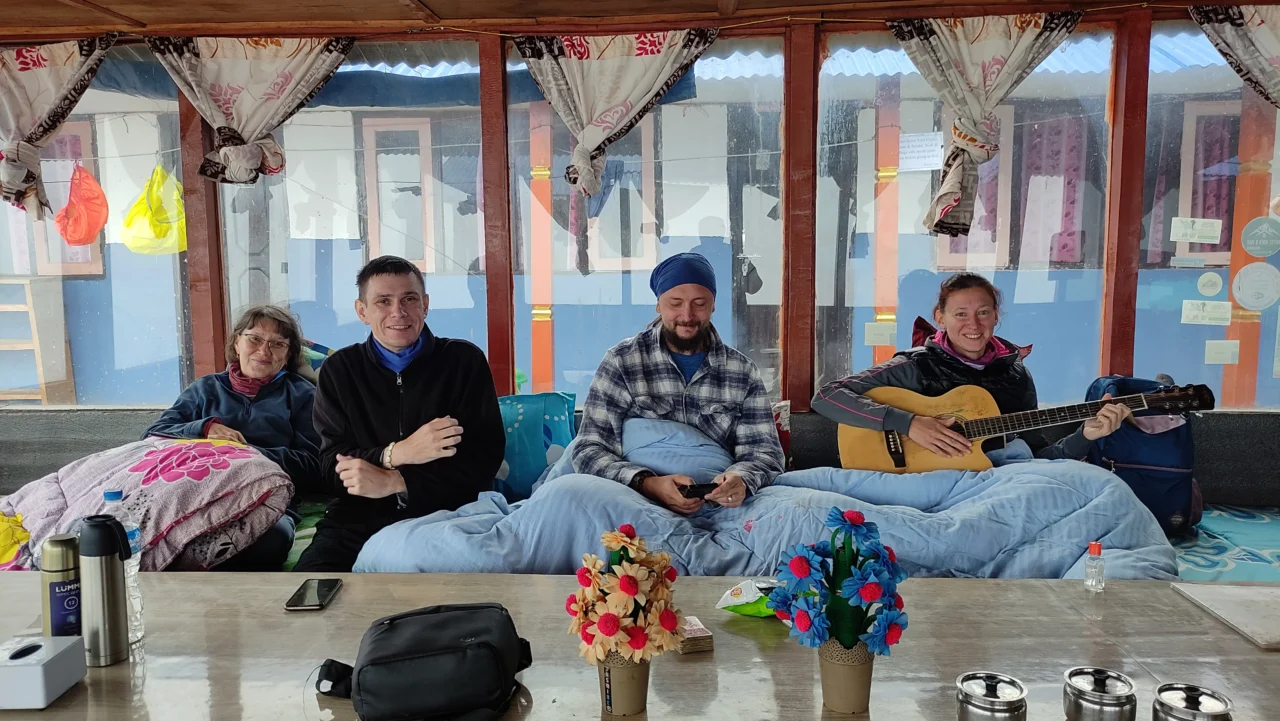
Rest Camp, serves as a resting point for trekkers on their journey to Mardi Himal Base Camp. The camp offers a comfortable teahouse, providing cozy accommodations and nourishing meals to refuel your energy. Engage in conversations with fellow trekkers, share stories, and relish the warmth of the teahouse ambiance while taking in the breathtaking views of the Annapurnas and surrounding hills.
Activity
TrekkingTrip Duration
5-6 HoursMax Altitude
2,650m / 8,694ftMeals
Breakfast, Lunch & DinnerAccommodation
Guest HouseDay 5: Trek from Rest Camp to High Camp
After enjoying the sunrise view and breakfast, we start to ascend alongside a ridge towards the Mardi Himal and Machhapuchre mountains. Soon the forests will start to get thinner and the sky opens more and we get to see more views. As we look down the left, we see the Modi River valley and the Annapurna sanctuary area until the horizon. This area is also famous for many different varieties of flowers, Birds, and Wildlife. We might be able to spot the national bird of Nepal Danphe/Lophophorus. The low Camp offers the towering overhead views of Machhapuchere, where you can spend hours even without realizing it, so Close, but at so far!
Leaving the mesmerizing campsite of Low Camp is almost heartbreaking. It was being incredibly photogenic spot but soon we will be getting closer to the mountains and the views will be even more beautiful.
After about 1:30 hours of a gradual climb through the forest, we will get into the Badal Dada one of the finest views of the trek, from where we can have delightful views of Annapurna South, Hiuchuli, Gangapurna, Machhapuchhre, and Mardi Himal itself. Soon we will be trekking above the tree line. The trail continues along the Mardi Himal ridge. We should be able to kick high camp. The high camp also offers a wide range of mountain views. We will have enough time to acclimatize, rest and explore the awesome spot on the lap of the mountain.
Activity
TrekkingTrip Duration
5-6 HoursMax Altitude
3,580m / 11,745ftMeals
Breakfast, Lunch & DinnerAccommodation
Guest HouseDay 6: Day hike to Mardi Himal Base Camp and return to High Camp
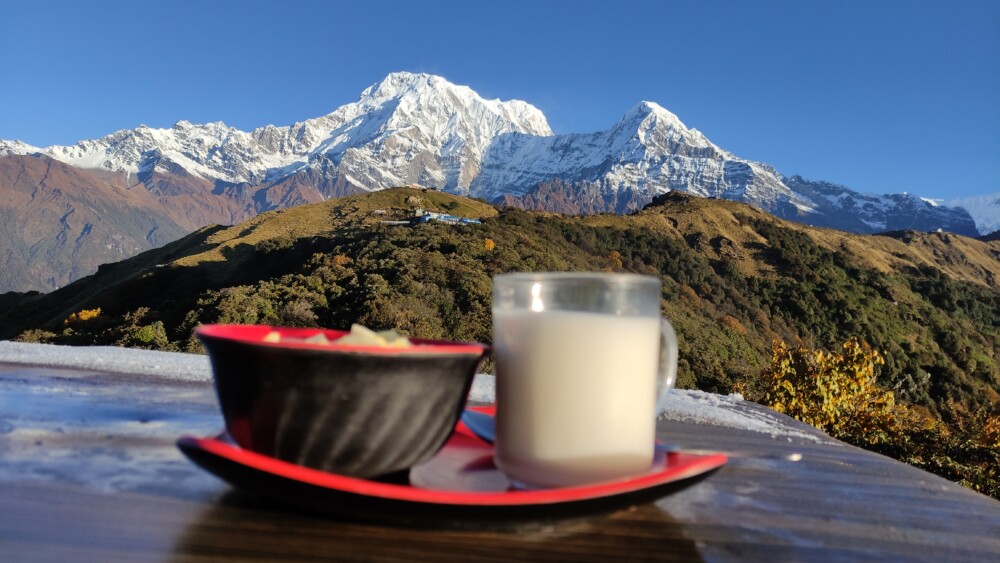
We wake up early today for sunrise view. After enjoying the beautiful sunrise view with a hot cup of tea and the breakfast we start our day to Mardi Himal base camp. It is almost 1 km up from here but no worries, about 3 hours of walk through the well-established trail on the grassy ridge will take us to the dreaming Mardi Himal base camp.
a pleasing view of the Mardi Himal (5,587m / 17,060 ft), Annapurna I (8,091m / 26,545 ft), Annapurna South (7,219m / 23,684 ft), Hiunchuli (6,441/ 21,132 ft), Bhara Shikhar (7,647m / 25,088 ft), Tharpu Chuli/Tent Peak (5,695 m / 18,684 ft), Gandharba Chuli (6,248m / 20,498 ft), Machhapuchhre / Fishtail (6,997m / 22,956), Annapurna base camp (4,130m / 13,550 ft) and many others will sine above everything else.
After spending some time in this awesome site we will trek back to High Camp and enjoy the rest of the evening glance at the unique site sorrowing.
Activity
TrekkingTrip Duration
6-7 HoursMax Altitude
4,500m / 14,764ftMeals
Breakfast, Lunch & DinnerAccommodation
Guest HouseDay 7: Trek To Shidding and then drive to Pokhara
It’s again heartbreaking to leave the unforgettable sight of High Camp. Trekking back to sidhing is mostly easy downhill. From low camp, we take left and continue descending. It’s about 1600 meter down on the count. Soon we will be in a different geographical land with a warmer Slade with friendly and welcoming villages. Siding village also offers homestay facilities where you can experience wonderful Nepali culture, their daily lifestyle and spending time with Host family members. By the time you finish your Lunch at Shiding our private tourist vehicle will be waiting for us to spin back to Pokhara.
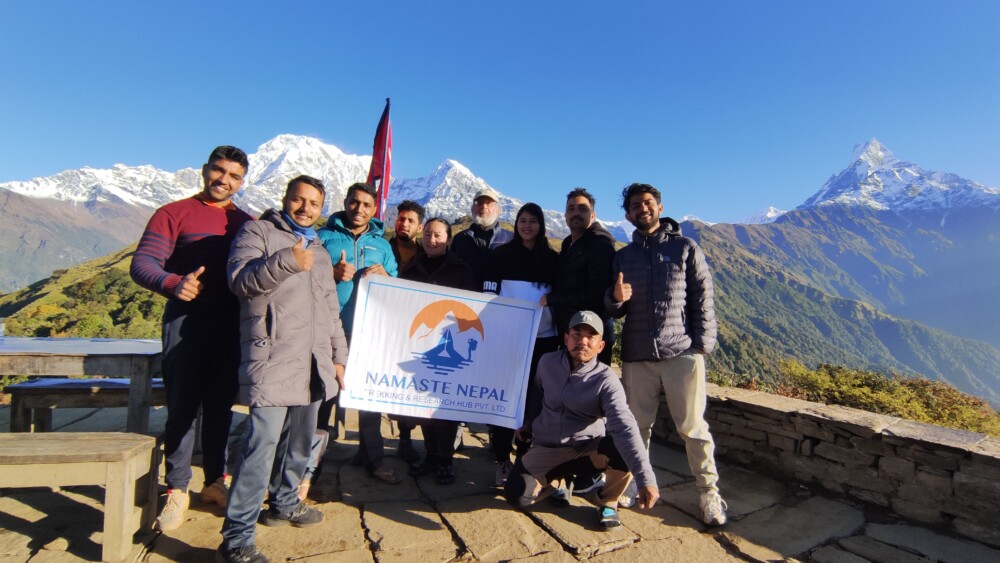
Upon Your arrival at Pokhara, It’s Time to celebrate a sucessful trek to the Mard Himal Base Camp with your Trekking Team.
Activity
Trekking and DriveTrip Duration
7-8 HoursMax Altitude
822m / 2,697ftMeals
Breakfast LunchAccommodation
3 Star HotelDay 8: Drive/flight to Kathmandu
We will take an early morning deluxe tourist bus/afternoon flight to Kathmandu. If you have time and interested in extending the trip, White water rafting, Chitwan jungle safari, visit Lumbini: Birthplace of Lord Buddha, paragliding, sightseeing will be ideal.
Upon your arrival in Kathmandu, Transfer to the selected hotel. In the evening to celebrate the successful completion of our journey, the farewell dinner will be served in a traditional Nepalese restaurant with cultural performances.
Activity
DriveTrip Duration
7-8 HoursMax Altitude
1,400m / 4,593ftMeals
BreakfastAccommodation
3 Star HotelDay 9: Final Depature
Your adventure to Nepal comes to the end today! It’s time to say goodbye to Nepal until the Next Time! Enjoy your last moments in Kathmandu, a city stroll, and-or souvenir shopping. NNTR representative will meet you at your hotel and drive you to the airport for your return flight home. On the way to your home, you have plenty of time to plan your next adventure in the wonderful land of the mystic Himalayas.
Activity
FairwellTrip Duration
30mDistance
7 kmMax Altitude
1,400m / 4,593ftMeals
BreakfastBuild Your Own Adventure!
Collaborate with our specialists to create a unique itinerary.
What's Included and Excluded in Your Package: Clear Details for Better Planning
- All Airport hotel transfers by private vehicle
- 2-night 3-star hotel in Kathmandu
- 2-night 3-star hotel in Pokhara
- Kathmandu – Pokhara – Kathmandu by Luxurious Tourist Bus.
- Pokhara – Kande by Private tourist vehicle
- Shiding to Pokhara by Public Jeep
- All the twin-sharing accommodations during the trek
- All the meals (Breakfast, tea break, lunch, and dinner) will be served with seasonal fruits during the trek.
- TIMS (Trekkers Information Management System) Permit
- ACAP (Annapurna Conservation Area Permit) Permit
- The farewell dinner in Kathmandu
- All government and local taxes
- An experienced English-speaking trekking guide,
- And Sherpa porters/Support staff (1 Support staff for every 2 trekkers), including their salary, insurance, equipment, transport, food and lodging.
- Nepal visas fee (lowest fee available is for a 15-day visa costing 30$/person)
- International airfare to and from Kathmandu
- Excess luggage charges
- Extra night accommodating in Kathmandu/Pokhara (if in case of early Arrival/return from mountain then the scheduled itinerary)
- Travel and rescue insurance
- Personal expenses (phone calls, laundry, bar bills, personal drinks, battery charge, bottle or boiling water, hot shower, wifi and or internet, etc)
- Tips for guides and porters
Book Mardi Himal Base Camp Trek today and enjoy the following Complimentary Services with Your Trip
- Personalized virtual consultation before finalizing your trek booking.
- Online Pre-Trip Briefing after booking confirmation
- Free excess luggage storage facilities at our office store
- Down jacket and seasonal sleeping bag (to be returned after completion of the trip).
- Namaste Nepal’s duffle bag
- Namaste Nepal’s T-shirt/Baseball Cap
- Trekking map
- Trekking Pools (to be returned after completion of the trip).
- A self-sufficient medical first aid kit containing vital medications.
- Oximeter to check your pulse oxygen saturation and heart rate twice daily (Very useful to check AMS symptoms)
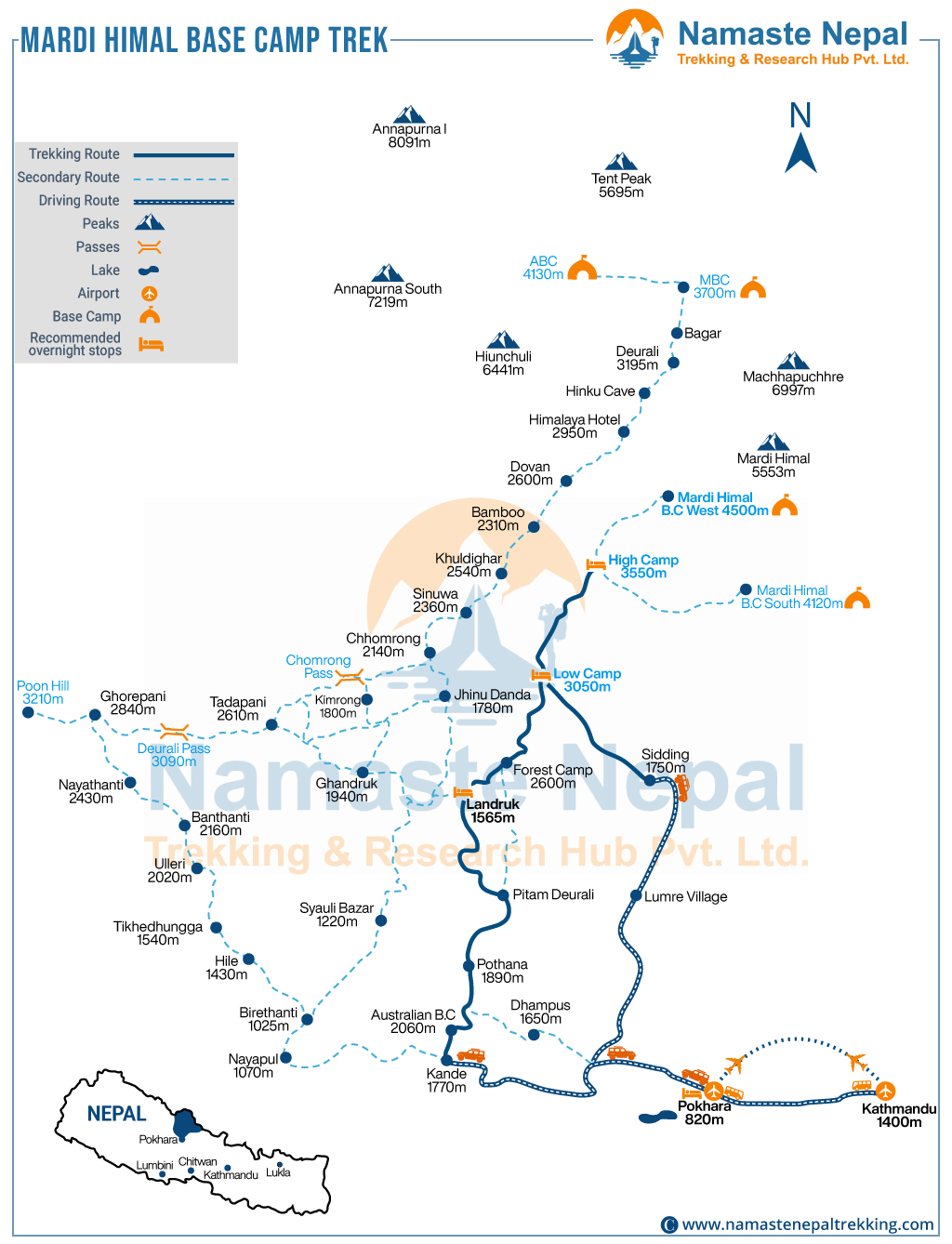
Trip Map of Mardi Himal Base Camp Trek - 7 Days
Good To Know
All international visitors must hold a valid passport with at least six months’ validity beyond the date of entry. A tourist visa can be obtained on arrival at Tribhuvan International Airport (Kathmandu) or pre‑apply through the embassy of your home country.
Visa fees are:
- USD 30 (for 15 days)
- USD 50 (for 30 days)
- USD 125 (for 90 days).
A copy of your passport’s bio‑data page, a recent passport‑size photo, and a completed visa application form are all that’s required. For the Mardi Himal Trek, getting a Days visa will be enough, but if you want to spend more days here in Nepal, you can obtain a Days tourist visa.
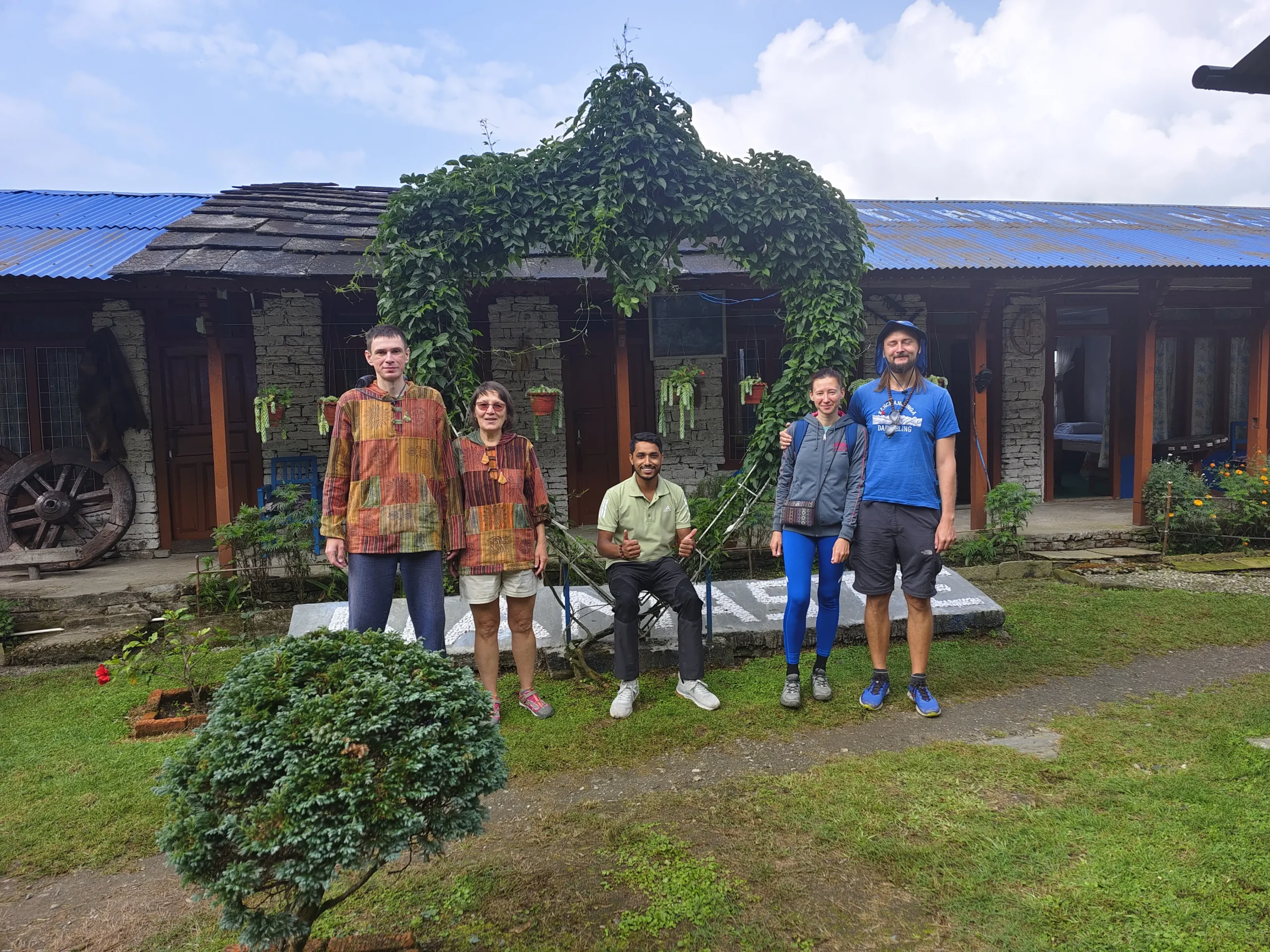
In the Mardi Himal Trek, Most of the teahouses have comfortable shared toilets and washing facilities. As the trail is newly opened, the facilities of the accommodation are getting better every day. In Deurali, Labdruk, and Sidhing Village, you can also find rooms with attached bathrooms.
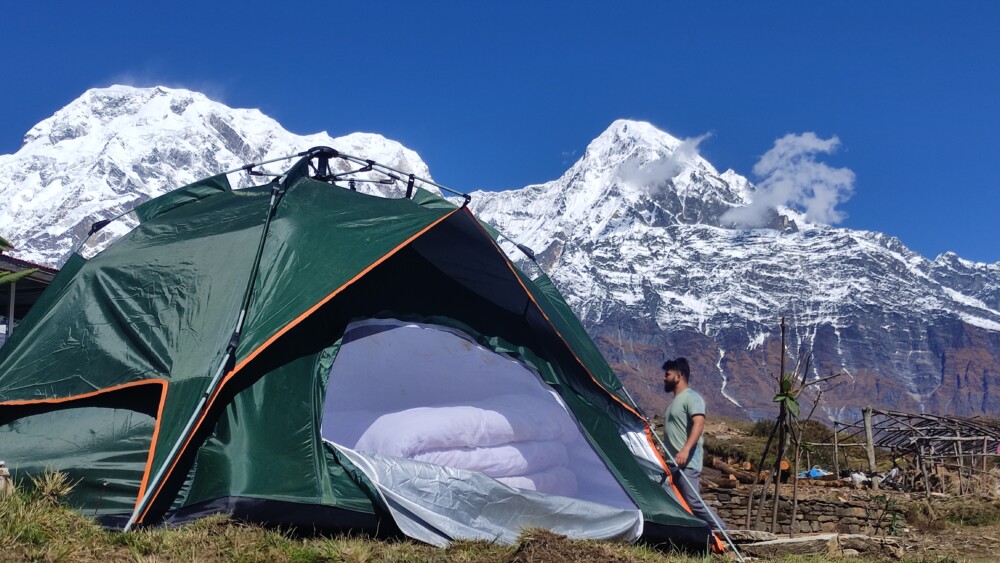
There is nothing like falling asleep after a long day on the trails to a panoramic display of mountains outside your bedroom window. On the inside, the accommodation is simple yet clean, cosy, and functional.
The rooms usually include single-sized beds with comfortable sheets, pillows, and blankets. All the Accommodation for your trek is on a twin-sharing basis. If you wish to get a single supplement, it will be available but you will have to let us know in advance.
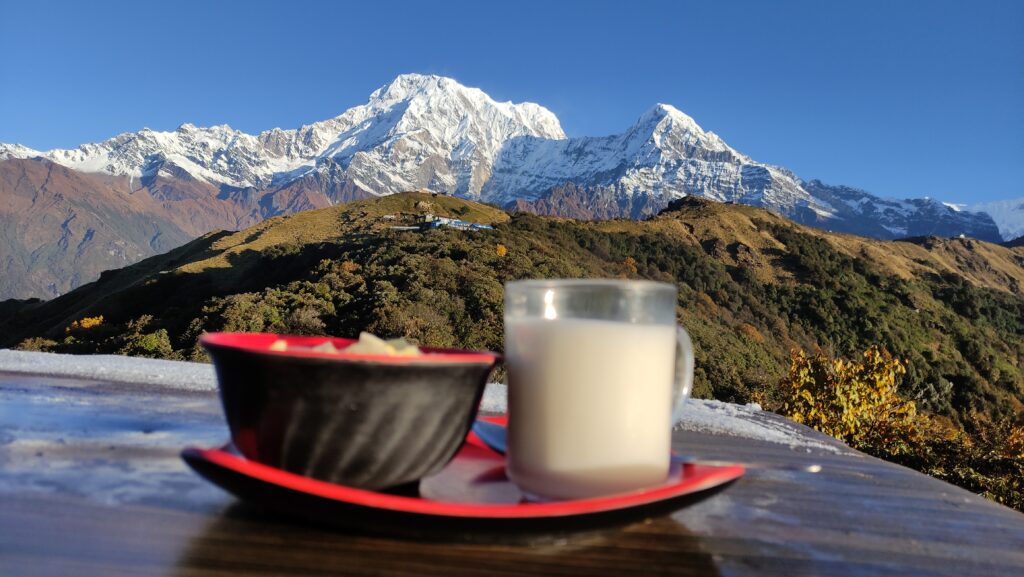
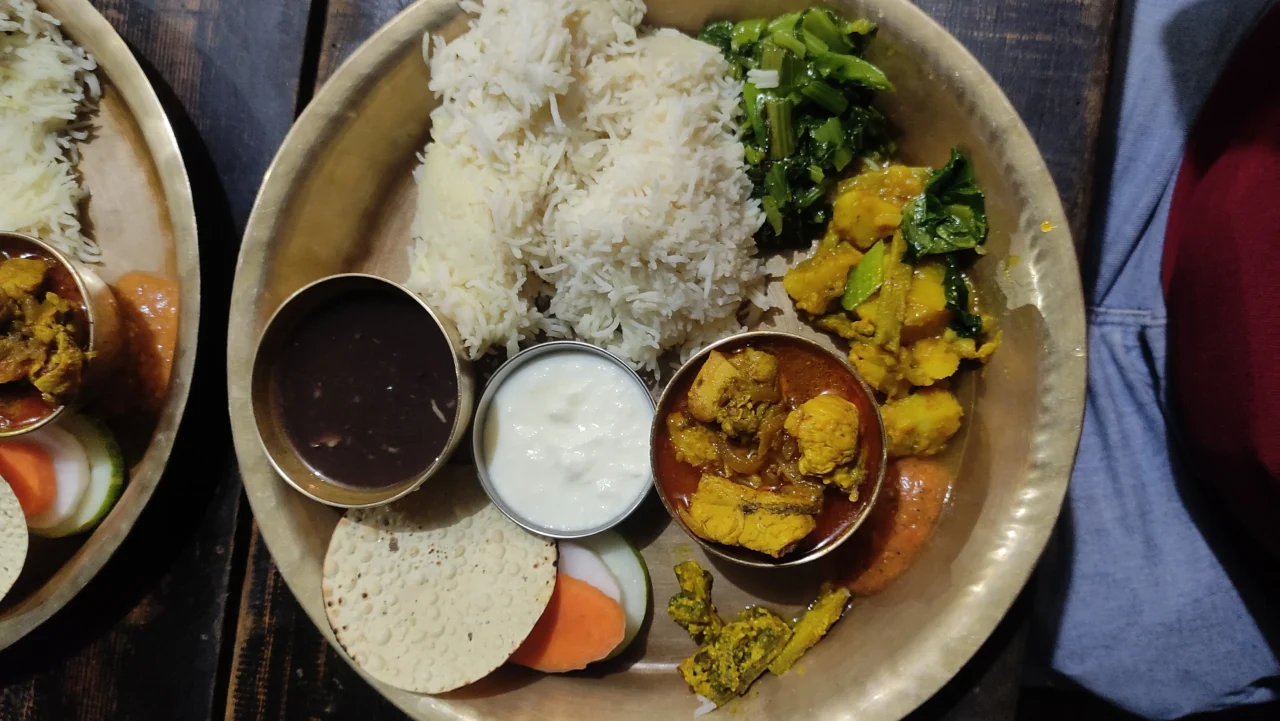
During the Mardi Himal Trek, you can enjoy traditional Nepali food “Daal Bhaat”, which is a platter of boiled rice, curry, greens, lentil soup, meats, and pickles.
Many types of international foods are also available such as Indian, Chinese, Italian, Continental, Tibetan, etc.
Breakfast options:
- Bread
- Eggs
- Porridge
- Muesli
- Cornflakes
- Pancakes
- Hash browns
- Fries
- Chapati
Lunch and Dinner menu (usually the same):
- Vegetables and meats (limited options)
- Spaghetti
- Pizza
- Noodles
- Sandwiches
- Burgers
- Soup
- Momo
- Fruits are rare on the menu.
- Seafood items are usually not available.
Hot beverages available:
- Different types of tea
- Coffee
- Hot chocolate
- Hot lemon with ginger and honey
Simple dessert options (available in some places):
- Apple pie
- Chocolate roll
- Custard
- Pudding
Before you begin your Mardi Himal Trek in the Kaski District of Gandaki Province all the trekkers must obtain the permit beforehand. This permit helps to keep the record of travellers heading in Annapurna region so that emergency evacuation can be provided whenever needed. It is for your own safety so make sure to obtain this permit and carry it during the trek. The required permit for the Mardi himal trek are:
- TIMS Card: Cost NPR 2,000 per person.
- Annapurna Conservation Area Project (ACAP) permit: Cost NPR 3,000 per person
Since this permit is included in the Mardi Himal trekking package, Namaste Nepal will handle all their permits for you. To obtain this permit you need to submit your;
- Passport copy
- Pp size photograph
Although it is not mandatory to have travel insurance for Mardi Himal trek, high‑altitude trekking carries inherent risks, so comprehensive travel insurance is non‑negotiable. Look for a policy that explicitly covers:
- Medical evacuation from remote Himalayan regions
- Hospitalization and emergency treatment
- Trip cancellation or interruption (including weather‑related closures)
- Lost or damaged trekking gear
Most reputable insurers in Europe, North America, and Asia offer tailored Himalayan packages. We can provide a list of trusted providers upon request.
International arrival – Most travelers fly into Tribhuvan International Airport (KTM) in Kathmandu. From there, you will take a scenic 8‑hour road transfer, or you may opt for a domestic flight to Pokhara (PKR), which takes roughly 25 minutes.
Ground transfer – Upon reaching Pokhara, a comfortable, private vehicle transports you to the trailhead in Kaski (approximately 2 hours). Our drivers are experienced, speak English, and will assist with luggage loading onto the trekking porters.
Return logistics – After the trek, you will be driven back to Pokhara for your onward flight or onward travel toward Kathmandu.
- Hydrate: Aim for 3–4 liters of water daily; dehydration accelerates altitude symptoms.
- Ascend slowly: Follow the “climb high, sleep low” principle—limit daily altitude gain to 300–500 m above your previous night’s sleep.
- Medication: Carry acetazolamide (Diamox) (125 mg twice daily) for prophylaxis, and a basic first‑aid kit with pain relievers, anti‑nausea tablets, and oral rehydration salts.
- Listen to your body: Early signs include headache, nausea, or dizziness. Rest, descend if symptoms worsen, and seek medical assistance by informing your trekking guide.
Cellular coverage in the Annapurna region has improved dramatically. Ncell and NTC operate 3G/4G networks in the Mardi Village. For reliable internet on the trail, we recommend purchasing a prepaid Ncell SIM at the airport or in Pokhara; data packages start at USD 5 for 1 GB and can be topped up online. Wi‑Fi is available at most lodges but you need to pay certain fees like around USD 1-2 per night. The speed of Wifi can be unreliable and slow at higher altitudes.
Tipping is a valued way to acknowledge the hard work of the local team. There are no standard rates but we recommend:
- Guide: USD 5–10 per day (or USD 50–70 for a 10‑day trek)
- Porter: USD 3–5 per day (or USD 30–40 for a 10‑day trek)
Tips can be handed directly in cash at the end of the trek, or you may include a gratuity in your final settlement. Your generosity helps support the families of the trekking staff and contributes to the sustainability of the community.
Reservation: A 25 % deposit secures your spot; once you make a paymnet our team will send your mail or whatsapp with confirmation letter.
Payment methods: We accept major credit cards (Visa, MasterCard, American Express), bank transfers, and PayPal.
Cancellation: No refund of the advance payment if guests cancel the Mardi himal trek or they didnt show at arrival date. If you have paid the full amount in advance 75% will be refunded but it will take time due to legal procedure.
All cancellations must be submitted in writing via email or contact. We recommend purchasing travel insurance that covers trip cancellation to protect your investment.
Mardi Himal Base Camp Trek - 7 Days Altitude Chart
Mardi Himal Base Camp Trek: Flexible Itinerary Options
Planning your Mardi Himal Base Camp Trek? You’ve made an excellent choice for an unforgettable adventure! To help you find the perfect itinerary, take a look at the tables below.
These tables provide all the details you need, from starting points and trek durations to altitudes and approximate trekking times. Whether you’re short on time or looking for a longer, more immersive experience, there’s an option that will suit your needs. For specific costs, please contact us directly. Dive in and start planning your perfect trek! Choose Your Perfect Itinerary:
- 4 Days Mardi Himal Base Camp Trek: Ideal for those with limited time, this itinerary covers the essentials of the Mardi Himal Trek, providing a condensed yet fulfilling experience.
- 5 Days Mardi Himal Base Camp Trek: This itinerary balances trekking with ample time for acclimatization, ensuring you enjoy the stunning views without feeling rushed.
- 6 Days Mardi Himal Base Camp Trek: A balanced itinerary offering a mix of trekking and relaxation, allowing you to fully immerse yourself in the beauty of the Himalayas.
- 7 Days Mardi Himal Base Camp Trek: Perfect for those who want to take their time and savor every moment, this itinerary includes an additional day at Mardi High Camp.
- 8 Days Mardi Himal Base Camp Trek: An extended itinerary designed for avid trekkers who want to explore more trails and take in the diverse landscapes of the Mardi Himal region.
4 Day Mardi Himal Base Camp Trek Itinerary from Pokhara
| Day | Itinerary Details | Altitude (meters) | Approx. Trekking Time |
| 1 | Drive from Pokhara to Kande, trek to Forest Camp | 2,520 | 6-7 hours |
| 2 | Trek from Forest Camp to High Camp | 3,580 | 6-7 hours |
| 3 | Early morning hike to Mardi Himal Base Camp, return to High Camp, trek to Badal Dada | 4,500 | 6-7 hours |
| 4 | Trek from Badal Dada to Siding, drive back to Pokhara | 1,750 | 5-6 hours |
5 Day Mardi Himal Base Camp Trek Itinerary from Kathmandu
| Day | Itinerary Details | Altitude (meters) | Approx. Trekking Time |
| 1 | Drive from Kathmandu to Pokhara, then to Kande; trek to Australian Camp | 2,060 | 8-9 hours |
| 2 | Trek from Australian Camp to Low Camp | 3,150 | 6-7 hours |
| 3 | Trek from Low Camp to High Camp | 3,550 | 5-6 hours |
| 4 | Trek from High Camp to Mardi Himal Base Camp and Return to Low Camp | 3,150 | 5-6 hours |
| 5 | Trek from Low Camp to Siding, drive to Pokhara | 1,750 | 4-5 hours trek, 1.5 hours drive |
6 Day Mardi Himal Base Camp Trek Itinerary from Kathmandu
| Day | Itinerary Details | Altitude (meters) | Approx. Trekking Time |
| 1 | Drive from Kathmandu to Pokhara, then to Kande; trek to Australian Camp | 2,060 | 5-6 hours |
| 2 | Trek from Australian Camp to Low Camp | 3,150 | 6-7 hours |
| 3 | Trek from Low Camp to High Camp | 3,550 | 5-6 hours |
| 4 | Trek to Mardi Himal Base Camp | 4,500 | 6-7 hours |
| 5 | Trek from High Camp to Siding, drive to Pokhara | 3,150 | 5-6 hours |
| 6 | Drive to Kathmandu | 1400 | 7-8 Hours |
7 Day Mardi Himal Base Camp Trek Itinerary
| Day | Itinerary Details | Altitude (meters) | Approx. Trekking Time |
| 1 | Drive/Flight to Pokhara | 827 | – |
| 2 | Drive from Pokhara to Kande, then trek to Landruk Village | 1,565 | 4-5 hours |
| 3 | Trek from Landruk Village to Rest Camp | 2,520 | 5-6 hours |
| 4 | Trek from Rest Camp to High Camp | 3,580 | 3-4 hours |
| 5 | Day hike to Mardi Himal Base Camp and return to High Camp | 4,500 | 7-8 hours |
| 6 | Trek to Sidding, then drive to Pokhara | 1,850 | 6-7 hours trekking, 1.5-hour drive |
| 7 | Drive/Flight to Kathmandu | 1,400 | – |
8-Day Mardi Himal Base Camp Trek Itinerary
| Day | Itinerary Details | Altitude (meters) | Approx. Trekking Time |
| 1 | Drive/Flight to Pokhara | 827 | – |
| 2 | Drive from Pokhara to Nayapul, then trek to Ghandruk Village | 1,940 | 4-5 hours |
| 3 | Trek from Ghandruk Village to Forest Camp | 2,520 | 5-6 hours |
| 4 | Trek from Forest Camp to High Camp | 3,580 | 5-6 hours |
| 5 | Day hike to Mardi Himal Base Camp and return to High Camp | 4,500 | 7-8 hours |
| 6 | Trek to Sidding | 1,850 | 6-7 hours |
| 7 | Drive to Pokhara: Explore Pokhara | 827 | 1.5 hour drive |
| 8 | Drive/Flight to Kathmandu | 1,400 | – |
No matter which itinerary you choose, our team at Namaste Nepal Trekking & Research Hub guarantees an unforgettable experience filled with breathtaking views, cultural insights, and the adventure of a lifetime.
Feel free to reach out to us for more details and to customize your trekking plan. We look forward to guiding you on your journey to Mardi Himal Base Camp!
Frequently Asked Questions
General
What is the Mardi Himal Trek?
Mardi Himal is a short-distance trek from Pokhara, which takes you to the base camp of Mardi Himal at an altitude of 4,500. During this trek, you will enjoy the panoramic views of Mardi Peak (5,587 m), Annapurna II, Machapuchare, and the Annapurna and Dhaulagiri ranges.
How long does the trek normally take?
There are different flexible itineraries for the Mardi Himal trek. It can be completed in 5, 7, or 10, depending on your interest and preference.
What is the difficulty level?
The Mardi Himal trek is moderately difficult, making it beginner-friendly. The Mardi Himal trail includes steep ascents, a few sections of rocky/snow‑covered terrain above 3,600 m, and a final push to the Mardi Himal base (≈ 4,500 m). The main challenge for trekkers is preventing altitude sickness by following proper acclimatisation plans.
Is a guide/porter mandatory?
Not legally required, also the trail is well-maintained and well-marked. If you are trekking in Nepal for the first time or are beginner trekkers, we highly recommend hiring a trekking guide and porter for your safety.
Best Time to Go
When is the best trekking season for Mardi Himal Trek?
Mardi Himal trekking is possible throughout the year, but for the best views, we recommend participating in Autumn (late September – November) and Spring (March – May). During these days, the weather is clear, temperatures are moderate, and the chance of rainfall is low.
Can I trek in the monsoon or winter?
The Mardi Himal trek in winter is also possible, given the snow landscape, but you need to deal with chilly temperatures and snow at high altitude. If you are trekking during the monsoon, you will encounter wet, slippery trails from heavy rainfall. Also, floods and landslides can make the trek riskier, so if possible, avoid trekking in the Himalayan mountains during the winter months.
Permits & Regulations
Which permits do I need?
- Annapurna Conservation Area Permit (ACAP) – USD 30 per person.
- Trekkers’ Information Management System (TIMS) card – USD 10 (individual) or $20 (group). This permit will be arranged by Namaste Nepal as it is included in our trekking package.
Do I need a special permit for Mardi Himal?
No extra permit beyond ACAP and TIMS. The trail is within the Annapurna Conservation Area, which is covered by those two permits.
Can I obtain permits on arrival?
Yes, but to make your journey smooth, we can arrange them in advance once you confirm your booking and submit your documents to us.
Acclimatization & Health
What is the highest point on the trek?
The highest point of the Mardi Himal trek is the base camp itself, which is at an altitude of≈ 4,500 m.
How can I avoid altitude sickness?
- Follow the “climb‑high, sleep‑low” principle
- Hydrate (3–4 L/day).
- Avoid alcohol and smoking if possible at high alitude.
- Keep a slow, steady pace (≈ 4–5 km/day).
- Consider a medication like acetazolamide (consult a doctor).
Is the trek suitable for children or seniors?
Small children with parents monitoring can also be accommodated, but you need a customised itinerary that fits the family, including small children.
What medical facilities are available?
The nearest hospitals are in Pokhara, and along trekking trails, there are only basic health posts. For a serious emergency during trekking, it is essential to have an emergency evacuation plan covered by your insurance.
Logistics – Getting There & Transport
How do I reach the trailhead?
As per our standard Mardi Himal trek, we will arrange a tourist bus to reach Pokhara, and from Pokhara, you will reach the trail by private vehicle, either a taxi or a jeep. To reach Pokhara, you can either use ground transportation or a domestic flight (at an extra cost).
Do I need to arrange transportation for my luggage?
We provide free porter service to our customers, so our porter will carry your gear from Kande onward.
How much does it cost for a flight from Kathmandu to Pokhara?
- For foreign citizen it cost: Approximately USD 130–180( one way)
- For Indian citizen it cost: Approximately INR 7,000–9,000 ( one way)
- For Nepali citizen it cost: Approximately NPR 7,000–8,000 ( one way)
Accommodation & Food
What type of lodging is available?
Basic cozy tea houses (raised wooden platforms with shared dormitory rooms). They offer basic double rooms with blankets and mattresses, as well as shared washroom facilities.
Do tea houses have hot water and electricity?
Hot water and electricity are available, but depending on the location, you may need to pay a small fee for their use.
What meals are served?
Standard tea‑house menu: Dal‑bhat (lentil soup & rice), thukpa (noodle soup), momos, stir‑fried vegetables, eggs, and tea/coffee. Vegetarian and vegan options are common; you can request a non‑spicy version.
Can I bring my own food?
Breakfast, lunch and dinner are provided in the tea house. If you want to bring your own food, you can bring snacks, energy drinks or gluten‑free items.
Gear & Packing List
What are the essential clothing items?
- Moisture‑wicking base layers (top & bottom).
- Insulating mid‑layer (fleece or down jacket).
- Waterproof, breathable shell jacket and pants.
- Warm hat, gloves, and a buff/neck gaiter.
- Trekking boots (broken‑in, supportive) + camp shoes.
Do I need crampons or an ice axe?
No you don’t need this mountaineering gear for this Mardi Himal trek.
What sleeping gear is required?
Tea houses will provide warm blankets, so a sleeping bag is usually not required, but if you wish to bring one, you can.
What electronics should I bring?
- Power bank (10,000 mAh or higher).
- Universal travel adapter.
- Camera (DSLR/mirrorless) + extra batteries (cold drains them quickly).
- Optional: handheld GPS or offline maps on a smartphone.
Is there a need for a water purification system?
Bottled water is safe to drink; however, if you want to bring a water purification system, like tablets, you can for added safety.
Safety & Emergency
What are the main hazards on the Mardi Himal trek?
- Rapid altitude gain → AMS.
- Slippery rocks/loose scree, especially after rain.
- Unpredictable weather (cloud bursts).
- Limited cellular coverage above 3,500 m.
Do I need travel insurance?
Not compulsory but highly recommended. Choose a policy that covers high‑altitude trekking (up to 5,500 m), medical evacuation, and repatriation.
Is there mobile network coverage?
Nepal Telecom and Ncell have decent coverage up to High Camp. Above that, signal becomes spotty; you may lose service near Mardi Himal Base.
What should I do in case of an emergency?
- Contact your guide/porter or local.
- If evacuation is required, the guide will arrange a helicopter rescue (weather permitting).
- Keep a copy of your passport, insurance, and emergency contacts both physically and digitally.
Trek Variations & Extensions
Can I combine Mardi Himal with other Annapurna treks?
Yes. Many trekkers add a side‑trip to Annapurna Base Camp (ABC) or continue to Poon Hill for a multi‑day circuit. The trail can also be linked with the Ghorepani‑Poon Hill route for a 12‑day classic Annapurna trek.
Is there a “Mardi Himal Summit” option?
The summit (5,587 m) requires a technical climbing permit, a certified mountaineering guide, and equipment (crampons, ice axe, ropes). It is a separate expedition, not part of the standard trekking itinerary.
What are the options for a “luxury” version of the trek?
When you choose the luxury Mardi himal trek option we offer:
- Private tea‑house rooms with en‑suite bathrooms.
- Free hot shower and Wifi facilities at tea house
- Daily yoga/meditation sessions.
- Airport transfers in a 4‑WD vehicle.
Is a “self‑guided” trek possible?
Yes, if you have prior trekking experience, a good map, and a reliable GPS app. However, note that remote sections have limited signage, and a guide adds invaluable local knowledge, language support, and emergency assistance.
Miscellaneous
What wildlife might I see?
Himalayan monal (national bird), red‑panda, musk deer, langur, and a variety of alpine butterflies. Bird‑watchers love the rhododendron forests in spring.
Are there any cultural highlights?
The trek passes through Gurung villages (e.g., Siding, Ghandruk). You’ll see traditional stone houses, prayer flags, and may be invited to a local tea house or cultural dance if you’re respectful of customs.
Do I need a visa for Nepal?
Yes you need to obtain a tourist visa to enter Nepal to participate in the Mardi himal trek. You can obtain a visa from your home country or here at Tribhuvan International Airport as an arrival visa.
What is the average cost per person?
On average, it costs USD 400-600 per person. The exact cost depends on the number of itinerary days, the travel season, the group size, and the level of service you want during the trek.
How can I reduce my environmental impact?
- Pack out all non‑biodegradable waste.
- Use a reusable water bottle and filter (no single‑use plastic).
- Stick to established trails.
- Respect local customs and support the community‑run tea houses.
Related Blogs & Articles

Kathmandu To Pokhara Transportation: Travel Guide
How to Get Permits for Trekking in Nepal 2026-2027
10 Best Trekking Places in Nepal 2025-2026
21 Must-Do Activities in Nepal Other Than Trekking
- 1 - 1 personUS$ 850
- 2 - 2 personUS$ 783
- 3 - 5 personUS$ 685
- 6 - 10 personUS$ 625
- 11 over 9999 US$ 565
- Your safety, our no 1 priority
- Best price guarantee
- Experienced & dedicated team
- Easy booking, no hidden charge
- You can customize this trip
US$ 850
Client Reviews


Related Trips