English
 Dutch
Dutch Japanese
 Hindi
Hindi Italian
 Spanish
 French
 German
 Chinese
 Korean
 Arabic
 Hebrew
 Russian
 Portuguese
 Danish
 Czech
Czech Polish
 Swedish
 Share
ShareNepal’s UNESCO World Heritage Sites: Must-Visit Cultural Gems

 Updated: 30 January, 2025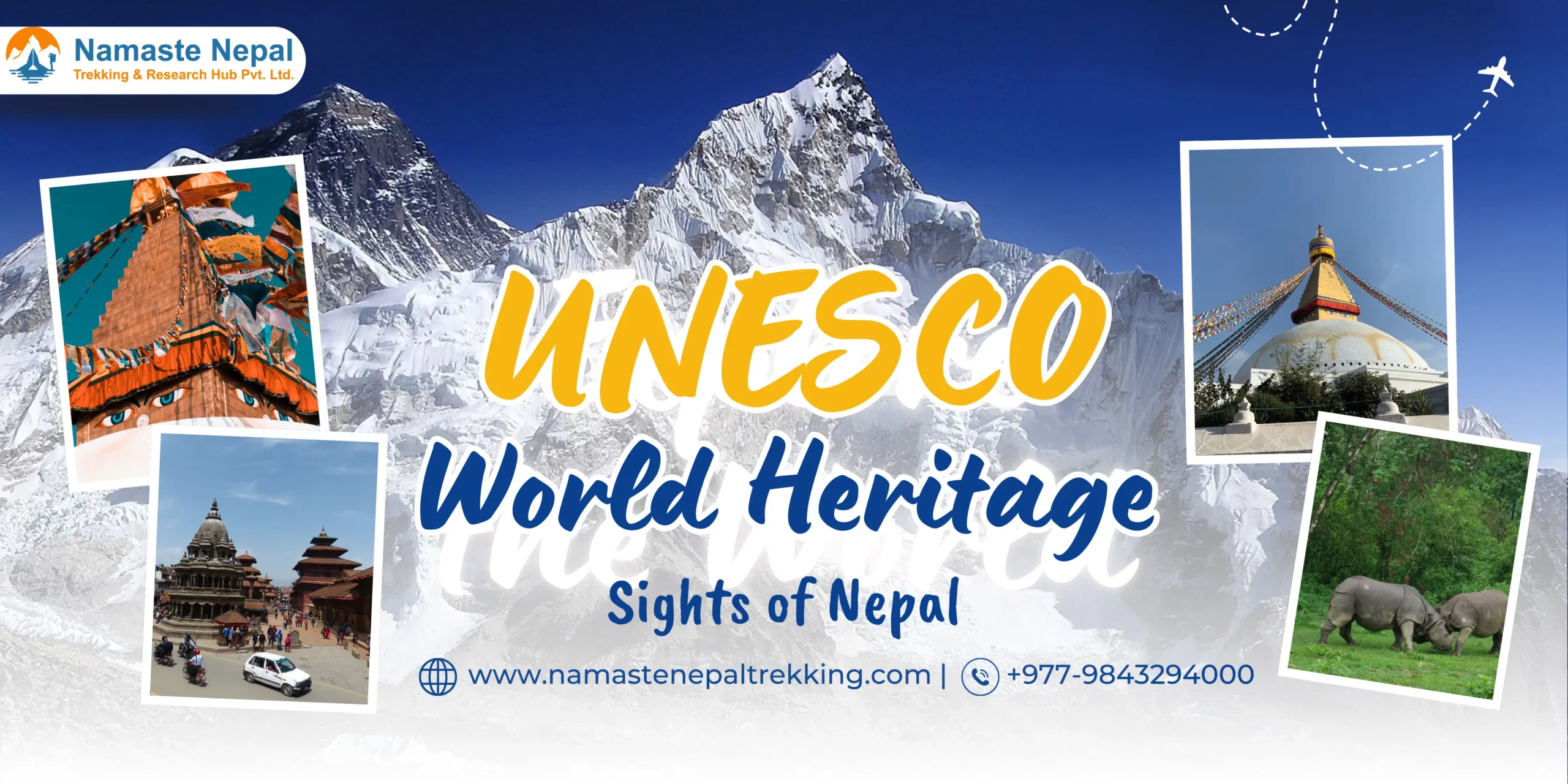
Nepal’s UNESCO World Heritage Sites are some of the most beautiful spots on the planet. These cultural gems offer a glimpse into the rich history, diverse culture, and stunning architecture of this beautiful country.Nepal is packed with amazing sights, especially its UNESCO World Heritage Sites. Start in the Kathmandu Valley, where busy city life meets ancient monuments and temples. It’s home to seven World Heritage Sites like Swayambhunath (Monkey Temple), Pashupatinath Temple, and Bhaktapur.
Outside the city, there’s Lumbini, the birthplace of Lord Buddha. Its peaceful gardens and monasteries are great for a spiritual retreat and to learn about history.
Don’t miss Chitwan National Park, a wildlife hotspot where you can go on jungle safaris to see one-horned rhinos, Bengal tigers, and tons of bird species. Nepal’s heritage isn’t just about temples and palaces; it’s about preserving natural beauty too.
In this article, we’ll dive deep into each of these incredible sites, giving you all the detailed information you need to plan your visit. Along the way, you’ll discover countless reasons why Nepal is a bucket-list destination for culture enthusiasts, history experts, and adventurers alike.
| S.N | UNESCO World Heritage Sites | Listed In (AD) | Entrance Fee |
| 1 | Kathmandu Durbar Square | 1979 | Tourists: NPR 1000 SAARC Nationals: NPR 150 |
| 2 | Patan Durbar Square | 1979 | Tourists: NPR 1000 SAARC Nationals: NPR 250 |
| 3 | Bhaktapur Durbar Square | 1979 | Tourists: NPR 1500 SAARC Nationals: NPR 500 |
| 4 | Changu Narayan Temple | 1979 | Tourists: NPR 400 SAARC Nationals: NPR 150 |
| 5 | Lumbini | 1997 | Tourists: NPR 700 SAARC Nationals: NPR 400 |
| 6 | Swayambhunath Stupa | 1979 | Tourists: NPR 200 SAARC Nationals: NPR 50 |
| 7 | Boudhanath Stupa | 1979 | Tourists: NPR 400 SAARC Nationals: NPR 100 |
| 8 | Pashupatinath Temple | 1979 | Tourists: NPR 1000 Indian: Free |
| 9 | Sagarmatha National Park | 1979 | Tourists: NPR 4000 SAARC Nationals: NPR 1500 |
| 10 | Chitwan National Park | 1984 | Tourists: NPR 2000 SAARC Nationals: NPR 1000 |
| Potential UNESCO World Heritage Sites | |||
| 1 | Khokana and Bungamati | Potential | Free for Everyone |
| 2 | Janakpur Dham | Potential | Tourists: NPR 5 |
| 3 | Lo Manthang | Potential | Tourists: $500 + NPR 3000 SAARC Nationals: $500 + NPR 1000 |
| 4 | Tansen (Palpa) | Potential | Free for Everyone |
| 5 | Rara Lake | Potential | Tourists: NPR 3000 + $90 SAARC Nationals: NPR 1000 + $90 |
Are you planning to Explore Nepal?
Dreaming of an adventure in Nepal? Namaste Nepal Trekking & Research Hub is here to turn your travel fantasies into reality! At Namaste Nepal Trekking & Research Hub, we pride ourselves on providing exceptional service and creating customized itineraries tailored to your interests and preferences.
Imagine standing at the foot of Everest, exploring ancient temples in Kathmandu, or rafting down rivers – the possibilities are endless with us! Contact Namaste Nepal Trekking & Research Hub and let’s plan your dream trip together. Find out UNESCO Heritage Sites in Nepal below:
1. Kathmandu Durbar Square (The Valley of Ancient Temples)

Located in the heart of the capital city of Nepal, Kathmandu Durbar Square is a showcase of ancient Nepali architecture and a testament to the historical significance of the Malla kings who ruled over the city. This UNESCO World Heritage Site serves as a cultural melting pot, brimming with palaces, courtyards, and temples that date back to the 12th century. The majesty of the old royal palace, intricate wood carvings, and fascinating Kumari Ghar (home of the living goddess) make it an unmissable destination. Visitors can marvel at the vivid details of the Taleju Temple, an architectural gem standing tall since 1564.
A few steps away, the Hanuman Dhoka Palace Museum offers rich insights into the royal history and artifacts of the region. Don’t forget to capture the essence of everyday life as locals engage in their rituals, sell traditional crafts, and maintain a lively atmosphere that is both welcoming and deeply rooted in heritage.
For a more interactive experience, join a guided tour that dives deeper into the stories behind each monument and gives life to the age-old legends associated with this historical site. Be sure to visit nearby local eateries and shops, which offer delicious Nepali cuisine and unique souvenirs that will make your visit even more memorable.
Kathmandu Durbar Square isn’t just a historic site – it’s a living, breathing part of the city’s soul, promising an unforgettable journey into the heart of Nepal’s cultural heritage.
Major Activities and Attractions
- Explore the old Royal Palace, where the kings of Kathmandu once resided.
- Visit the House of the Living Goddess (Kumari Ghar) and perhaps catch a glimpse of the Kumari.
- Admire the stunning architecture of the Taleju Temple, one of the square’s most revered.
- Witness local life and traditional crafts in the surrounding markets.
- Experience the vibrancy of local festivals, especially during Indra Jatra.
- Learn about the rich history and legends from knowledgeable local guides.
History and Origin
Kathmandu Durbar Square, right in the heart of Nepal’s capital, is a historic spot packed with palaces, courtyards, and temples. It’s been a cultural and political hub for centuries and is now a UNESCO World Heritage Site. Dating back to the 3rd century under the Licchavi dynasty, it saw major growth with the Malla dynasty, blending Hindu and Buddhist influences.
The area was home to royal palaces and coronation ceremonies and thrived from the 15th to 18th centuries with stunning constructions like the Taleju Temple and the residence of the living goddess, Kumari. The Malla kings added intricate wooden carvings, stone sculptures, and gold-topped pagodas, making it a lively center of daily and religious life.
Though earthquakes, especially the one in 2015, have caused damage, restoration continues to bring back its former glory. Visitors can still experience the echoes of its grand past while exploring its ancient alleys, observing vibrant local life, and admiring the enduring architecture. Kathmandu Durbar Square showcases Nepal’s rich history and resilient spirit.
Festival Celebrated:
Indra Jatra: An eight-day-long festival celebrating Indra, the god of rain and heaven, featuring chariot processions, masked dances, and ceremonial rituals.
Kumari Jatra: Includes the chariot procession of the living goddess, Kumari, adding a mystical touch to the festivities.
2. Patan Durbar Square (The City of Fine Arts)

Patan Durbar Square in Lalitpur is a vibrant testament to the ancient artistry of Nepal, captivating visitors with its stunning array of palaces, temples, and historical sites. This remarkable square stands out for its exceptional collection of intricate stone and metal sculptures. Among the most memorable features is the former palace complex, which provides a glimpse into the past of the region.
One of the key highlights of Patan Durbar Square is the Krishna Temple, constructed in the 17th century. This temple is renowned for its awe-inspiring 21 golden pinnacles and exquisite carvings depicting scenes from the epic stories of the Mahabharata and Ramayana. Another must-visit site within the square is the Hiranya Varna Mahavihar, commonly known as the Golden Temple. This serene and visually stunning temple is a haven of peace and beauty.
For those interested in diving deeper into the cultural heritage of the region, the Patan Museum is an essential stop. This museum houses an extensive collection of traditional sacred art, offering insights into the rich artistic and spiritual traditions of Nepal. Each piece in the collection tells a story, making the museum a treasure trove for anyone eager to learn more about the history and culture of this fascinating area.
Visiting Patan Durbar Square is like stepping back in time, where every corner has a story to tell and every structure has a sense of historical richness.
Major Activities and Attractions
- Marvel at the architectural beauty of the ancient Royal Palace.
- Visit the Krishna Mandir, made entirely of stone with intricate carvings.
- Explore the Patan Museum to understand the rich cultural heritage of the region.
- Enjoy local arts and crafts, especially the traditional Thanka paintings.
- Observe craftworkers at work in the nearby workshops.
- Partake in the Patan Festival if timing allows, to see the city come alive with cultural performances.
History and Origin
Patan Durbar Square, in the center of Lalitpur city, Nepal, is one of three Durbar Squares in the Kathmandu Valley and a UNESCO World Heritage Site. Known as the “City of Beauty,” it highlights the rich cultural heritage and artistic traditions of the Newar community. It has been an important hub of power, culture, and religion, especially during the Malla kings’ rule in the 16th and 17th centuries. The square features intricate wooden carvings, stone sculptures, and beautiful temples that blend Hinduism and Buddhism.
Patan Durbar Square’s exact beginnings aren’t crystal clear, but it has been bustling for centuries. The Malla kings really amped up its beauty by building many religious and public structures. King Siddhi Narsingh Malla, especially, was behind some of the most impressive buildings there, like the Krishna Mandir, famous for its amazing stone carvings and religious importance. The architecture blends Indian craftsmanship with traditional Newari elements, creating a unique style that still wows visitors.
Festival Celebrated:
Krishna Janmashtami: Celebrates the birth of Lord Krishna with religious processions, rituals at the Krishna Mandir, and performances.
Rato Machhindranath Jatra: A month-long festival involving the chariot procession of the rain god, celebrated to ensure good harvests.
3. Bhaktapur Durbar Square

Bhaktapur Durbar Square, located 13 km east of Kathmandu, is a historical place in front of the old Bhaktapur Kingdom’s royal palace. Known for its well-preserved palaces, courtyards, and temples, it highlights the city’s splendid history from the 15th to 17th centuries. The famous attraction is a Nyatapola Temple stands as a prime example of Newari craftsmanship.
Visitors can explore open spaces, admire intricately carved wooden windows and doors with complex structure, and visit the 55-Window Palace, showcasing the Malla Kings’ greatness. Beyond its complex architectural structure, Bhaktapur Durbar Square is a cultural hotspot with traditional Newari music and dance performances during festivals, offering a taste of Nepal’s rich heritage. Museums and workshops nearby let tourists engage with traditional arts like pottery and thangka painting.
Every corner of Bhaktapur Durbar Square, from the Talaju Temple to the maze of alleyways, tells a story of its fascinating past. The square is a living museum, attracting visitors from around the world.
Major Activities and Attractions
- Take in the impressive five-storied Nyatapola Temple, Nepal’s tallest pagoda shrine.
- Explore the Golden Gate and the Palace of Fifty-Five Windows with its exquisite craftsmanship.
- Visit the Bhaktapur National Art Gallery to see ancient paintings and artifacts.
- Enjoy the vibrant atmosphere during the Bisket Jatra festival.
- Engage with local artisans creating pottery in Pottery Square.
- Taste local delicacies like King Curd (Juju Dhau), particularly famous in Bhaktapur.
History and Origin
Bhaktapur Durbar Square, a UNESCO World Heritage Site, has a rich history from the 12th century when the Malla kings ruled Nepal’s Kathmandu Valley and built many of its beautiful palaces, courtyards, and temples. Known for their art and architecture, the Malla era left behind intricate wood carvings, brickwork, and stone sculptures.
Founded in the 9th century, Bhaktapur is one of the three royal cities in the Kathmandu Valley. Its location on the ancient trade route between India and Tibet helped it grow and prosper, allowing the Malla kings to invest in grand architectural projects.
Though earthquakes in 1934 and 2015 caused damage, Bhaktapur Durbar Square has kept its historical charm. Efforts from the local community and international organizations have restored much of it. Walking through the square today offers a glimpse into the history and artistry of the Malla period, drawing visitors from around the world to admire its beauty and serene atmosphere.
Festival Celebrated:
Bisket Jatra: Celebrated in April, marking the Nepali New Year with elaborate chariot races, tug-of-war contests, and traditional rituals.
Gai Jatra: A festival to honor the deceased, featuring parades, costumes, and satirical performances.
4. Changu Narayan Temple

Changu Narayan Temple, situated atop a hill in Bhaktapur, is considered the oldest temple in Nepal, dating back to the 4th century. Dedicated to Lord Vishnu, the temple is a magnificent example of ancient Nepali temple architecture with intricate wooden carvings depicting legends from Hindu mythology. The temple’s location also offers panoramic views of the surrounding valley and the lush hills.
Major Activities and Attractions
- Admire the stone inscriptions, among the oldest in Nepal, dating back to 464 AD.
- Explore the temple’s rich sculptures and artwork, which illustrate Nepalese history.
- Enjoy the tranquil environment and scenic hikes in the surrounding hill area.
- Participate in Hindu religious rituals and ceremonies.
- Visit the small museum within the temple premises to learn about the temple’s historical significance.
- Take the opportunity for photography, capturing the architecture and breathtaking landscapes.
History and Origin
Changu Narayan Temple, located in the Bhaktapur district of Nepal, is one of the oldest Hindu temples in the Kathmandu Valley, dating back to the 4th century. Dedicated to Lord Vishnu, the temple showcases ancient art and traditional Newari architecture. It features inscriptions from 464 AD at its base, making it a key historical and spiritual site. The temple has undergone several renovations due to natural wear and earthquakes.
Its Pagoda-style architecture includes intricate wooden carvings and metalwork. The double-roofed structure is adorned with sculptures and statues of gods and goddesses, appealing to both art lovers and spiritual seekers. According to legend, the site was initially a sanctuary established by a villager who saw Lord Vishnu disguised as a stone, hinting at its spiritual importance even before the temple was built.
Festival Celebrated:
Changu Narayan Jatra: The most notable festival is “Changu Narayan Jatra” which is , celebrated annually, typically falls in the months of February or March and involves extensive rituals, processions, and traditional dances.
Vishnu Jatra: During “Vishnu Jatra” and “Haribodhini Ekadashi,” the temple gets packed with devotees from all over Nepal and even beyond. Pilgrims come to pray and get blessings, turning the place into a lively scene of culture and faith. Both locals and tourists join in, making it a true celebration.
5. Lumbini, the Birthplace of the Lord Buddha

Lumbini, situated in the Rupandehi District of Nepal, holds great significance as the birthplace of Siddhartha Gautama, who later became known as the Lord Buddha. This revered spiritual site is steeped in history and calmness, drawing visitors from all corners of the globe.
The sacred Bodhi tree stands as a silent witness to centuries of devotion and enlightenment, offering a serene spot for reflection and meditation. Among the many significant landmarks, the Maya Devi Temple holds a special place. This temple, dedicated to Buddha’s mother, is a focal point for pilgrims and historians alike, who come to pay their respects and uncover the rich tapestry of Buddhist heritage.
Lumbini’s serene environment draws travelers, scholars, and spiritual seekers. From ancient ruins to modern temples, the place embodies peace and devotion, making it an inspiring destination.
Lumbini offers more than just a historical journey; it provides a peaceful and calming environment. Visitors have the unique opportunity to delve into the origins of Buddhism, experiencing firsthand the serenity and spiritual depth that have inspired countless generations.
Major Activities and Attractions
- Visit the Maya Devi Temple where Queen Maya Devi gave birth to Buddha.
- Meditate under the sacred Bodhi tree, enjoying the serene atmosphere.
- Explore the monastic zone, which houses monasteries from various Buddhist countries.
- Learn about Buddhist history and culture at the Lumbini International Research Institute.
- Attend the Buddha Jayanti festival, celebrating the birth of Buddha with many rituals and cultural activities.
- Walk around the Pushkarini pond where Buddha had his first bath.
History and Origin
Lumbini, in Nepal, is famous as the birthplace of Siddhartha Gautama, who became the Buddha around 563 BCE. Archaeological discoveries, like the Ashoka Pillar from 249 BCE, confirm its historical and spiritual significance. This site is a pilgrimage hotspot for Buddhists worldwide.
Over time, Lumbini has grown into a complex with many monasteries, stupas, and prayer halls built by devotees from various Buddhist traditions. Each adds to its rich cultural and spiritual heritage.
Festival Celebrated:
Buddha Jayanti: Celebrated every May, this festival marks the birth, enlightenment, and death of Buddha. Thousands of pilgrims visit Lumbini, and the day is filled with prayers, processions, and offerings at the Maya Devi Temple.
Losar: This is the Tibetan New Year celebration, featuring colorful dances, traditional music, and big feasts. It’s a vibrant event for the Tibetan Buddhist community.
6. Swayambhunath Stupa (Monkey Temple)

Swayambhunath Stupa, also known as the Monkey Temple due to its many resident monkeys, is a beautiful and ancient site located on a hill in the western part of Kathmandu Valley. This sacred site dates back to around the 5th century AD and is a symbol of enlightenment with its stunning white dome and golden spire featuring Buddha’s eyes.
The heritage site features various shrines, temples, a Tibetan monastery, a museum, and a library, bustling with devotees and tourists alike. As you explore, you can enjoy the peaceful atmosphere filled with the sound of prayers and the scent of incense, along with panoramic views of Kathmandu city below.
Both Buddhist and Hindu worshippers visit Swayambhunath, showcasing Nepal’s religious harmony. The playful monkeys add a fun element, making it a great spot for animal lovers and photographers.
Getting to Swayambhunath is an adventure, involving a climb up 365 steps, symbolizing each day of the year. The path features intricate carvings and ancient statues. Once at the top, the view of Kathmandu Valley is breathtaking and well worth the effort.
Major Activities and Attractions
- Climb the 365 ancient steps that lead to the main platform for an exhilarating experience.
- Witness the daily rituals and offering ceremonies performed by Buddhist monks.
- Explore the ancient Harati Devi temple, dedicated to both Hindu and Buddhist deities.
- Enjoy panoramic views of Kathmandu Valley from the viewpoint.
- Shop for traditional Tibetan thangka paintings and handmade artifacts around the complex.
- Interact with the cheeky monkeys that roam freely, symbolizing the playful nature of the gods.
History and Origin
Swayambunath Stupa, or the Monkey Temple, is an ancient religious site on a hill in Kathmandu Valley, Nepal. It’s over 2,000 years old and very significant in the country. According to legend, the valley used to be a giant lake with a lotus flower in the middle. When Manjushri drained the lake, the lotus settled on what became Swayambhunath’s hill. The stupa, with its famous Buddha eyes, was built during the Licchavi period and played a big role in spreading Buddhism in the region.
Swayambunath, a sacred site for both Buddhists and Hindus, has evolved over time with changing cultures and beliefs. The stupa’s architecture symbolizes different elements: earth, water, fire, air, and the void. This mirrors the path to enlightenment. Smaller, intricately decorated stupas and shrines around the main stupa showcase its long, rich history and cultural growth.
Festival Celebrated:
Buddha Jayanti: This festival commemorates the birth, enlightenment, and death of Buddha and is marked by processions, prayers, and lamp lighting.
Gunla: A month-long festival involving daily pilgrimages, music, and religious observances in August-September.
Samyak: A festival held every 12 years involving offerings to hundreds of Buddha images, reflecting the communal reverence for the spiritual significance of the stupa.
7. Boudhanath Stupa

Boudhanath Stupa, with its large mandala-like structure, is a central hub of Tibetan Buddhism in Nepal. Built-in the 14th century after the Mughal invasions, it amazes visitors with its size and perfect design. This stupa is a major pilgrimage site for Buddhists worldwide, offering an atmosphere of deep peace and serenity.
Around the stupa, there’s a lively market filled with colorful prayer flags, beautiful thangka paintings, and crafts showcasing Tibetan heritage. Local vendors and monks walk together, creating a vibrant yet peaceful atmosphere that feels timeless and modern at the same time. Visitors are welcome to join the locals in walking around the stupa clockwise as a form of meditation and respect. As you walk, the scent of incense and butter lamps, used as offerings, fills the air.
The experience blends spirituality and daily life with monks chanting sutras, prayer wheels spinning with whispered mantras, and the gentle sound of bells. Each step becomes a mindful reflection, connecting you with centuries of tradition and devotion.
In this busy yet serene setting, time seems to slow down, encouraging deep connection and reflection. The stupa stands tall, a symbol of peace despite the business of our daily life.
Major Activities and Attractions
- Walk around the stupa and spin the prayer wheels for good karma.
- Join the monks and devotees in their regular kora (walking meditation) around the stupa.
- Eat traditional Tibetan cuisine in nearby restaurants.
- Attend a meditation session at one of the surrounding monasteries.
- Shop for unique Buddhist artifacts and incense.
- Learn about the rich iconography and symbolism embedded in the stupa’s architecture.
History and Origin
Boudhanath Stupa in Kathmandu, Nepal, is one of the world’s largest and most important Buddhist monuments. It was built in the 5th century after Buddha’s death. The stupa’s origins are surrounded by myths, including one about a widow and her sons using buffalo bones for construction and another about a king building it to house the remains of Kassapa Buddha. It became a key pilgrimage spot, especially for Tibetan Buddhists after the 1959 Chinese invasion. The stupa symbolizes enlightenment and draws millions of visitors.
The architecture of Boudhanath Stupa is also fascinating. It has a white dome about 120 meters in diameter, topped with a gilded tower featuring Buddha’s all-seeing eyes on four sides, symbolizing wisdom and compassion. Around the stupa are 108 images of the Dhyani Buddha Amitabha in niches, along with many prayer wheels. Each tier of the stupa represents different stages of enlightenment, providing a meaningful journey for worshippers who circle it while chanting mantras.
Festival Celebrated:
Losar (Tibetan New Year): Celebrated with great enthusiasm, Losar marks the start of the Tibetan lunar calendar. The festival is filled with prayers, dances, and traditional music, drawing large crowds of Tibetans and visitors.
Buddha Jayanti: This festival commemorates the birth, enlightenment, and death of Buddha. Devotees participate in special prayers and light thousands of butter lamps around the stupa.
8. Pashupatinath Temple

Situated along the banks of the holy Bagmati River, Pashupatinath Temple is a Hindu temple dedicated to Lord Shiva. Established in the 5th century and later renovated by Malla kings, the temple area expands across 264 hectares of land abounding with countless temples, ashrams, images, and inscriptions. As a major pilgrimage destination, it draws thousands of worshippers annually, especially during the Maha Shivaratri festival.
The temple’s stunning pagoda design and silver-plated doors are truly eye-catching. Pashupatinath Temple, with its detailed wood carvings and golden pinnacle, showcases ancient craftsmanship. Visitors often see sadhus meditating and performing rituals by the river’s stone steps. During the Maha Shivaratri festival, the temple buzzes with devotees, lights, music, and the scent of candles.
Major Activities and Attractions
- Observe the Aarti Ceremony held each evening at the riverbank.
- Discover the array of smaller temples dedicated to other deities within the complex.
- Witness the Hindu cremation rites along the ghats.
- Explore the Pashupatinath Museum within the temple premises.
- Attend philosophical discourses or music performances often held in the temple area.
- Enjoy serene walks along the banks of Bagmati River adjacent to the temple.
History and Origin
Pashupatinath, located on the banks of the Bagmati River in Nepal, stands as one of the most devoted Hindu temples dedicated to Lord Shiva. It’s a place where spirituality and history intertwine, creating an atmosphere that feels both timeless and sacred. The origin of Pashupatinath dates back to 400 AD, but there’s a strong belief among historians and devotees alike that this site has held spiritual significance since the pre-Vedic era. This means that for thousands of years, people have felt a divine connection with this ground.
The temple complex is an amazing piece of architecture. Every part of it is decorated with detailed wood and stone carvings that show the region’s rich cultural and religious history. Pashupatinath isn’t just an old monument; it’s full of life, especially during the Maha Shivaratri festival.
Thousands of pilgrims from around the world come to honor Lord Shiva. The place is filled with prayers, glowing lamps, and the ever-present Bagmati River, creating a powerful spiritual atmosphere. This festival really highlights Pashupatinath’s importance as a key pilgrimage site for Hindus.
Festival Celebrated:
Maha Shivaratri: This big festival honors Lord Shiva with all-night vigils, special rituals, and thousands of sadhus (holy men) coming from all over India and Nepal.
Teej: Celebrated by Nepali women, Teej is devoted to Goddess Parvati and Lord Shiva. Women fast, wear bright red sarees, and join in energetic dances and songs.
9. Sagarmatha (Everest) National Park

Home to Mount Everest, the world’s highest peak, Sagarmatha National Park offers breathtaking natural landscapes and a unique ecosystem. Established in 1976, this park covers 1,148 square kilometers of the Himalayan ecological zone in the Khumbu region of Nepal. The area is not only significant for its impressive geology but also for its cultural ties with the indigenous Sherpa people.
Wildlife thrives in the harsh mountainous conditions, with species like the snow leopard, red panda, and Himalayan tahr calling the park home. The flora is equally diverse, from lush forests of pine and rhododendron to alpine meadows adorned with blooming wildflowers.
For adventure seekers, Sagarmatha National Park is a trekker’s paradise. Trails range from moderate hikes to strenuous climbs, making it a destination suitable for various skill levels. The well-trodden Everest Base Camp trek is a bucket-list experience for many, offering not just physical challenge but also stunning views and encounters with the rich Sherpa culture.
Additionally, the park’s spiritual significance shouldn’t be overlooked. Scattered throughout are monasteries, stupas, and prayer flags, creating a serene atmosphere where one can reflect with natural peace.
Major Activities and Attractions
- Trek to Everest Base Camp for a once-in-a-lifetime adventure.
- Spot rare fauna like the snow leopard, Himalayan tahr, and red panda.
- Visit the Tengboche Monastery, a spiritual and cultural hub in the region.
- Engage in bird watching; the park is home to over 118 species of birds.
- Explore the Gokyo Lakes, the world’s highest freshwater lake system.
- Learn about Sherpa culture and traditional high-altitude farming techniques.
History and Origin
Sagarmatha National Park, home to Mount Everest, was established in 1976 and added to the UNESCO list in 1979. This park, encompassing a rugged terrain of glaciers, deep valleys, and towering peaks, is primarily inhabited by the Sherpa community, known for their mountaineering prowess.
The park is filled with incredible stories of the first mountaineers who conquered Everest. It’s more than just pretty views and fresh air; it’s a tribute to human adventure and exploration. Each trail and peak stands as a reminder of the bravery and determination of those who dared to reach for the sky. When you step into the park, you’re walking through an inspiring story that keeps unfolding.
Festival Celebrated:
Mani Rimdu: At Tengboche Monastery, enjoy masked dances, songs, and shows celebrating Buddhism’s triumph over Bon, Tibet’s old animistic religion.
Dumji Festival: Honoring Guru Rinpoche, this event features tasty Sherpa food, traditional dances, and prayers, bringing the Sherpa community together.
10. Chitwan National Park

Chitwan National Park, one of the most iconic national parks in Nepal, was established in 1973 and proudly became a UNESCO World Heritage Site in 1984. This park is celebrated for its remarkably diverse ecosystems, encompassing lush forests, expansive marshlands, and wide-reaching grasslands. If you have a passion for wildlife, Chitwan is nothing short of a paradise.
Walking through the park, you’ll find yourself completely immersed in nature, with the chance to encounter some of the world’s most magnificent and endangered creatures. The Bengal tiger walks through these habitats with its dangerous presence. The park is also home to the rare one-horned rhinoceros, a remarkable sight as it roams the plains and wallows in the mud. And don’t miss spotting the Gharial crocodile, an impressive reptile that makes its home in the park’s rivers.
Each visit to Chitwan National Park is not just an adventure; it’s a step into a world where nature’s wonders are preserved and celebrated.
Major Activities and Attractions
- Enjoy elephant or jeep safaris to explore the depths of the jungle.
- Canoe down the Rapti River and watch crocodiles basking in the sun.
- Visit the Elephant Breeding Center and learn about conservation efforts.
- Experience a traditional Tharu cultural dance show in a local village.
- Take guided nature walks with experienced naturalists.
- Attend briefings at the visitor center to enhance your understanding of the park’s biodiversity.
History and Origin
Established in 1973, Chitwan National Park holds the distinction of being Nepal’s very first national park and, in 1984, it further earned the prestigious UNESCO World Heritage status. Nestled in the Terai region, this park isn’t just a protected area—it’s a living museum of rich history, conservation efforts, and a striking blend of diverse ecosystems. The park’s landscape is a fascinating tapestry of lush forests, marshlands, and grasslands, creating a sanctuary for some of the world’s most magnificent and endangered creatures.
Historically, the area that is now Chitwan National Park served a very different purpose; it was once the hunting reserve for Nepal’s ruling elite. Back then, it was frequented by royalty and their guests who sought the thrill of hunting in its dense jungles. However, as conservation awareness grew, this reserve underwent a remarkable transformation. Instead of hosting hunting expeditions, Chitwan became a critical stronghold for wildlife conservation.
Today, Chitwan National Park is famous worldwide for protecting endangered species like the Bengal tiger and the one-horned rhinoceros. Thanks to its conservation programs and strict rules, it’s a top spot for wildlife preservation. Nature lovers, researchers, and tourists visit to see its rich biodiversity. In short, Chitwan National Park shows how resilient nature is and why it’s essential to protect it for the future.
Festival Celebrated:
Maghi: Celebrated by the Tharu community, this New Year event features traditional dances, songs, and a feast with unique Tharu dishes.
Elephant Festival: In December, enjoy elephant races, football matches, and a grand parade, showing the special bond between locals and elephants.
Potential UNESCO World Heritage Sites in Nepal
Nepal is a treasure with cultural and natural wonders. It already has an impressive list of UNESCO World Heritage Sites, and more could be added soon! Here are five cultural gems you should definitely check out.
1. Khokana and Bungamati
Just a short drive from Kathmandu, Khokana and Bungamati are living museums of ancient Newari culture and traditions. These twin villages offer a window into the past, where the rhythms of daily life continue much as they have for centuries. Traditional oil-pressing methods, ancient temples, and artisans at work make these villages a rich cultural experience.
Khokana and Bungamati are noted for their beautifully preserved buildings and traditional practices, offering a stark contrast to the rapidly modernizing world around them. Here, every alley tells a story, and every resident carries forward a legacy.
Major Attractions and Highlights:
- Witness the ancient techniques of oil pressing in action, a craft that has been passed down through generations.
- Explore the sacred pond in Khokana, which holds great religious significance for the local community.
- Visit this temple in Khokana, dedicated to Goddess Rudrayani, and admire its intricate woodwork and stone carvings.
- Take a stroll through Bungamati to discover this beautiful monastery and soak in the serene atmosphere.
History and Origin
Khokana and Bungamati are two fascinating towns with rich histories that stretch all the way back to the Malla period in the 16th century. These places have done an incredible job of preserving their cultural and architectural heritage, looking much the same today as they did hundreds of years ago.
Khokana has always been famous for its mustard oil production. Walking through the town, you can still find traditional oil-pressing mills, giving you a glimpse into its storied past. It’s like stepping back in time, with the town’s layout and daily life revolving around this ancient craft. Meanwhile, Bungamati holds a special place in the hearts of many as it is believed to be the birthplace of the deity Machhindranath.
This town is a significant religious site, and you can really feel its spiritual vibe. The traditions here are strong, with various festivals and rituals dedicated to Machhindranath still actively celebrated by the locals.
In both Khokana and Bungamati, it feels like time stands still. Their commitment to preserving history and culture makes them unique, offering a rare and authentic glimpse into the Nepal of centuries past.
Festivals Celebrated:
Indra Jatra: Celebrated with chariot processions and traditional dances.
Biska Jatra: Marking the Nepalese New Year with vibrant celebrations.
Gai Jatra: A unique festival where families who have lost a member in the past year parade a decorated cow through the town.
2. Janakpur Dham and Janaki Mandir Complex
Located in the ancient city of Janakpur in southeastern Nepal, the Janaki Mandir Complex is a testament to the region’s rich historical and religious tapestry. The temple is dedicated to Goddess Sita, the consort of Lord Rama, making it a significant pilgrimage site for Hindus.
The greatness of Janaki Mandir, built in a mix of Mughal and local architecture, draws thousands of visitors annually. The temple complex extends over a large area with manicured gardens, courtyards, and several smaller shrines.
Major Attractions and Highlights:
- The temple’s unique blend of Mughal and local architectural styles is a visual feast.
- Beautifully maintained courtyards where devotees and visitors can relax and spend time.
- Lush gardens add to the serene ambiance, making it a perfect spot for meditation and reflection.
- Several smaller shrines within the complex are dedicated to various deities, enhancing the spiritual experience.
History and Origin:
Janaki Mandir was built in 1910 by Queen Vrisha Bhanu of Tikamgarh, India. The temple stands on the site where it is believed that Sita was born and where she married Lord Rama, immortalized in the epic Ramayana. The city of Janakpur was the capital of the ancient kingdom of Videha.
Festivals Celebrated:
Ram Navami: Celebrates the birth of Lord Rama with grand processions and rituals.
Vivah Panchami: Reenacts the wedding ceremony of Sita and Rama.
Chhath Puja: Dedicated to the Sun God with rituals performed at the Ganga Sagar.
3. Lo Manthang

Lo Manthang in Upper Mustang is like stepping into a different world. This remote, walled city features unique Tibetan culture, ancient monasteries, and stunning desert landscapes.
The city is still ruled by a local king, and its isolation has preserved the Tibetan Buddhist culture and traditions that date back centuries. Exploring Lo Manthang reveals a harmonious blend of spirituality, history, and natural beauty.
Major Attractions and Highlights:
- Home to the last king of Lo, this ancient palace offers a glimpse into the region’s royal history and traditional Tibetan architecture.
- An exquisite monastery dating back to the 15th century, featuring beautiful murals, intricate carvings, and a serene ambiance.
- Mysterious ancient caves carved into the cliffs, historically used as meditation retreats and shelters.
- Stunning vistas of snow-capped peaks, arid landscapes, and picturesque villages, perfect for trekking and photography.
History and Origin
Lo Manthang, established in the 15th century by King Ame Pal, served as the capital of the Kingdom of Lo. The region’s strategic location along the ancient trade route between Nepal and Tibet contributed to its historical and cultural richness. The fortified city has remained a vital center for Tibetan Buddhism.
Walking through Lo Manthang feels like stepping back in time, as the city’s layout and buildings have retained much of their historical character. It’s not just a place; it’s an experience of living history where every corner tells a story of its glorious past and vibrant spiritual life.
Festivals Celebrated:
Tiji Festival: A three-day event symbolizing the victory of good over evil.
Losar: The Tibetan New Year is celebrated with traditional songs, dances, and feasts.
Mani Rimdu: A festival involving mask dances and rituals conducted by monks.
4. Tansen (Palpa)
Tansen, a cozy hill town in western Nepal, boasts awesome mountain views and a mix of natural beauty and cultural heritage. It’s like a living museum of Newari architecture and classic Nepali culture. Since it’s not swamped by tourists, visitors get a more genuine experience.
Tansen also serves as a gateway to other attractions in the region, including the famous Rani Mahal or Queen’s Palace, a picturesque palace located on the banks of the Kali Gandaki River. Wandering through the narrow streets of Tansen, you can feel the history come alive through its ancient temples, palaces, and traditional homes.
Major Attractions and Highlights:
- Get lost in the mesmerizing views of the Himalayas, where the towering peaks touch the sky and the landscape feels like it’s straight out of a dream.
- Explore the historical Rani Mahal, a palace that stands as a testament to a bygone era, brimming with cultural and architectural wonders.
- Wander around and admire the beautifully preserved Newari architecture, showcasing the intricate craftsmanship and unique designs that tell stories of the past.
- Discover the ancient temples scattered throughout the area, each with its own rich history and spiritual significance, creating a tapestry of sacred spaces.
History and Origin
Tansen, founded during the medieval period, played a significant role as a bustling trade and administrative hub within the Magar kingdom of Tanahun. Thanks to its strategic location, it served as a vital link between the fertile Terai plains and the more rugged hilly regions.
This prime positioning not only boosted commerce by allowing easy movement of goods but also encouraged a rich cultural exchange among diverse communities. Merchants, traders, and travelers mingled in Tansen, each contributing to the town’s vibrant and diverse cultural tapestry.
Festivals Celebrated:
Maghe Sankranti: Celebrating the winter solstice with feasts and rituals.
Ropai Jatra: A vibrant festival marking the planting season.
Janai Purnima: A traditional Hindu festival involving ritual baths and sacred threads.
5. Rara Lake
Rara Lake is a beautiful destination in the remote north-western region of Nepal. As the largest lake in the country, its crystalline waters and surrounding lush greenery offer a serene escape from the hustle and bustle of urban life. A trip to Rara Lake provides not only natural beauty but also an opportunity to witness the traditional lifestyles of the local communities.
The trek to Rara Lake takes you through picturesque villages, dense pine forests, and breathtaking mountain landscapes, culminating in the awe-inspiring view of the lake itself. It’s an ideal destination for adventurers and nature enthusiasts alike.
It’s not just the unmatched beauty or the serenity of the place that draws people in; it’s the sense of timeless wonder that lingers in the air, making Rara Lake a true gem amidst the Himalayan landscape.
Major Attractions and Highlights:
- Crystal-clear waters perfect for photography and peaceful reflection
- Diverse wildlife, including rare species of birds and fish
- Traditional Nepali villages offering cultural immersion and local hospitality
- Dense pine forests and scenic trails ideal for trekking and nature walks
- Stunning panoramic views of the Himalayan peaks surrounding the lake
History and Origin
Rara Lake, surrounded by Rara National Park established in 1976, has been at the center of local legends and folklore for centuries. The park was created to protect the area’s unique biodiversity, and the lake continues to hold spiritual and cultural significance for the locals.
Locals believe that the lake is home to divine spirits and ancient gods, making it a place of pilgrimage for many. Visitors often come not just for the breathtaking views and peaceful atmosphere but also to immerse themselves in the rich cultural heritage that permeates the region. The way the mist rises off the water in the early morning creates an almost otherworldly scene, adding to the lake’s mystical aura.
In recent years, eco-tourism initiatives have helped strike a balance between preserving the park’s fragile ecosystem and providing educational opportunities for visitors. Local guides, well-versed in the flora, fauna, and lore of the area, help ensure that tourism benefits both the environment and the community.
Best Time to Visit Nepal UNESCO Heritage Sites in Nepal
Kathmandu Durbar Square, Patan Durbar Square, and Bhaktapur Durbar Square truly come alive during during the Indra Jatra Festival in late September. The streets are filled with traditional dances, chariot parades, and an unbeatable festive vibe. It’s the best time to experience Nepal’s rich culture.
Additionally, Swayambhunath Stupa, also known as the Monkey Temple, and Boudhanath Stupa, two of the most iconic landmarks in Kathmandu, reach their full glory during Buddha Jayanti in April or May. This festival celebrates the birth of Buddha with vibrant decorations, prayers, and ceremonies that add an extra layer of beauty to these already stunning sites.
For a spiritual experience, visit Pashupatinath Temple during Maha Shivaratri in February or March. The festival, dedicated to Lord Shiva, offers vibrant rituals that make it unforgettable. Changunarayan Temple is especially celebrated during the Changunarayan Jatra around the same time. This festival brings the temple to life with traditional celebrations, highlighting its historical and religious importance.
Moreover, Lumbini, the birthplace of Lord Buddha, is best visited during Buddha Jayanti. The entire area transforms into a hub of cultural activities and ceremonies, offering a deeply immersive experience into the life and teachings of Buddha. For those looking to explore the majestic landscapes of Nepal, Sagarmatha National Park, home to the legendary Mount Everest, is ideal from late September to early December or from March to May. These time offer clear skies and excellent trekking conditions, making it the perfect time to go on an adventure in the Himalayas.
Finally, Chitwan National Park is a great spot for wildlife and is best to visit between October and March. The weather is perfect for exploring and spotting animals like the one-horned rhinoceros.
How to Secure Your Trip to Nepal’s UNESCO Heritage Sites
Visiting Nepal is like entering a timeless world with stunning scenery and a rich cultural history. Planning to check out Nepal’s UNESCO World Heritage Sites? Here’s a quick guide to making your trip easy and stress-free.
First things first, travel insurance is a must. Not only does it cover unexpected medical expenses, but it also safeguards you against trip cancellations and lost baggage. Think of it as your safety net.
Next, securing the right permits is crucial. Sites like Sagarmatha National Park and the Kathmandu Valley have strict regulations, so you’ll need to obtain the appropriate entry permits. Sometimes this can be confusing, but don’t worry – we’ve got you covered.
Speaking of coverage, We, Namaste Nepal Trekking & Research Hub Pvt. Ltd. can be your one-stop solution for all things travel-related. Our experienced guides specialize in navigating every corners of Nepal’s cultural heritage sites. For a hassle-free, unforgettable experience, leave the logistics to the pros. From obtaining necessary permits to charting out the best routes, we manage everything so you can focus on soaking in the beauty and history.
Feel free to contact us at +9779843294000 to make your dream trip a reality. With Namaste Nepal Trekking & Research Hub Pvt. Ltd., you’re not just visiting Nepal; you’re experiencing it like never before.
Conclusion
Wrapping up our journey through Nepal’s UNESCO World Heritage Sites, it’s clear that this small yet incredibly diverse country has so much to offer. From the ancient, sacred city of Lumbini, which birthed a spiritual revolution, to the awe-inspiring Kathmandu Valley where history and architecture blend seamlessly, each site tells its own unique story. These cultural gems aren’t just places to check off your travel list—they are gateways to understanding Nepal’s richness of history, spirituality, and art.
Visiting these sites, you’ll not only witness stunning temples, palaces, and stupas, but also experience the living traditions that surround them. Traveling in Nepal is about more than just sightseeing; it’s about immersing yourself in a culture that has thrived for centuries while adapting to the modern world. Taking the time to explore these UNESCO World Heritage Sites will give you a deeper appreciation for Nepal’s cultural heritage and its resilience.
Don’t miss these cultural gems when planning your trip to Nepal. They are more than just destinations; they’re experiences that will stay with you long after you’ve returned home. Let’s Plan your Caltureal expedition and Natural Adventure in Nepal together!

Rajan Lamichhane, the Founder and Managing Director of Namaste Nepal Trekking & Research Hub, brings over 15 years of expertise in the tourism industry. With a profound passion for trekking and mountaineering, he has led numerous trekking and cultural tours across Nepal, Tibet, and Bhutan, prioritizing safety, enjoyment, and sustainability. Under his leadership, Namaste Nepal Trekking has become a trusted name in adventure travel industry.
Related Blogs