English
 Dutch
Dutch Japanese
 Hindi
Hindi Italian
 Spanish
 French
 German
 Chinese
 Korean
 Arabic
 Hebrew
 Russian
 Portuguese
 Danish
 Czech
Czech Polish
 Swedish
14 Days
Moderate
 Share
Share Updated: 5 May, 2026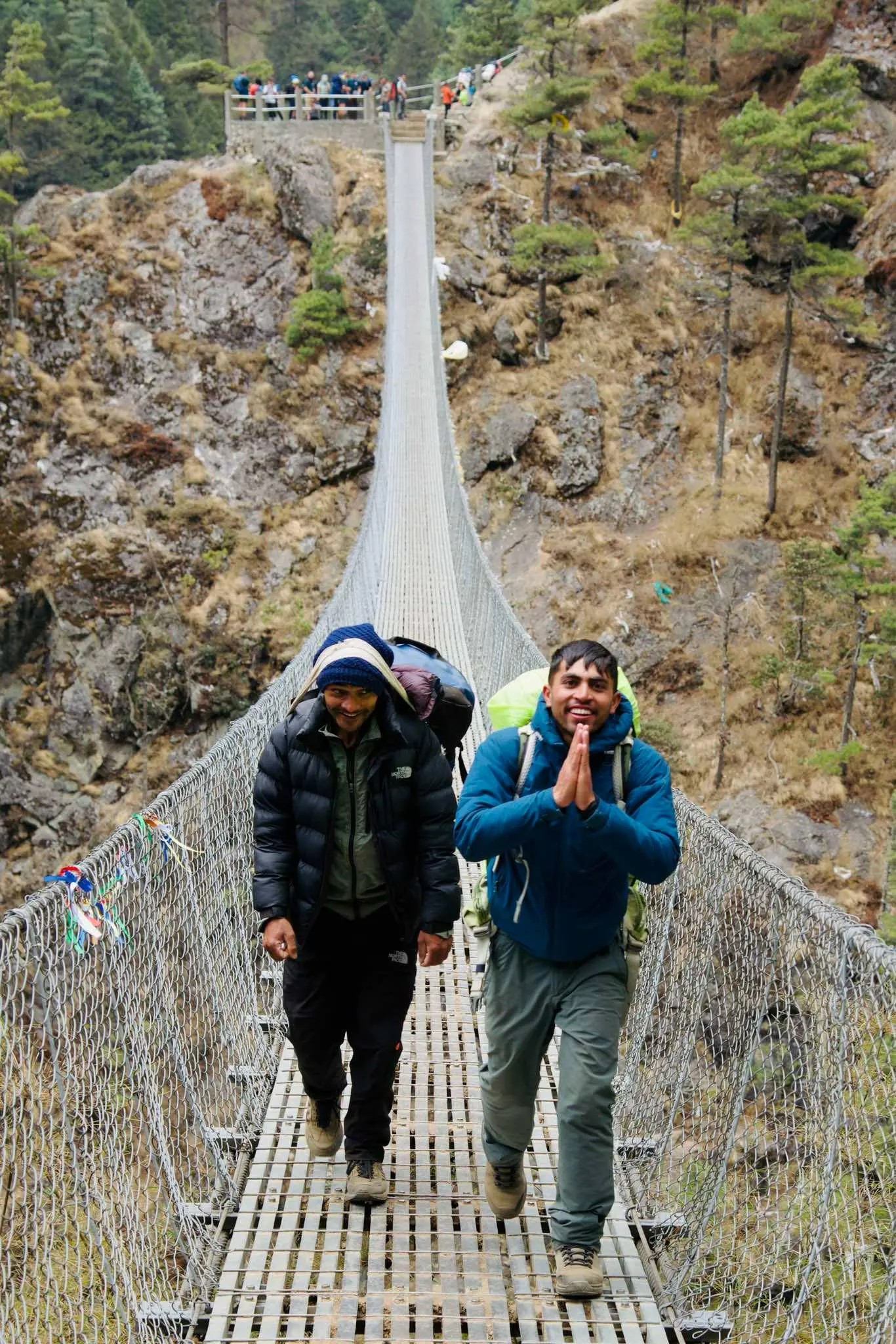
Learn the meaning of Namaste in Nepalese culture, the hand gesture, correct pronunciation and how to use it respectfully as a visitor.
Namaste is a word many travelers encounter before they arrive in Nepal. It appears on yoga studio walls, wellness websites and souvenir T‑shirts. But in Nepal, Namaste is the simplest form of greeting you do to everyone.
The Sanskrit word Namaste literally means “I bow to you,” but it also includes a hand gesture, a slight bow and recognition of the other person’s intrinsic value and divinity.
This guide explains what Namaste actually means: linguistically, spiritually and culturally. It covers the hand gesture (Anjali Mudra), the bow, how Namaste is used differently from Namaskar, and how the greeting works in both Hindu and Buddhist contexts in Nepal. It also addresses common Western misunderstandings and practical advice for visitors who want to use it correctly.
Whether you are traveling to Nepal, teaching yoga or simply curious about the word, this guide gives you the information you need on Namaste.
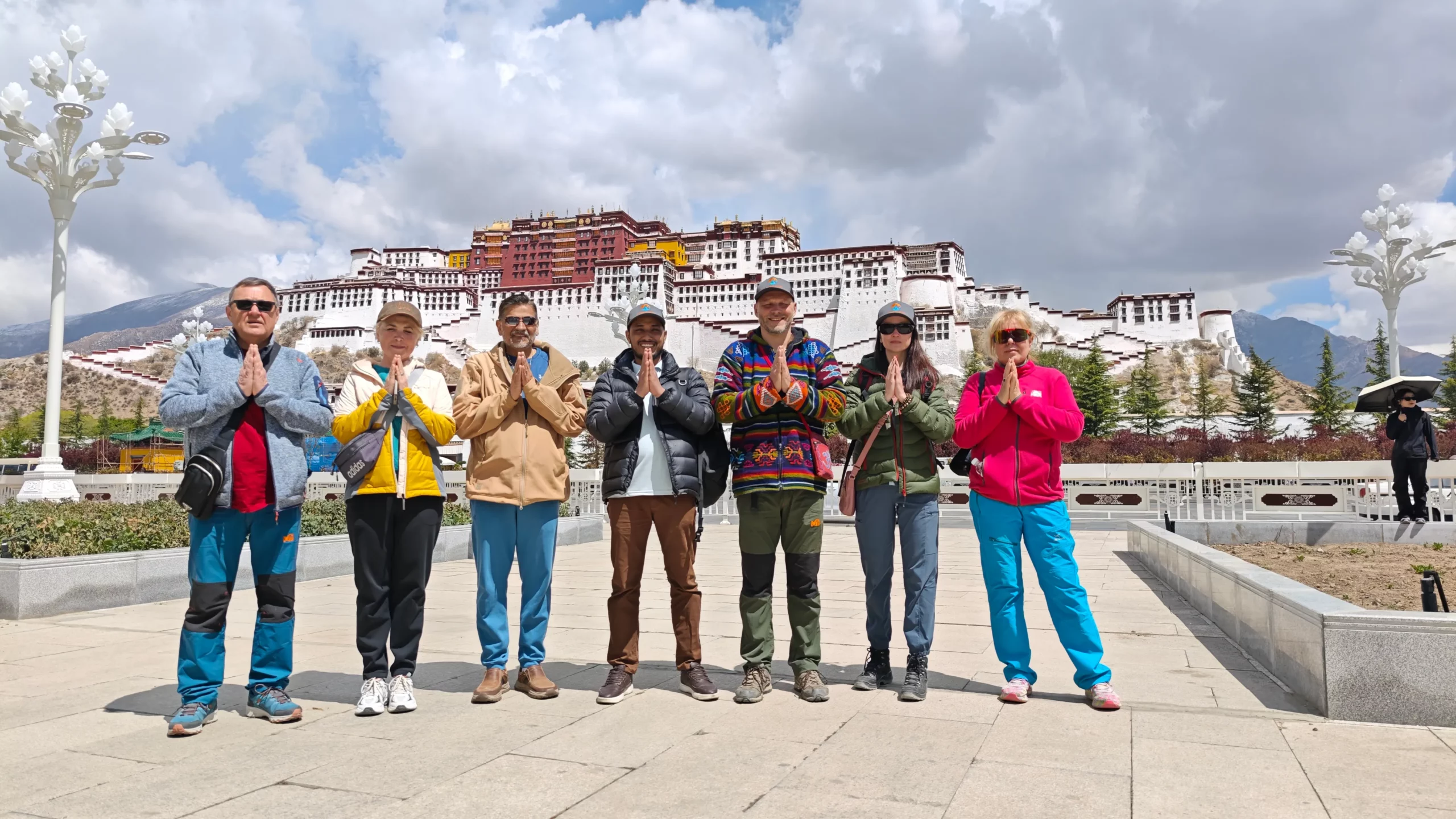
| Category | Detail |
| When to say it | Meeting, leaving, entering a shop, asking for help, thanking, apologizing |
| How to do it | Hands together at heart, fingers up, slight bow, gentle eye contact |
| How to say it | na-mas-te (stress middle syllable). “Nah-mah-stay” is fine |
| How to respond | Say “Namaste” back with same gesture |
| Bow deeper for | Elders, monks, teachers |
| Don’t | Use as a joke |
| Good to know | Locals appreciate the effort. Perfection not expected |
Namaste comes from Sanskrit, the classical language of Hindu scriptures. The word is a combination of two parts: namah and te.
Namah means “bow” or “reverent salutation.” It is a formal acknowledgement of respect. Te means “to you.” Put together, the most direct translation in the English language is “I bow to you.”
There is no single English word equivalent because Namaste is both a verbal greeting and a physical acknowledgment of respect in one word.
In simple terms, saying “Namaste” is the bow as you’re not just talking about bowing, you’re actually doing it with your words (Benson, 2023).
The deeper meaning associated with Namaste comes primarily from yoga and meditation traditions. It is based on the idea that every person contains a divine spark.
Different traditions name this spark differently: Atman in Hindu philosophy, Buddha nature in some Buddhist teachings, or simply the inner self.
When someone says Namaste, they are not bowing to the other person’s body, personality or social status. They are bowing to that inner spark.
The commonly used interpretation: “the divine in me bows to the divine in you”, is a modern phrasing which became popular in Western yoga communities as a way to explain the spiritual concept behind the word.
Sociologist Holly Oxhandler describes it as “the sacred in me recognizes the sacred in you” (Sharma et al., 2021).
This interpretation is not incorrect, but it is not literal. It helps non‑Sanskrit speakers understand the underlying respect for the other person’s essential nature.

14 Days
Moderate
When the hands are pressed together in Namaste, the gesture is called Anjali Mudra in Sanskrit. Anjali means “offering” or “reverence,” and mudra means “gesture.”
The hands are placed together with palms touching and fingers pointing upward, not sideways. The placement of the hands has specific meanings. Traditional etiquette has three hand positions showing different levels of respect: hands at the heart for people equal to you, hands at the forehead for gods and teachers, and hands above the head for the deepest reverence to a deity or guru (Benson, 2023).
In yogic philosophy, the two palms touching represents the union of opposites. The left hand corresponds to the ida nadi (the feminine, lunar energy) and the right hand to the pingala nadi (the masculine, solar energy).
Pressing them together brings balance to these two channels within the body. It also symbolizes the meeting of the individual self with the universal self.
The fingertips should touch evenly, with a small hollow space between the palms. This space is said to represent the heart’s openness, and the gesture itself helps calm the mind by creating symmetry in the body’s nervous system.
The physical bow is an essential part of Namaste. It communicates humility and active respect.
A slight nod of the head is used for peers, acquaintances or people of similar age and status. A deeper bow, bending from the waist or lowering the head further, is directed toward elders, teachers, authority figures or deities.
Unlike bows in Japanese or Thai culture, which have strict social rules and hierarchies, the bow in Namaste is simpler and fundamentally rooted in bowing to another person’s inner divinity rather than their status.
Nepalese use Namaste with everyone: whether strangers or friends, it doesn’t change based on how well you know someone. Unlike Western greetings like “hello” for strangers and “hey” for friends, Namaste keeps the same respectful form in every interaction.
Tourists and visitors are encouraged to try it. Locals appreciate you attempting it with hands together and a slight bow. The gesture and intention matter more than getting it exactly right.
This greeting tradition is rooted in the broader Nepali value of Atithi Devo Bhava i.e. “the guest is equivalent to God”, which is the moral foundation for the famous hospitality across Nepal (Sharma, 2025).
In cities like Kathmandu and Pokhara, you might hear “hello” used alongside Namaste, especially among younger people or in tourist areas. In villages, Namaste is the standard greeting.
18 Days
Moderate
The main difference is that Namaskar is more formal and respectful, used for elders, teachers and gods. Namaste is everyday language, used for friends and people your own age. Tourists should just use Namaste, it’s fine in almost any situation.
Nepalese also has time-based greetings like subha prabhat (good morning) and subha sandhya (good evening), but Tourists aren’t expected to use them in daily conversation.
In very formal settings (like ceremonies or addressing a high priest), people might use Namaskar with a deeper bow or even pranam for deep respect. But these are rare now.
In Hinduism’s Advaita Vedanta (non-duality), the joining of the palms symbolizes the meeting of the individual self (atman) with universal consciousness (Brahman), the dissolution of duality into oneness (Benson, 2023).
Saying Namaste is a practical way of recognizing that the same divine presence lives in both you and the person you greet.
The same gesture is also used in worship (puja). Hindus press their hands together and bow to a deity in a temple, to a priest, or to a sacred image during festivals like Dashain and Tihar.
In these religious settings, the hands are often raised to the forehead or above the head, and the bow is deeper. But the meaning is the same: respect for the divine presence.
Nepalese Buddhists use Namaste just as often as Hindus. The meaning is similar, but the reason behind it differs.
Buddhists do not believe in a permanent, unchanging soul. Instead, when a Buddhist says Namaste, they are recognizing the other person’s capacity for awakening and their worth as a living being, along with qualities like compassion and loving-kindness.
In Buddhist contexts, hospitality and respect are guided by Karuna (compassion) and Dana (generosity), framed through pratityasamutpada (dependent origination) which is the understanding that all beings are interdependent (Sharma, 2025).
In Nepal’s Himalayan regions where the majority population is the Sherpas and Tibetan Buddhism is strong, and Namaste is used with its Buddhist meanings. Monks and nuns use it daily with each other and with ordinary people.
It is also used in meditation practice before or after meditating, people press their hands together and bow to a teacher, a Buddha image, or to each other as a sign of gratitude and respect, not worship.
As both Hindus and Buddhists in Nepal use Namaste, it is a shared greeting that crosses religious boundaries. A Hindu and a Buddhist can greet each other with Namaste, and both understand the respect being offered, even if their beliefs about why they bow are different.
Namaste became popular in Western yoga classes as yoga spread to the US and UK. In most Western studios, it is said at the end of class, not the beginning.
Some people from Nepal and India feel this Western use is disrespectful or shallow, especially when Namaste appears on joke merchandise like “Namastay in bed” or is used as a trendy word without real understanding.
Others say spreading a positive message of respect is fine, even if the tradition has changed slightly. Most agree that using Namaste with genuine respect, not as a fashion statement, is acceptable.
However, some scholars argue that the global use of Namaste has become a tool of “commercial mindfulness” marketed to stressed workers as a form of escapism rather than genuine spiritual practice, reducing the greeting to what critic Andrea R. Jain calls an empty subversion designed to make a sale (Benson, 2023).
The word likely entered Western yoga through teachers like Swami Satchidananda and Indra Devi in the mid-1900s, who taught yoga to Western students and used Namaste as part of their classes.
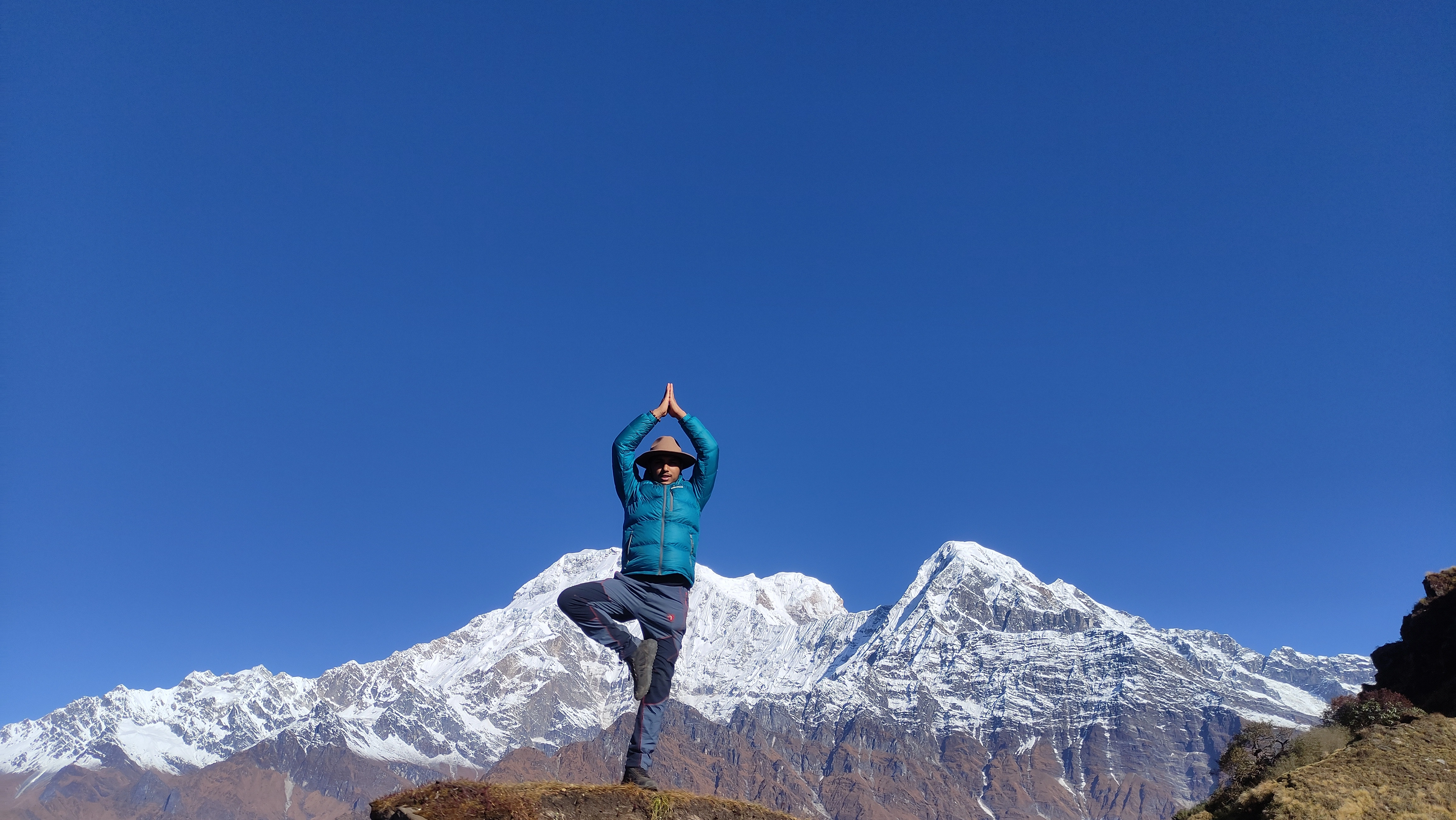
Say Namaste when you meet someone, when you leave, when you enter a shop or teahouse, and before asking for help. It is a polite way to begin any interaction.
Say it to older people first as a sign of respect. Place your hands together at your heart, palms touching, fingers pointing up. Bow your head slightly and make gentle eye contact.
This practice of warm, immediate hospitality traditionally includes offering a guest a seat, water, and dudh-chiya (milk tea) upon arrival. These are gestures that accompany Namaste to make the visitor feel genuinely welcomed (Sharma, 2025).
When someone says Namaste to you, simply say it back the same way, with hands together and a slight bow.
The correct Sanskrit pronunciation has three clear syllables: na-mas-te. The “t” is soft, with no burst of air. Put the stress on the middle syllable: na-MAS-te.
The earliest written forms of the greeting appear in the Rig Veda (circa 1500–1200 BCE), where “nam-” is used to indicate homage to deities (Benson, 2023).
What you should not do: stretch the last sound into a long “stayyyyy” or add an extra “ay” like “namastay-ay.” That sounds unnatural. Many non-native speakers say “nah-mah-stay,” and that is fine.
In fast, casual Nepalese speech, the word can sound like “nam-ste.” The clear three-syllable version is always correct and respectful.

14 Days
Moderate
Yes. It is the default greeting for most people in most situations.
Yes. Nepalese will like you more for trying. It shows you have made an effort to respect local culture.
No one will be offended. A clumsy attempt with good intention is always better than no attempt at all.
Say Namaste back with the same gesture: hands together, slight bow. That is all.
No. It is for everyone. In Nepal, it is an everyday greeting, not a spiritual declaration.
Many Christians in Nepal do say Namaste because it is a cultural greeting, not exclusively a religious one. Some Christians outside Nepal have personal concerns about the divine spark interpretation, but most Nepalese Christians use Namaste without conflict.
Yes. Children may bow slightly deeper or add respectful body language, but the word itself remains the same.
Yes. Unlike a handshake, which can transfer an average of 124 million live organisms, Namaste is a non-contact greeting. During the COVID-19 pandemic, it was recognized worldwide as an important preventive measure. Mahatma Gandhi had advocated for Namaste on these same hygienic grounds decades earlier (Sharma et al., 2021; Benson, 2023).
Namaste is not complicated. It is a greeting that says: I see you, I respect you and I bow to the good in you. You do not need to be Hindu or Nepali or a yoga teacher to say it. You just need to say it with your hands together, your head slightly bowed and genuine kindness in your intention. That is all. That is everything.
When you travel to Nepal, start with Namaste. It will open doors, warm conversations and show locals that you respect their culture.

Rajan Lamichhane, the Founder and Managing Director of Namaste Nepal Trekking & Research Hub, brings over 17 years of expertise in the tourism industry. With a profound passion for trekking and mountaineering, he has led numerous trekking and cultural tours across Nepal, Tibet, and Bhutan, prioritizing safety, enjoyment, and sustainability. Under his leadership, Namaste Nepal Trekking has become a trusted name in adventure travel industry.