


 English
 Dutch
Dutch Japanese
 Hindi
Hindi Italian
 Spanish
 French
 German
 Chinese
 Korean
 Arabic
 Hebrew
 Russian
 Portuguese
 Danish
 Czech
Czech Polish
 Swedish
 Share
ShareMuktinath Temple

 Updated: 18 August, 2025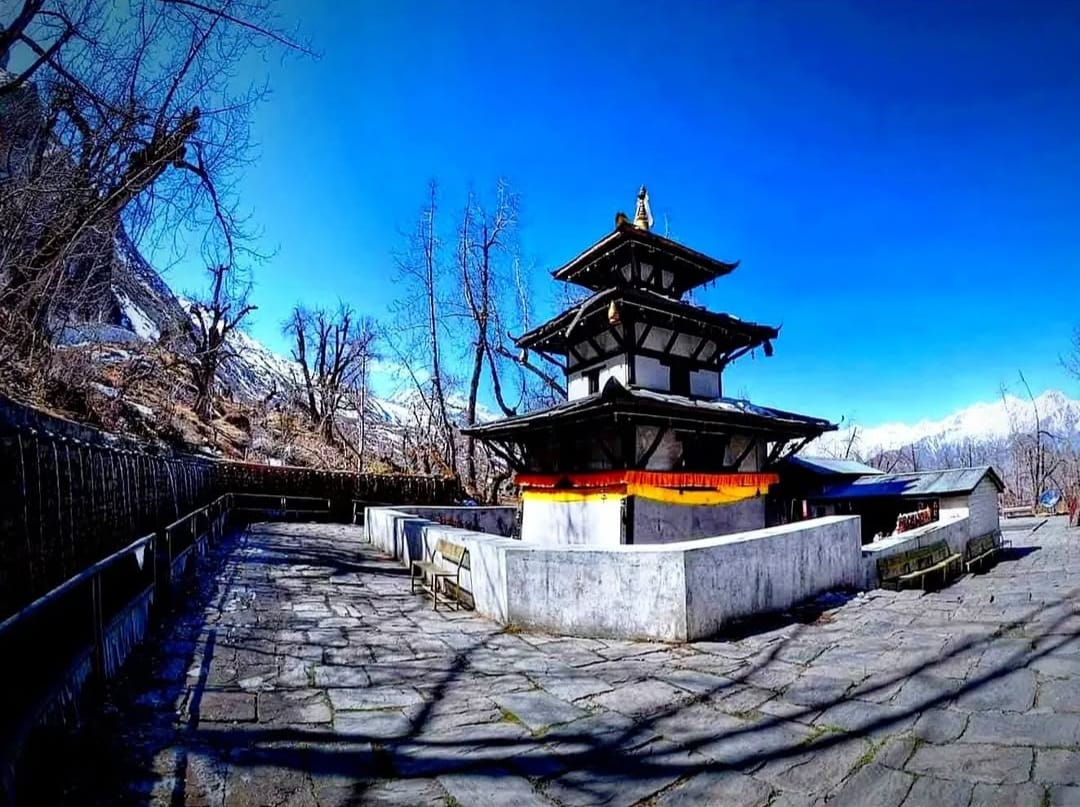
Introduction
Muktinath Temple, at a soaring altitude of 3,710 meters, is located deep in the Himalayas and is one of the highest places of worship in Nepal. The temple is an ancient shrine, sacred to both Hindus and Buddhists, and so, it is visited by thousands of pilgrims, in search of spiritual liberation and the blessings of God.
Situated in the valley of Muktinath in the Mustang District of Nepal, the temple complex does not owe its beauty to religious implications. It is a synergetic connection between religions where the old culture thrives effortlessly in a backdrop of snow cornices and windswept valleys.
To Hindus, Muktinath is one of the most sacred pilgrimage centers-a holy place where Hindus can seek salvation or religious deliverance-gain moksha or the ability to be reborn once more. The Buddhists consider it to be a holy meditation place, and Guru Rinpoche is believed to have meditated there in search of enlightenment. With these two meanings, Muktinath becomes a spiritual destination that has no other match in the world.
Are you thinking of making a pilgrimage there, or at least learning about Nepal and its rich religious culture, or maybe want to learn about this amazing temple? Then this guide to Muktinath Temple is what you are looking for, as it will take you all the way through what you should know about Muktinath Temple and its history- including its ancient roots and its modern importance.
Historical and Religious Significance (Facts, History & More)
Origin and Mythology
The Mukti Kshetra (place of salvation) or Muktinath Temple is one of the significant holy places since ancient times. It is considered to be amongst the 108 sacred temples of Lord Vishnu, the Divya Desams. To the Hindus, it is a liberating (moksha) path to visit this temple. To Buddhists, it is one of the 24 Tantric places in which Guru Rinpoche (Padmasambhava) meditated. This also means that Muktinath is a rare and special place that brings together two giant religions.
The temple’s origin is connected to both Hindu and Buddhist traditions, which is why it is often seen as a symbol of religious harmony in Nepal.
Mythology in Hinduism:
The Hindu mythology narrates that Lord Vishnu had once been in the form of a rock to avoid the curse of Brinda, the wife of the demon king Jalandhar. Muktinath is the shrine where a stone embodiment of Vishnu is adored. According to the believers, the visit here purifies all the sins and provides them with moksha (liberation from life and death).
There are 108 water spouts in the temple, as well, which are associated with gods and holy rivers. It is believed that the cleansing effect of the bath process under these cold waters was relieving past karmas and spiritual liberation.
Mythology in Buddhism:
To Buddhists, somehow Muktinath is regarded as the Chumig Gyatsa or the Hundred Waters. According to them, the eternal flame in Jwala Mai proves to be the unity of the five elements of earth, water, fire, air, and the sky. Tibetan Buddhists believe it to be the sacred site that is associated with Avalokiteshvara, or the Bodhisattva of Compassion.
Taktsang was believed to be the meditation site of Guru Rinpoche, the person who had spread Buddhism in the Tibetan region; therefore, it is a very strong spiritual point of interest to the Buddhist pilgrims.
Hindu Significance: pilgrimage for salvation (moksha), one of the 108 Divya Desams.
Muktinath Temple is of high spiritual significance to the Hindu people, and this is way beyond its physical beauty. The temple holds a distinctive position within Hindu theology as one of the 108 Divya Desams or places of residence of Vishnu, of which the temple is described in ancient Tamil literature.
The Path to Salvation:
The pilgrims of the Hindu faith assume that being in the Muktinath Temple and following the relevant rituals can make them reach moksha, which is the end goal of the Hindu spiritual activity. This freedom out of the circle of death and rebirth is the supreme religious goal, and thus the grueling trek up to this high altitude temple is justified by many devotees.
The place where the temple has been built is also symbolic. The pilgrimage of Muktinath is located high above the tree line in a bare, surreal landscape, far removed from mundane cares. It is therefore seen as a place of release that allows the devotee to concentrate unhindered on his spiritual walk.
Ritual Significance and Sacred Practices:
Muktinath has certain ritual practices that the Hindu pilgrims follow.
Most start with ritual cleansing, usually cleansing meetings with the sacred waters that flow out of the 108 water spouts of the famous temple. It is said that the spouts contain divine blessings, and hence the believers take long hours walking from spout to spout in prayer and meditation.
Another significant ritual, which is part of the Hindu pilgrimage to Muktinath, is the assortment of Shaligram stones. These are natural fossils that can be found in the nearby Kali Gandaki River, which were taken to be direct manifestations of Vishnu himself. Pilgrims choose these stones religiously and then worship them at home as objects that are a divine representation.
Buddhist Significance: sacred place, Guru Rinpoche meditation site.
Muktinath is revered by Buddhists, earning it the status as one of the 24 sacred tantric power places in the Himalayan region. The designation makes it one of the most significant meditation and spiritual practice locations in the Buddhist tradition.
Guru Rinpoche’s Meditation Legacy:
The Buddhist importance of the temple is mainly due to its association with the legendary master known as Guru Rinpoche, who made a vital contribution towards the spread of Buddhism in the entire Himalaya region. According to Buddhist sources, Guru Rinpoche selected this distant place as the venue of his intensive meditations, being attracted by the strong spiritual power of this place and the absence of worldly temptations.
Up till today, contemporary Buddhist adherents do the same as Guru Rinpoche, and visit Muktinath as a spiritual retreat and intense meditation. The elevated location of the temple and the pure nature of the environment form the perfect conditions for the contemplative practice.
Sacred Symbolism in Buddhist Context:
To Buddhists, Muktinath is considered the perfect harmony of the elements in nature, earth, water, fire, and air, which are a must basis to spiritual enhancement. This cosmic balancing is physically embodied in the particular characteristics of the temple: the sacred fire symbolizing the element of fire, the cascade jets of water symbolizing the element of water, the monolithic blocks of stone symbolizing the element of the earth, and the winds blowing high up in the air symbolizing the element of air.
Unique Features: 108 water spouts, Jwala Mai (eternal flame), Shaligram stones.
Muktinath Temple is one of a kind and has features that make it both spiritual and otherworldly. These elements combine to create a spiritual environment that feels truly otherworldly.
The 108 Sacred Water Spouts:
The most unique aspect about the Muktinath Temple is its 108 bronze water spouts surrounding the main semicircle of temples. The figure 108 has an immense number of meanings in the Hindu and Buddhist religions with symbolism of spiritual wholeness and cosmic order.
This type of spouts is called Mukti Dhara (streams of salvation) and carries water through natural springs at great altitudes in the mountains. Most remarkably, the water is incredibly clean even after its long journey, and pilgrims also believe that they can cleanse their sins and bad karma reputed after numerous lifetimes by choosing to bathe at the spouts.
Spending time under such freezing mountain streams, especially in winter months when the air can easily fall way below freezing point, is an experience that challenges the faith and perseverance of pilgrims. Some call this the Ritual of bathing a great spiritual journey that removes ego and the cares of the world.
Jwala Mai: The Eternal Sacred Flame:
Just beside the main temple complex is a shrine called the shrine of Jwala Mai, where an eternal flame burns smoothly through natural gas, which comes up through the earth. It is a natural phenomenon that underground gas depots cause, but it symbolizes the constant existence of the divine to the pilgrims.
The fire is engulfed in close proximity to the natural water spring, and this rare phenomenon results in a blending of fire and water. This, together with this mix, is a metaphor of spiritual enlightenment, seen in the balance of contrary forces and the harmony of opposites as a whole.
To Hindu faithful, Jwala Mai is regarded as an incarnation of the Divine Mother, whereas Buddhists consider the burning flame to be an allegory meaning the indestructibility of Buddha-consciousness. These two traditions concur on the symbolism of fire, that it is the unchangeable, constant truth of ultimate reality.
The Sacred Shaligram Stones
The Kali Gandaki River valley running close to Muktinath Temple is the center of Shaligram stone sources in the world. Although this cluster of fossilized ammonites was shaped millions of years ago when the area used to be underwater, it nowadays plays a central role in the Hindu worship.
Each Shaligram stone displays unique markings and characteristics that devotees interpret as divine symbols. Some stones show clear spiral patterns, others display what appear to be eyes or other sacred symbols. Hindu tradition holds that these stones are self-manifested representations of Vishnu, requiring no consecration or ritual preparation before worship.
The process of finding and selecting Shaligram stones has become an integral part of the Muktinath pilgrimage experience. Many devotees spend days searching the riverbanks, guided by traditional knowledge about which stones carry the most powerful spiritual energy.
Getting There: Transportation Options (Transportation)
Flights: Kathmandu/Pokhara to Jomsom
One of the easiest and most convenient ways to reach Muktinath Temple is to take a flight from Kathmandu to Pokhara, and then continue with another short flight to Jomsom. The flight from Kathmandu to Pokhara takes about 25 minutes, followed by another 25-minute scenic flight from Pokhara to Jomsom. There are multiple flight timings from Kathmandu to Pokhara, but from Pokhara to Jomsom, the flight is from 6:30 AM to 10:00/11:00 AM.
- Kathmandu to Pokhara flight cost for a foreign citizen: $ 102 per person for one way
- Kathmandu to Pokhara flight cost for an Indian citizen: INR 2750- 4200 per person
- Kathmandu to Pokhara flight cost for Nepali citizens: NPR 4,400 and NPR 6,715 per person.
Jeep/Road Travel: From Kathmandu/Pokhara to Muktinath (routes, road conditions, duration).
Kathmandu to Pokhara by road:
There are different types of road transportation available to reach Pokhara from Kathmandu. Travellers have the option to use local buses, tourist bus, hiace, taxi, or hire a private jeep to reach Pokhara. The road conditions from Kathmandu to Pokhara are smooth and paved. From Kathmandu, it takes around 6-8 hours if you use road transportation.
Pokhara to Muktinath by road:
To reach Muktinath from Pokhara, travellers can use the local bus as well as hire a rental jeep. If you use the local bus, you need to catch the first bus from Pokhara to Jomsom and then from Jomsom to Muktinath. If you hire the jeep, you can take it direct to the Muktinath temple. The road conditions till the Beni are good, and after that, the road is quite rough, so we suggest you use the 4-wheeler jeep for convenience. Pokhara to Muktinath by bus takes around 8-10 hours. If you use a jeep, it will take around 7-8 hours.
Trekking: Jomsom to Muktinath (difficulty, time, scenic views).
Some travellers also love to trek from Jomsom to Muktinath. Jomsom to Muktinath trekking distance is around 20-24 kilometers. Depending upon your fitness, it can take 1-2 days to reach Muktinath from Jomsom. If you are trekking, your trekking route will be Jomsom to Kagbeni and then from Kagbeni to Muktinath.
Permits required (ACAP, TIMS).
Muktinath Temple is located inside the Annapurna Conservation Area. All travellers and trekkers who want to enter here must obtain the ACAP permit from the Nepal Tourism office, either in Kathmandu or Pokhara.
Annapurna Conservation Area Project Permits Cost:
- Foreign Nationals: NPR 3,000
- SAARC Nationals: NPR 1,000
- Children Under 10: No permit required
Note: Payment must be made in Nepali Rupees. TIMS Cards are no longer required.
Best Things to Do at Muktinath Temple (Best Things to Do)
Ritual Bathing in the 108 spouts.
There are 108 water spouts named Muktidhara, where one of the most sacred rituals of the Muktinath Temple is performed. These are bull-like spouts that have constantly running icy waters, which are Himalayan in origin. Pilgrims consider this rite a process of purification of the soul by getting rid of sins and spiritual liberation. Devotees endure the cold in order to have this life-changing act of religion, even though it is at freezing temperatures.
As a number, 108 is enormously significant in Hinduism and Buddhism; it has a special meaning of cosmic order and fullness. These spouts are not merely a physical washing but actually a spiritual process and the washing away of past karma. The experience of visiting this place is said to be refreshing and humbling, and it is something not to be missed by visitors to Muktinath.
Visiting the main Vishnu Temple (Muktinath).
The Muktinath offers a calm and divine attraction of Lord Vishnu, who both Hinduism and Buddhism. It is one of the 108 Divya Desams (sacred Vishnu temples) at an altitude of 3,710 meters above sea level, adopting the shape of a pagoda. Internally, the figures of his consorts Bhudevi and Sridevi surround the golden image of Vishnu, who are flanked by other deities.
Its historical and architectural beauty is commensurate with the spiritual meaning of the temple. People believe that it is an epiphany of the shrine by itself, and pilgrims come to find salvation. The calmness and the dramatic view of the Himalayas are such that a visit to this temple is so holy and so beautiful to the eyes.
Exploring Jwala Mai Temple (eternal flame).
Along the main shrine is the Jwala Mai Temple with its everlasting flame that naturally burns through a spring of water. This has been a special feature, and many people consider this a miracle of God due to the coexistence of fire and water. The Hindus attribute the flame to Lord Brahma, whereas the Buddhists believe that Guru Rinpoche blesses it.
The visitors looking at the eternal flame tend to get amazed and spiritually relieved. The temple, built in Tibetan Gompa style, offers a peaceful space for prayer and reflection. It’s a rare opportunity to witness the convergence of the five elements—fire, water, earth, air, and space—making it a must-visit spot at Muktinath.
Meditation and prayer.
The calm atmosphere around Muktinath in the arms of the Himalayas is an ideal place to meditate and pray. The temple compound is calm and spiritual, inviting the tourists to seek intimacy with their inner being. Several people go in such instances, sit for several hours in the quiet and find peace and answers to situations in the contemplative setting.
No matter how long you have been meditating, the spiritual energy of Muktinath brings you closer to the experience. It is a beautiful place with nature and offerings that give spiritual vibrations that reflect, pray, and renew your mind and soul.
Enjoying panoramic Himalayan views.
Muktinath presents one of the most spectacular highlights of the Himalayas as well as some of its mountains such as Annapurna, Dhaulagiri, and the Nilgiri. The elevated position of the temple offers a spectacular view to appreciate the beauty of mountains that have sparkling snow, rough terrains, as well as green, lush valleys.
Scenery is described many times as otherworldly, with the fresh mountain air contributing to it. The sun rises and sets, especially deeply magic, vibes of gold and pink paint the mountains, changing the light. These shots are both visually intriguing as well as spiritually uplifting, so don’t forget to take a shot of them.
Collecting Shaligram stones.
The Kali Gandaki river is also well-known in connection with its Shaligram stones, which are fossilized ammonites sacred in Hinduism. Lord Vishnu is believed to be the manifestation of these stones that the followers greatly adore. Pick up a Shaligram stone as a shower of blessings and an important memory of the trip.
According to the traditions and tales, pilgrims tend to seek these stones at the riverbanks. The very process of finding a Shaligram is also viewed as a spiritual quest in itself, which only adds a special and memorable aspect to what you have read thus far of your visit to Muktinath.
Famous Places to Visit Near Muktinath Temple (Famous Places to Visit Near Muktinath Temple)
Kagbeni: Gateway to Upper Mustang, an ancient village, and monasteries.
Kagbeni is a beautiful village at the junction of the Kali Gandaki and Jhong Rivers, only 12 km away from Muktinath Temple. Known as the gateway to Upper Mustang, it boasts Tibetan cultural influences, with its iconic Red Monastery, prayer wheels, and ancient caves. The village offers stunning views of barren hills and snow-capped peaks, making it a favorite stop for pilgrims and trekkers alike.
Jomsom: District headquarters, airport, apple orchards.
Jomsom, located 23 km east of Muktinath, is the administrative center of Mustang and a common base camp for further exploration of the area. It is located in the midst of the Kali Gandaki River, and the view of the Annapurna range and the Dhaulagiri range is breathtaking. Jomsom also has in its store apples and locally produced products such as apple brandy, making it a delightful stopover for visitors.
Marpha: Famous for apple brandy, Thakali culture, and beautiful village.
Marpha is a nice village with apple orchards and traditional Thakali culture, just around 35 km from Muktinath. Apple products such as cider and brandy can be sampled, and the whitewashed stone houses in these villages can be viewed by the visitors, and the peaceful ambiance is to be experienced. Marpha is an absolute place to visit in search of culture and food mixture.
Dhumba Lake.
Dhumba Lake is a serene place located near Jomsom, around 30 km away from Muktinath. Enclosed by nutrient-deficient hills and mountain peaks that are covered with snow, the turquoise waters of the lake provide a calming atmosphere ideal for finding relaxation. It is a perfect place that can be visited on a relaxing one-day trip to nature.
Annapurna Circuit Trek (for trekkers).
Among the most popular trekking trails around the world, Annapurna Circuit Trek commences by the Jomsom village ( 23 km away on the foot of Muktinath ). It provides beautiful scenery, green valleys, and dry high-altitude deserts and runs through beautiful villages and forests. This is an opportunity where the trekkers can witness magnificent scenes of the Annapurna and Dhaulagiri mountain ranges as they experience the cultural beauty in the area.
Upper Mustang Trek(for trekkers).
The Upper Mustang trek starts with a 12km drive to Kagbeni, 12km below Muktinath. Making a trek to the Lo Manthang, where the Forbidden Kingdom is found, is an adventure in itself since on this adventure, adventurers get to explore the ancient monasteries, caves, and have a glimpse of the traditional Tibetan villages. The stunning beauty and cultural importance of the trek also make it a must-do trek and adventure into the off-beaten path.
Food and Accommodation
Accommodation options in Muktinath (basic guesthouses, tea houses).
There are no high-luxury international hotels near Muktinath Temple, but you can still find cozy and comfortable stays. Some hotels provide attached bathrooms, hot water, and good food services to make your journey relaxing.
Most of the hotels here are 3-star, which offer simple yet clean rooms suitable for both pilgrims and trekkers.
Here is a list of some of the famous hotels to stay at during a visit to Muktinath Temple
| Hotel Name | Distance |
| Hotel Grand Shambala | 0.5 miles from Muktinath Temple |
| Lo Mustang Himalayan Resort | 1.3 miles from Muktinath Temple |
| Hotel De Purang | 0.5 miles from Muktinath Temple |
| Red House Lodge | 5.5 miles from Muktinath Temple |
| Mustang Panorama Inn | 0.9 miles from Muktinath Temple |
| Hotel Grand Shambala( top rated) | 0.5 miles from Muktinath Temple |
| Hotel Bob Marley | 0.4 miles from Muktinath Temple |
| Hotel Yac Donalds | 5.5 miles from Muktinath Temple |
| Hotel Trekkers-Inn | 9.2 miles from Muktinath Temple |
| Annapurna Inn | 0.5 miles from Muktinath Temple |
| Himalayan Paradise | 0.9 miles from Muktinath Temple |
Accommodation in Jomsom (more variety, better facilities).
Suppose you are staying in Jomsom during a trip to the Muktinath temple. Jomsom has a wide variety of accommodation options. Here you can find normal, basic to high-end luxury hotels. Depending upon your budget, you can choose the hotel to stay. Jomsom is a popular base for exploring the Mustang region, so all the hotels here provide amenities like private bathrooms, hot showers, Wi-Fi, and in-house dining.
Typical food available (Dal Bhat, local Thakali cuisine, simple Indian/Nepali dishes).
Travellers who are planning to visit the Muktinath temple can expect simple food options around Muktinath and Jomsom. The most common meal that you will find here is Dal Bhat, a traditional Nepali set meal with rice, lentil soup, seasonal vegetables, and pickles. You can also enjoy the famous Thakali cuisine, known for its rich flavors and wholesome ingredients.
In addition, many guesthouses and hotels serve simple Indian and Nepali dishes such as chapati, curry, noodles, and fried rice. For travelers looking for comfort food, tea houses often provide snacks like soup, momos (dumplings), and tea or coffee. While luxury dining is limited, the warm hospitality and local flavors make every meal special in this Himalayan region.
Tips for staying healthy and hydrated.
- Drink plenty of water throughout the day to avoid dehydration.
- Choose simple meals like Dal Bhat and Thakali food, which are freshly prepared and easy to digest. Avoid heavy, oily food that can cause stomach problems at high altitude.
- Limit Alcohol and Caffeine
- Carry Basic Medicines
- Taking enough rest, especially after long rides or treks.
Practical Travel Tips (More)
Best time to visit (weather, crowd)
The Muktinath temple remains accessible year-round, but the most popular time to visit the Muktinath temple is from September to November. You can expect a huge crowd this month due to stable weather conditions for travelling and adjustable temperature, taking a bath in the temple. Spring (March to May) is also the best time to travel, but the early morning and night temperatures remain cold. Travelling during the summer is also possible, but due to the monsoon, the roads can be blocked, and you need to be aware of floods and landslides. The temperature during the winter is challenging as it can drop to -20°C (-4°F).
Altitude sickness prevention and awareness.
Reaching the world’s highest altitude temple, which lies at the foot of the Thorong La mountain pass, travellers need to be aware of altitude sickness. Even though the chances of having altitude sickness are low, we still need to be cautious while travelling here. Headache, nausea or vomiting, dizziness or lightheadedness, fatigue or weakness, loss of appetite, and difficulty sleeping are the early signs of altitude sickness(AMS). If you experience any of these symptoms, it is important to rest, stay well-hydrated, and follow proper acclimatization guidelines.”
Packing essentials (warm clothes, rain gear, hiking boots).
You need to pack the essentials according to the season you choose to travel. While travelling in spring and autumn, you don’t need to pack much. But if you are travelling in the monsoon and winter, you need to pack extra things to adapt to the challenging weather.
Here is the common packing list for all weather conditions.
- Warm Clothes: Jackets, fleece, thermal wear, gloves, and hats
- Rain Gear: Waterproof jacket, pants, and rain cover for backpacks
- Footwear: Sturdy hiking boots with good grip, comfortable trekking shoes, and extra socks
- Accessories: Sunglasses, sunscreen, trekking poles, and a reusable water bottle
- Personal Items: Basic first-aid kit, personal medications, toiletries, and a headlamp/flashlight
- Optional Items: Camera, power bank, and travel adapter
Respecting local customs and traditions.
Muktinath temple is a highly religious temple, so we suggest you follow the cultural etiquette while visiting.
- Dress modestly – Wear simple and respectful clothes while entering the temple premises.
- Remove footwear – Before entering the main temple, always make sure to remove your shoes and leather items.
- Photography rules – Don’t take pictures inside the temple and of devotees without permission.
- Follow rituals – Respect the ongoing prayers, pujas, and ceremonies without interrupting.
- No loud behavior – Maintain silence and avoid loud conversations in the sacred area.
- Offerings – If you wish to make offerings, do so respectfully and properly.
- Respect pilgrims – Be considerate of devotees, as many travel long distances for worship
- No smoking or drinking – Avoid alcohol, cigarettes, or any disrespectful behavior near the temple.
Conclusion
Muktinath temple is a sacred palace for Hindus and Buddhists, but visiting here is equally meaningful for foreign travellers. Travellers can enjoy the natural beauty surrounding the Muktinath temple and understand the local culture and traditions. The scenic drive from Kathmandu to the Muktinath temple is full of adventure, and it is a must-visit destination for everyone.
Namaste Nepal trekking also arrange Muktinath tour so if you are interested you can directly contact us for itinerary and price.

Sabin Shrestha is an experienced content writer with over 4 years of expertise in creating clear and engaging content. He specializes in writing about lifestyle, travel, health, and technology, delivering well-researched articles that connect with readers. Known for his storytelling skills and attention to detail, Sabin creates content that informs, inspires, and leaves a lasting impression on audiences.

