English
 Dutch
Dutch Japanese
 Hindi
Hindi Italian
 Spanish
 French
 German
 Chinese
 Korean
 Arabic
 Hebrew
 Russian
 Portuguese
 Danish
 Czech
Czech Polish
 Swedish
 Share
ShareMount Everest Base Camp Tibet – Complete Guide

 Updated: 27 November, 2025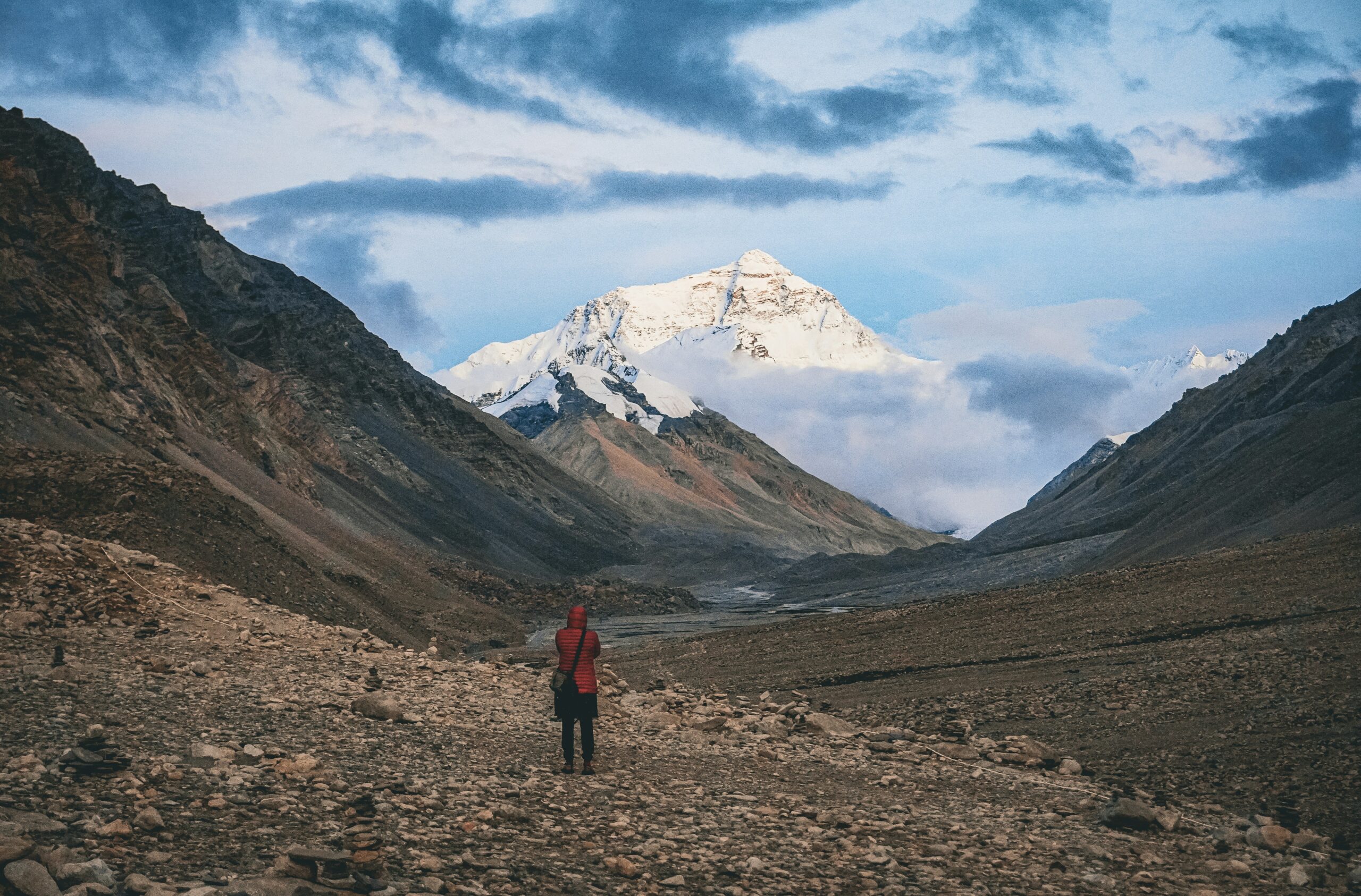
The North Face of Mount Everest (Chomolungma, “Goddess Mother of the World”) rises in a huge, clear wall of rock and ice that is 5,200 meters (17,060 feet) high on the Tibetan Plateau. The drive to the North Base Camp is the highest journey on Earth. It is a beautiful, culturally rich, and well-maintained road trip, unlike the popular and difficult climb to the South Base Camp in Nepal.
This is your whole guide to overcoming the logistical, physical, and spiritual obstacles that come with getting to Everest Base Camp (EBC) via the Roof of the World.
Why Choose the Everest Base Camp Tibet (North) Side?

The North Side trip is very different from the hard 12-day trek in Nepal. It has a unique mix of being able to reach very high altitudes and getting deeply involved in the traditions of the region.
| Feature | Tibet (North) EBC | Nepal (South) EBC |
| Primary Mode of Transport | Vehicle (mostly driving) | Trekking (walking 100% of the way) |
| Altitude of Base Camp | 5,200m (17,060 ft) | 5,364m (17,598 ft) |
| View of Everest | Direct, head-on, dramatic North Face | Obstructed view; requires Kala Patthar climb |
| Logistics | Complex permits, mandatory organized tours | Individual permits possible, independent trekking common |
| Cultural Stops | Lhasa, Potala Palace, significant monasteries | Sherpa villages, limited cultural sites |
Key Difference: On the Tibet side, you drive most of the way, which lets you get a greater understanding of the Tibetan landscape and way of life without having to continuously trek at high altitudes.
Key Facts
- Location: Tingri County, Shigatse Prefecture, Tibet Autonomous Region, China.
- Altitude: About 5,200 meters (17,060 feet) above sea level.
- Best Time to Visit: The best times to visit are in the spring (April to May) and the autumn (September to October) when the weather is milder and the skies are clear.
- Permits Required: You need a Tibet Travel Permit, an Alien’s Travel Permit, and a Tourist Visa
- Access: Mostly by private hiace or tour bus from Lhasa or Shigatse.
- Accommodation: Basic tent guesthouses (seasonal) or Rongbuk Monastery Guesthouse.
- Nearest Town: Tingri (Old Tingri) or Shelkar (New Tingri).
Require Permits For Everest Base Camp Tibet Side
You need special permits to visit Tibet, especially in places like EBC that are restricted to visitors. Here are the types of permit that you will need for you visit to Everest Base Camp Tibet side:
- Tibet Travel Permit: The Tibet Tourism Bureau gives out the Tibet Travel permission, which is the most important permission. You need it to get into Tibet. This is something that your trip operator will do for you.
- Alien’s Travel Permit: Needed to get to “unopened” places outside of Lhasa, like Shigatse and EBC. Your guide will apply for it when you get to Tibet.
How To Reach the Everest Base Camp Tibet Side
- You have to plan your Everest Base Camp Tibet tour with a licensed and trustworthy tour or travel company. Foreigners are not allowed to travel alone in Tibet.
- The tour operator will take care of all the paperwork, lodging, and transportation, and they will also arrange a knowledgeable Tibetan guide and driver.
- Give yourself enough time (at least 3–4 weeks) to get your approval, especially during busy times.
Best Time to Visit Everest Base Camp Tibet
The date and time you choose for the Everest Base Camp Tibet has a big effect on your experience. It is because the weather and landscape changes in the Himalaya according to the season.
- Spring (April – Early June): In the spring the skies are usually clear, the days are warm, but the nights are still very chilly. This time of year is wonderful for seeing Everest clearly.
- Summer (Late June – August): It’s warmer, but it’s also the monsoon season. There will be additional clouds and rain, which can make it hard to see the mountains. The plateau, on the other hand, is greener and more alive.
- Autumn (September – October): This has been considered to be the perfect time of year to visit EBC Tibet. The sky is clear and crisp, the days are warm, and you can see Everest very well. In October, the weather gets a lot colder.
- Winter (November – March): Very cold, and there can be a lot of snow. Roads may be closed. Even though the views are very good, the living conditions are bad, and many guesthouses remain closed.
Conquering the Altitude: Acclimatization & Safety
Acute Mountain Sickness (AMS) is a big worry when you are travelling at Everest base camp of Tibet because it is situated at an extremely high location. So it is essential to understand the effect of AMS and learn how to minimize it before you head for the trip.
Key Strategies for Acclimatization:
- Tibet is already at a high altitude. So, once you go to the Lhasa airport, give yourself a few days to get used to the high altitudes of Lhasa (3,656m) and Shigatse (3,800m). It will help your body adjust to being at a high altitude.
- Drinking water and fluid helps to minimize the effect of altitude sickness. So make sure to drink at least 3-4 ltr of water everyday during the trip.
- Drinking alcohol and coffee triggers the AMS so avoid it when you are at high altitude.
- Digestion problems can happen to some trekkers at high altitude so make sure to eat the food and it is easy to digest.
- Get enough sleep and rest and avoid heavy exercise at high altitude.
- Pay attention to how your body feels at high altitude and tell your guide about any difficulty.
- Headache, nausea, dizziness, tiredness, shortness of breath, loss of appetite, and trouble sleeping are all signs of AMS. If symptoms get worse, like a cough that won’t go away, a bad headache, or confusion, you need to go lower altitude right away.
What to Bring:
- By consulting with a doctor you can take altitude sickness medicine such as Diamox (Acetazolamide).
- If possible carry a portable oxygen bottle.
What to Expect at Everest Base Camp (Tibet Side)
Unforgettable Views: Get ready for a breathtaking view of the Himalayan range, with the North Face of Mount Everest standing out as the most impressive. The sky is often full with amazing colours at sunrise and dusk.
Rongbuk Monastery: It is the world’s highest altitude buddhist monastery located at the altitude of (4,980 meters/ 16,340 feet). It is located just below the Everest base camp Tibet. This monastery holds great history and from here you have exceptional views of the north face of Mount Everest.
Tent Guesthouses: In the warmer months(mid-April to late October) you can enjoy the experience of staying in a tent in Everest base camp Tibet. In one tent 6-10 people are accommodated with limited basic facilities.
Mountain views: From the Everest base camp Tibet you can see the panoramic view of Mount Everest’s North Face, along with other peaks like Changtse, Lhotse, and Makalu.
Starlit Nights: At night from the sky above EBC Tibet turns into a breathtaking view, the dazzling view of a shining star and moon.
Accommodation Along the Way
- In the City Area(Lhasa,Gyantse & Shigatse): You can find a range of hotels in these city areas. Depending upon your budget you can choose from comfortable tourist-class to modern luxurious options.
- In Rongbuk: There is no advanced hotel near the Rongbuk monastery but you will find very basic rooms, dormitory-style, with limited facilities.
- In EBC Tibet: There is no hotel/lodge in the EBC Tibet so people often stay in the Rongbuk. EBC is very close to the Rongbuk Monastery.
Essential Packing Guide for EBC Tibet
Before you head toward the Tibet for the EBC, here is your important packing list that you can follow:
Clothing:
- Thermal base layers (top and bottom)
- Warm insulating layers (fleece, down jacket)
- Waterproof and windproof outer shell jacket and pants
- Warm hat, gloves/mittens, scarf/neck gaiter
- Warm socks (wool or synthetic)
- Comfortable trekking pants/trousers
- Casual clothes for lower altitudes (Lhasa/Shigatse)
Footwear:
- Comfortable, broken-in hiking boots (waterproof)
- Sandals or comfortable shoes for evenings
Gear:
- Sunglasses (high UV protection)
- Sunscreen and lip balm (high SPF)
- Small daypack for daily essentials
- Refillable water bottle
- Camera and extra batteries (cold drains batteries fast)
- Power bank / portable charger
- Personal medical kit (painkillers, blister plasters, rehydration salts, any personal meds)
- Hand sanitizer, wet wipes
- Snacks (energy bars, nuts, chocolate)
- Reading material, journal, pen
Documents:
Passport, Tibet Travel Permit (copy), travel insurance details, local currency (Chinese Yuan – CNY).
Sample Itinerary: Lhasa to EBC & Back (Typical 8-Day Tour)
- Day 1: Arrive in Lhasa (3,656m). Rest and acclimatize.
- Day 2: Lhasa Sightseeing & Acclimatization. Explore Potala Palace, Jokhang Temple, Barkhor Street.
- Day 3: Lhasa Sightseeing & Acclimatization. Visit Drepung Monastery, Sera Monastery (monk debate).
- Day 4: Lhasa to Gyantse (3,980m) to Shigatse (3,800m). Drive via Yamdrok Lake, Karola Glacier. Visit Pelkor Chode Monastery in Gyantse.
- Day 5: Shigatse to Tingri (4,300m). Visit Tashilhunpo Monastery in Shigatse. Continue driving through stunning plateau landscapes.
- Day 6: Tingri to Everest Base Camp (5,200m) & Rongbuk Monastery. Drive to Rongbuk, explore the monastery. Take the shuttle to the EBC viewing point. Enjoy sunset/sunrise views of Everest. Overnight in a tent guesthouse or Rongbuk Monastery.
- Day 7: EBC to Shigatse. After sunrise views, drive back to Shigatse.
- Day 8: Shigatse to Lhasa. Drive back to Lhasa.
Cost Considerations
The EBC Tibet Cost depends upon the several factors such as:
- Group Size: Private tours are more expensive than joining a small group. The larger the group the more discount you can get in the tour package.
- Tour Duration: Longer tour is naturally more expensive for eg. Kailash Tour with visit to EBC.
- Season: Peak seasons (April-May, Sep-Oct) can be pricier.
- Accommodation Level: EBC Tibet tour price remains high when you choose a luxury hotel during your stay in Tibet.
- Included Services: Flights, personal expenses, tips, and visa fees are usually extra.
Typical breakdown of costs (excluding international flights):
- Tour Package: This is the bulk of the cost, covering permits, guide, driver, vehicle, fuel, most accommodation, and sometimes entrance fees. Expect a range from $1,500 – $3,000+ USD per person for an 8-day private tour, or $1,000 – $2,000+ USD for a join-in group tour.
- Chinese Visa: Visa free country can get an arrival visa at Lhasa but for those who are not eligible for free visa they need to apply from the tour operator.
- International Flights: To/from China (usually Chengdu or Beijing for onward connection to Lhasa).
- Personal Expenses: Snacks, souvenirs, extra drinks, laundry.
- Tips: For guide and driver (recommended).
- Travel Insurance: You need to manage on your own.
Note: Always check the detailed itinerary from the tour operator before booking the package with them. Ask if there is any hidden cost that you need to be aware of.
Cultural Etiquette
Tibet is a very sensitive palace because you can find here thousand years old buddhist religion, culture and traditions. Tibetan people deeply respect their culture and way of life they are living. While visiting here we request all the tourist to follow this things:
Monasteries: Dress modestly (shoulders and knees covered). Remove hats. Walk clockwise around stupas and monasteries. Do not touch religious artifacts. Ask permission before taking photos, and be prepared to pay a small fee in some places.
People: Be respectful. Avoid discussions on sensitive political topics. Ask permission before photographing locals, especially monks.
Gifts: Small gifts for children can be appreciated, but avoid promoting begging.
Avoid: You cannot talk about the 14th Dalai Lama, take his picture with you. China has banned him.
Safety Tips
Listen to Your Guide: Your Tibetan Guide knows the Tibetan Geography, policy, weather conditions well so always follow his advice.
Travel Insurance: We highly request you to have the travel issuance if you are planning to visit the Everest base camp Tibet. Having insurance helps you cover high-altitude risks, medical emergencies, evacuations, and other unexpected situations during the trip.
Stay Connected: In remote areas of Tibet the mobile network is weak and Wifi is not available. So while heading in such areas, inform your families about travel plans.
Environmental Responsibility: We don’t want the land of Kailash Parvat to be dirty so make sure to repeat the natural beauty by throwing waste only in the designated areas.
Ready for Your Everest Adventure?
If you want to see Mt. Everest from the Tibet side then we Namaste Nepal can arrange a tour for you. Tibet is really a beautiful place that you must visit once in a lifetime. We are registered tour operators and we organize different other trips in Tibet such as the Kailash Mansarovar Yatra. So if you are planning to visit Tibet make sure to contact us and let us be your travel partner. Thanks for reading!!!!!!!!!

Sabin Shrestha is an experienced content writer with over 4 years of expertise in creating clear and engaging content. He specializes in writing about lifestyle, travel, health, and technology, delivering well-researched articles that connect with readers. Known for his storytelling skills and attention to detail, Sabin creates content that informs, inspires, and leaves a lasting impression on audiences.
Related Blogs