


 English
 Dutch
Dutch Japanese
 Hindi
Hindi Italian
 Spanish
 French
 German
 Chinese
 Korean
 Arabic
 Hebrew
 Russian
 Portuguese
 Danish
 Czech
Czech Polish
 Swedish
 Share
ShareAnnapurna Region Packages
Explore the packages of Annapurna Region.


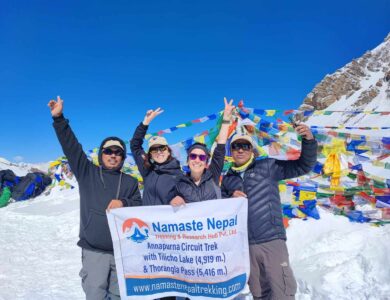
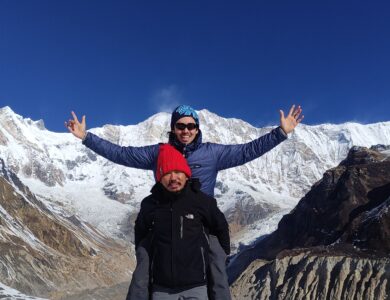
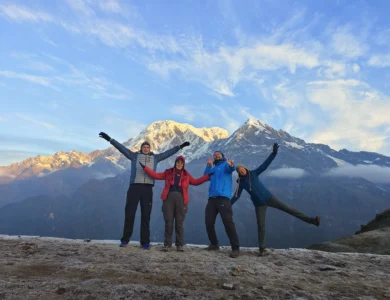
Short Information
Annapurna Region: Overview
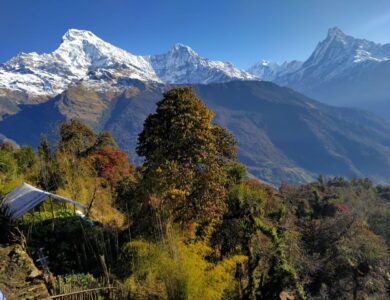
The Annapurna Region is in the north-central area of Nepal, west of Kathmandu and the Pokhara valley. The Annapurna Massif lies in the northwest part of the region. The Annapurna region is famous for its beautiful landscape and jaw-dropping mountain views. There are a total of 30 main peaks here and one peak above 8,000m(Annapurna I, tenth tenth-highest peak in the world with an impressive altitude of 8,091 m).
There are numerous other peaks of altitude as well. From the summit of the higher peak in the Annapurna range, you can get a close view of the Dhaulagiri and Manaslu ranges. The Annapurna region is protected by the Annapurna Conservation Area (ACA), Nepal’s first and largest conservation area, established in 1986.
What makes Annapurna so special?
Diverse Landscapes: lower altitude areas – lush greenery, rhododendron forest, oak forest, bamboo forest, rivers, lakes, terraces, farm land, etc. At higher altitudes, alpine meadows, rocky trails, glacial valleys, sparkling icefalls, snow peaks, and wide open Himalayan landscapes.
Cultural Richness: Inside the Annapurna region, there are lots of beautiful villages with warm and welcoming people. Although there are many ethnic groups, the majority of people who live here are Gurungs, Magars, and Thakalis. You can find unique customs, languages, and great hospitality during the visit.
Rivers: There are several rivers in the Annapurna region, but the Kali Gandaki River( the world’s deepest gorge) and the Marsyangdi River are very popular here.
Mountain Peaks: There are numerous peaks in the Annapurna region. Let’s see the famous mountain peaks of the Annapurna Region.
- Annapurna I — 8,091 m, the tallest in the range.
- Annapurna II — 7,937 m.
- Annapurna III — 7,555 m.
- Annapurna IV — 7,525 m.
- Gangapurna — 7,455 m.
- Machapuchare (Fishtail) — 6,993 m, sacred to locals and never officially climbed.
- Hiunchuli — 6,441 m, guarding the Sanctuary.
- Mardi Himal — 5,587 m, a trekking peak that offers stunning views and forest trails.
- Tilicho Peak — near Tilicho Lake, another noteworthy summit.
Natural hot spring: Jhinu Danda and Tatopani are famous natural hot springs in the Annapurna Region.
Muktinath Temple: Nepal’s famous high-altitude temple, the sacred Muktinath Temple (3,710 m), also lies in the Annapurna region.
Apple Orchards (Marpha & Tukuche): Famous for organic local apples, apple brandy, apple pie, and fresh fruit products.
Lower Mustang: Some parts of Lower Mustang are also part of the Annapurna Conservation Area.
Wildlife & Flora: Home to Himalayan birds, blue sheep, musk deer, rhododendron forests, and rich biodiversity.
Manang Valley: A Stunning valley surrounded by mountain peaks, which has a distinct culture, architecture, monasteries, and traditions.
Popular Trekking routes: There are several multi-day trekking routes inside the Annapurna Region. You can find everything from easy and short treks to challenging and longer adventures. Here is the list of popular trekking routes:
- Annapurna Base Camp
- Annapurna Circuit Trek
- Ghorepani Poonhill Trek
- Mardi Himal Base Camp Trek
- Tilicho Lake Trek
- Nar Phu Valley Trek
- Khopra Ridge Trek
- Mohare Danda Trek
- Panchase trek
How to Reach the Annapurna Region
Pokhara is the main entry point of the Annapurna region. So, to all the foreign travellers who enter Nepal from Tribhuvan International Airport (TIA), your journey will start from Kathmandu. There are mainly two ways to reach the Annapurna Region: by road transportation and by using a domestic flight.
By Flight: There are several airline companies(Buddha Air, Yeti Airlines, Hahn Air, and Shree Airlines) that operate regular two-way flights from Kathmandu to Pokhara. The flight duration will be around 25-30 minutes. You can book the flight ticket from the tour operator or by visiting the airline website.
By Road: Tourist bus, private jeep hire, local bus, hiace, and taxi are the options you can choose to reach Pokhara.
For more details check here: Kathmandu to Pokhara Transporation
Permits Required To Enter the Annapurna Region.
All foreign travellers who wish to enter the Annapurna Region must have the permits with them. The local body checks these permits. You can obtain this permit on your own or by visiting the Kathmandu (Nepal Tourism Board Office, Bhrikutimandap) or Pokhara (Nepal Tourism Board Office, Damside). Permits You’ll Need:
- Annapurna Conservation Area Project (ACAP) Permit: Cost around USD 30
Best Time To Visit For Your Annapurna Adventure
- Autumn (September to November): Clear sky with moderate temperature
- Spring (March to May): Mild temperatures, longer days, blooming seasons
- Winter (December to February): Cold and snowfall at high altitude
- Monsoon: Moderate to heavy rainfall
Internet and Communication in the Annapurna Region
Wifi: You can find high-speed connections in the lower region. At higher regions, the wifi connection can be a bit slow.
Mobile network: Local SIM( Ncell or NTC) works nicely in the Annapurna region. However, in remote regions, the mobile network might be poor or not available.
Power sockets: Type C, Type D, and Type M are used, but make sure to carry travel adapters with you.
Banks And Atm Facilities
In the city areas like Pokhara, the starting point to enter the Annapurna region, you can find banks and ATM facilities. You won’t find this in the trekking trails, so carry cash when you are heading for hiking, trekking, or other adventurous activities. Money exchange counters are also only inside Pokhara.
Food And Accommodation Facility in the Annapurna Region
- Lodges and luxury hotels are available in the lower region. At higher altitudes, tea houses are the only option, offering basic facilities with shared rooms and communal toilets.
- A wide variety of Nepali dishes and some international options are available in the lower areas, but as you go higher, the menu becomes simpler and more limited.
What to Pack for Your Annapurna Region Trip
Packing when visiting the Annapurna region depends on the season you choose to travel. Here is the list of common packing things that will help you to stay comfortable and prepared throughout your journey:
- Layered clothing for changing weather
- Warm jacket and thermal wear
- Sturdy trekking boots
- Hat, gloves, and sunglasses
- Rain jacket or poncho
- First-aid kit and medicines
- Water purification tablets
- Toiletries and wet wipes
- Power bank and headlamp
- Snacks and a reusable water bottle
- Trekking poles (optional but helpful)
- Passport, permits, and cash
Annapurna Region Travel Guide: Safe and Responsible Tips
- Hire a Guide/Porter: For trekking inside the Conservation area, it is mandatory to hire a Guide with you. You can hire a licensed guide and porter from a tour or trek agency inside Nepal.
- Travel Insurance: Travelers are required to have health and travel insurance for high-altitude trekking. Your insurance policy must cover helicopter evacuation and other high altitude risks and medical coverage.
- Acclimatize Slowly: When you are walking above 3,000m, it is important to have the acclimatisation day/rest day in your travel itinerary.
- Stay Hydrated: Buy a safe drinking water bottle from the local shops or from a tea house. Don’t drink tap water unless you use the water purification table.
- “Leave No Trace”: We don’t want to destroy the natural beauty of the Annapurna region with waste, so throw your waste in the designated areas only.
- Be Aware: Stay on marked trails, be mindful of yaks/donkeys/mules on narrow paths, and check weather conditions.

