English
 Dutch
Dutch Japanese
 Hindi
Hindi Italian
 Spanish
 French
 German
 Chinese
 Korean
 Arabic
 Hebrew
 Russian
 Portuguese
 Danish
 Czech
Czech Polish
 Swedish
16 Days
Difficult
US$1475
 Share
Share Updated: 22 November, 2024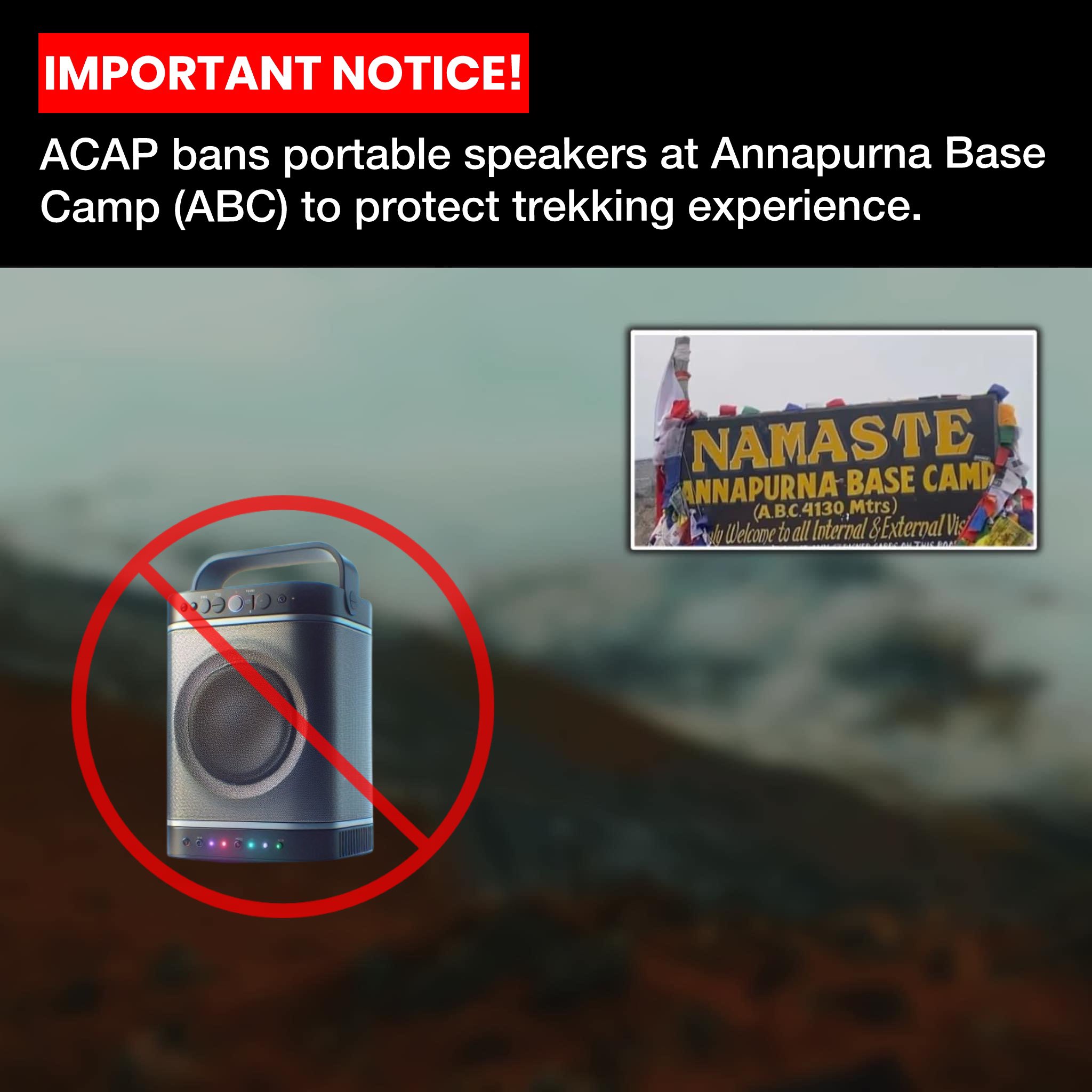
The Annapurna Conservation Area Project (ACAP) has instituted a significant regulation to enhance the trekking experience and conserve its diverse wildlife.
The ACAP office in Manang has banned portable speakers and loud music on the Annapurna Circuit Trek & Annapurna Base Camp Trek. This is to protect the wildlife in the area. Trekkers should avoid loud devices and actions like setting off fireworks. This reflects a dedication to eco-friendly tourism and nature preservation. Anyone who breaks the ban will face penalties, showing how seriously ACAP enforces these rules.

16 Days
Difficult
US$1475
The Annapurna Conservation Area, a region of extraordinary natural beauty and ecological significance in Nepal, has introduced a ban on portable speakers and loud music. This measure is driven by an urgent need to protect the area’s unique wildlife and maintain the authentic experience that draws trekkers from around the globe.
Loud music on the Annapurna Circuit is causing worries about its effects on local wildlife. The area is home to many species, including endangered ones, and loud sounds can harm their habitats. Dhak Bahadur Bhujel, the chief of the ACAP office in Manang, explained how these noises disturb the animals’ fragile environments.
This disruption can stress wildlife and change their behavior, affecting breeding and feeding. By banning loud music, ACAP aims to reduce these disturbances and keep the area safe for wildlife.
Loud music is banned on the Annapurna Circuit and Annapurna Base Camp Trek to protect the environment and maintain the authentic trekking experience these routes are famous for. Portable audio devices have brought city noise into what used to be a peaceful area. Trekkers on the Annapurna Circuit can reconnect with nature, enjoy stunning scenery, and experience the tranquility of the majestic mountains.
By banning loud music, the Annapurna Conservation Area Project (ACAP) lets visitors enjoy the peaceful beauty of the area. This ban preserves the natural sounds, such as birds chirping and leaves rustling, making them the journey’s soundtrack. This helps trekkers focus on the stunning views and appreciate the natural wonders around them.
Keeping a peaceful atmosphere is crucial for people wanting a real escape from the busy everyday life. By enjoying the trail in its natural form, trekkers can connect more deeply with the environment and feel the true adventure and discovery that is part of the Annapurna experience. The ACAP is dedicated to providing a memorable and genuinely calm trekking journey.
The ban wasn’t imposed suddenly; it followed several incidents that required action. ACAP officials reported that trekkers brought portable speakers with loud music, causing disruptions. ACAP had to confiscate these speakers and warn the trekkers.
This shows their dedication to maintaining rules that safeguard the environment and the trekking experience. Despite efforts to curb poaching and illegal wildlife trade, noise pollution continued to be a problem. The ban is a crucial step to tackle this issue.

The enforcement of the sound ban in Annapurna is structured around clear regulations and steps to ensure compliance. The ACAP has made it clear that the use of loudspeakers or any sound-emitting equipment, along with fireworks, is strictly prohibited. This is an essential measure to reduce noise pollution and maintain the natural silence of the area.
To make the ban effective, the ACAP has set strict penalties for anyone breaking the rules. Tourists who ignore the ban could face heavy fines or even jail time.
If you harm the wildlife in the area, like using loudspeakers, you could be fined up to NPR 1 million and face up to 15 years in prison. These strict penalties show how important it is to ACAP to protect the environment and follow the rules.
The ACAP has started taking action by confiscating loudspeakers from trekkers and giving warnings. These steps remind trekkers of the rules and why following them is important. Besides penalties, ACAP is also raising awareness about the ban and its reasons. They’ve put up signs along key parts of the trail to guide tourists on responsible trekking. These efforts aim to promote eco-friendly tourism and highlight the importance of protecting nature.
Banning portable speakers and loud music in the Annapurna Conservation Area shows a commitment to protecting the environment and enhancing the trekking experience. By following these rules, visitors help preserve Nepal’s delicate ecosystems and promote peaceful, respectful tourism.
The Annapurna Conservation Area Project (ACAP) has taken steps to protect the environment and keep the natural beauty and wildlife of the Annapurna region safe for future generations.
ACAP has increased its forest patrols in the Annapurna Conservation Area to better protect wildlife. These patrols play an important role in finding and removing illegal animal traps. Recently, they found and removed 35 traps, which are very dangerous to the local animals. Getting rid of these traps is vital for wildlife conservation in the area.
ACAP’s strict measures show their dedication to protecting nature by stopping human harm to local ecosystems. This is part of a bigger effort to ensure wildlife can live safely and naturally, without facing traps or other disruptions.
ACAP is also actively working hard to stop poaching and illegal wildlife trade in the region. Even though there have been many awareness campaigns and education efforts, these activities still continue. To address this, ACAP imposes heavy penalties, including fines up to NPR 1 million and imprisonment for up to 15 years, or both. These strict punishments aim to discourage these harmful practices and highlight the importance of preserving the area’s natural heritage.
In addition to legal enforcement, ACAP works with local communities to teach them about the harmful effects of poaching and illegal wildlife trade on both the environment and their own communities. This approach aims to create a shared responsibility for protecting the Annapurna region’s unique biodiversity.
Tourists heading to Annapurna Base Camp or traveling the Annapurna Circuit or even Ghorepani Poon Hill Trek will face both challenges and opportunities due to new regulations and conservation efforts. While banning loud music and portable speakers might inconvenience some trekkers at first, but it ultimately makes the trekking experience better.
The new regulations and environmental measures by the Annapurna Conservation Area Project greatly contribute to nature conservation and sustainable tourism. Visitors to the Annapurna region are encouraged to enjoy a peaceful, eco-friendly experience while respecting and supporting the area’s preservation.
The Annapurna Conservation Area (ACAP) is a trekking paradise with diverse trails that offer everything from breathtaking mountain views to rich cultural experiences. Here’s a list of 20 major trekking trails in this region where you are not allowed to Play Loud Speakers:
Due to the recent ban on loud music and to maintain a peaceful and safe environment for trekkers and wildlife in the Annapurna Conservation Area, the Annapurna Conservation Area Project (ACAP) has introduced more rules. Trekkers are encouraged to follow these guidelines:
These regulations underscore ACAP’s commitment to eco-friendly tourism and highlight the importance of peace and quiet in the preservation of nature and wildlife. Compliance with these rules not only ensures a memorable trekking experience but also contributes significantly to the protection and conservation efforts in the Annapurna Conservation Area.
The Annapurna Conservation Area Project’s ban on portable speakers and loud music helps preserve the peace and wildlife of the region. By focusing on protecting nature, ACAP highlights the need to keep harmony with the environment.
Make sure to follow the regulations on the Annapurna Circuit to protect the surroundings and avoid any consequences.
Additionally, Local municipalities are working together to upgrade and maintain trails, showing a strong commitment to sustainable tourism. By collaborating with communities, these projects aim to improve the trekking experience while minimizing environmental impact. This partnership enhances trail quality, supports the local economy, and encourages responsible tourism.
Such measures are crucial in preserving the integrity of the Annapurna Conservation Area for future generations, ensuring that it remains a sanctuary of peace and quiet in the heart of Nepal.

Rajan Lamichhane, the Founder and Managing Director of Namaste Nepal Trekking & Research Hub, brings over 15 years of expertise in the tourism industry. With a profound passion for trekking and mountaineering, he has led numerous trekking and cultural tours across Nepal, Tibet, and Bhutan, prioritizing safety, enjoyment, and sustainability. Under his leadership, Namaste Nepal Trekking has become a trusted name in adventure travel industry.